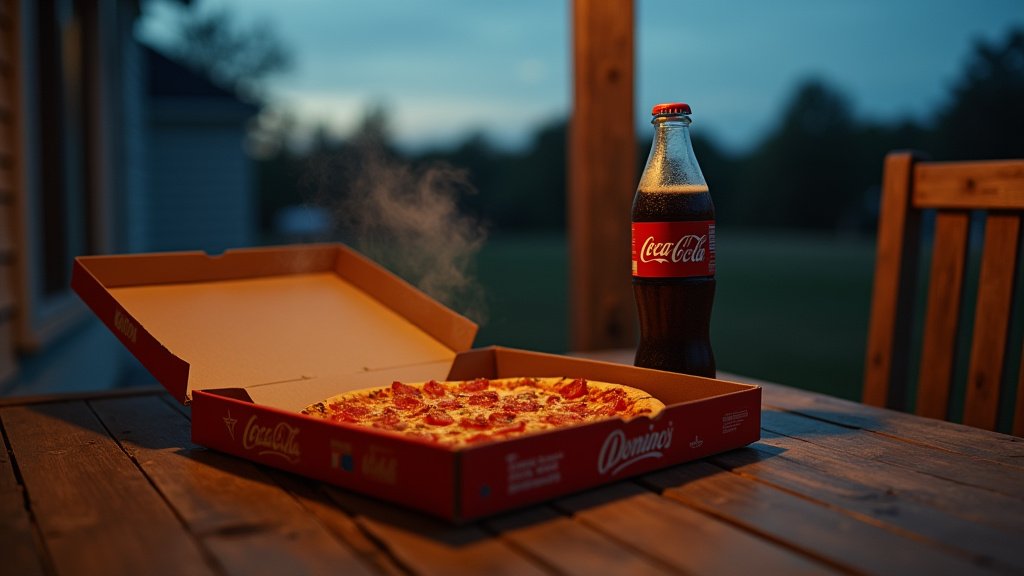
In a heartwarming turn of events that has captivated the nation, the viral story of Dan Simpson, a 68-year-old Domino’s delivery driver in Boise, Idaho, has culminated in a significant corporate tribute. After Simpson’s simple act of going above and beyond to fulfill a customer’s request for a Diet Coke—despite his store being out of stock—captured the internet’s attention via a Ring doorbell video, he inspired a global movement of generosity. Today, Domino’s and Coca-Cola have officially announced a nationwide promotion, launching the “DANTHEMAN” discount code, allowing customers to receive a free 20oz Coca-Cola with their online orders from April 30 through May 3. This collaboration marks a unique intersection of organic viral kindness and structured corporate social responsibility, turning one delivery driver’s dedication into a widespread celebration of community spirit.
Key Highlights
- The Viral Catalyst: A Ring doorbell video showing Dan Simpson explaining that he stopped at a store on his own time to buy a customer’s Diet Coke has garnered millions of views, spotlighting his commitment to service.
- Community Support: A GoFundMe campaign started by the customer, Brian Wilson, has raised over $168,000 to support Simpson’s impending retirement, exceeding all expectations.
- The ‘DANTHEMAN’ Promo: To honor Simpson’s legacy, Domino’s and Coca-Cola are offering a free 20oz Coke with online orders using the code “DANTHEMAN” from April 30 to May 3.
- The Human Element: Simpson, a seed analyst for the Idaho Department of Agriculture, has worked as a Domino’s delivery driver for over a decade as a second job, a reflection of the economic realities many face in retirement planning.
The ‘DANTHEMAN’ Effect: Anatomy of a Feel-Good Phenomenon
The Viral Moment: Why This Story Resonated
In the landscape of modern social media, where cynicism often prevails, the story of Dan Simpson stands out as a beacon of genuine human connection. The footage, captured by customer Brian Wilson, was not high-production content. It was raw, unscripted, and entirely human. When Simpson arrived at Wilson’s door, he did not just deliver the pizza; he delivered a sense of duty that is increasingly rare in the transactional nature of the gig economy.
The video’s power lies in its simplicity. Simpson explained that his store was out of the customer’s ordered Diet Coke, and rather than just skipping the item or offering a subpar substitute, he took the extra step to stop at a local convenience store to fulfill the order correctly. For the viewer, this is a relatable “micromoment” of excellence. We have all experienced frustration when an order is incomplete, and Simpson’s decision to bridge that gap on his own dime transformed a potential annoyance into a moment of gratitude. This narrative arc—problem, human intervention, appreciation—is the perfect recipe for viral success on platforms like TikTok, where community validation is the currency of the day.
The Sociology of Digital Altruism
What happened next is a study in modern digital altruism. Brian Wilson, blown away by the gesture, wanted to tip Simpson but lacked the cash. He leveraged the digital tools at his disposal to organize a GoFundMe. What started as a singular “thank you” escalated into a global fundraising event.
Sociologists often discuss the “bystander effect,” where individuals are less likely to intervene in a public situation. However, the internet has inverted this dynamic, creating a “participatory kindness effect.” When a clear, moral, and non-controversial need is presented, individuals are empowered to contribute. By donating to Simpson’s retirement, thousands of strangers were not just giving money; they were asserting their value system. They were rewarding someone for being “a good guy.” This serves as a psychological balm for many, proving that individual actions can still yield tangible, life-changing results in a macro-economy that often feels indifferent to the individual.
The Economic Reality of the ‘Side Hustle’
Behind the heartwarming narrative lies a sobering economic reality. Dan Simpson, at 68, has been delivering pizzas as a second job for over a decade. His story is not unique; it is representative of a growing demographic of older Americans who remain in the workforce, including the gig economy, well past traditional retirement age.
Simpson’s humility throughout this ordeal—remarking that he doesn’t work harder than anyone else—humanizes the struggle of retirement planning in the United States. His job at the Idaho Department of Agriculture combined with his late-night shifts at Domino’s provided the necessary supplement to keep his financial plan on track. The fact that the public resonated so deeply with his situation highlights a collective societal anxiety regarding retirement security. The donations he received were not just a tip for a soda; they were a collective investment in his well-being, effectively buying him the freedom to retire with dignity.
Corporate Synergy and the ‘DANTHEMAN’ Brand Narrative
Corporate response to viral stories is a delicate art. Often, brands risk appearing opportunistic or tone-deaf if they insert themselves into a organic moment of charity. However, Domino’s and Coca-Cola’s decision to institute the “DANTHEMAN” discount code manages to thread the needle of authenticity and promotion.
By framing the discount as a tribute to Simpson, the companies shift the narrative from a corporate giveaway to a community celebration. This is effective brand storytelling. It allows customers to feel like they are participating in the celebration of Simpson’s career while simultaneously engaging with the product. The choice of code—”DANTHEMAN”—is colloquial, memorable, and directly ties the promotion back to the specific individual whose actions spurred the story. It transforms a logistical error (being out of stock) into a brand win (a campaign about service excellence).
The Future of Community-Driven Marketing
This case study offers a blueprint for future corporate engagement with social media narratives. Brands are learning that they do not always need to manufacture “viral moments” through expensive influencer campaigns. Instead, they can monitor organic sentiment and pivot their resources to amplify existing, positive narratives.
When a company aligns its promotional schedule with a moment of genuine human kindness, the return on investment is not just in sales volume, but in brand equity. Consumers are increasingly skeptical of traditional advertising but highly receptive to stories that align with their personal values of kindness, hard work, and integrity. Domino’s successfully navigated this by centering the driver rather than the pizza, creating a legacy for Simpson that will last long after the discount code expires.
FAQ: People Also Ask
1. How can I use the ‘DANTHEMAN’ discount code?
Customers can use the code “DANTHEMAN” when ordering online at Domino’s to receive a free 20oz Coca-Cola. The promotion is valid nationwide from April 30 through May 3.
2. Is the GoFundMe for Dan Simpson still active?
Yes, the GoFundMe campaign created by Brian Wilson is still accepting donations. As of the latest reports, it has surpassed $168,000, significantly aiding Simpson in his transition to retirement.
3. Will Dan Simpson continue to work at Domino’s?
No, Simpson is planning to retire at the end of April. The outpouring of support has allowed him to accelerate his plans and retire with financial security, allowing him to focus on his hobbies, such as identifying native plants in Idaho.
4. Why did Domino’s and Coca-Cola decide to create this discount?
According to a corporate spokesperson, the companies wanted to “honor the spirit of generosity” and believe that “small actions can have the biggest impact.” The discount is a way to celebrate Simpson’s dedication to service.