The Trump administration has signaled coldness toward a new Iranian proposal aimed at reopening the vital Strait of Hormuz and ending the ongoing conflict, as officials insist that any agreement must permanently dismantle Iran’s nuclear proliferation capabilities. The proposal, conveyed through Pakistani intermediaries, seeks to decouple the immediate humanitarian and economic crisis—caused by the blockade of Iran’s ports and the subsequent closure of the Strait—from the long-term, contentious negotiations surrounding the Islamic Republic’s nuclear enrichment program.
Washington’s refusal to engage with a “Strait-only” deal underscores the administration’s “maximum pressure” strategy, which views the economic distress of the Iranian state as the primary leverage needed to force a comprehensive capitulation on its nuclear ambitions. As oil markets react with volatility and carrier groups remain stationed in the region, the diplomatic path forward appears increasingly narrow.
Key Highlights
- Strait of Hormuz Offer: Iran has proposed reopening the critical global shipping artery and ending current hostilities if the U.S. lifts its naval blockade of Iranian ports.
- Nuclear Delay Rejected: The proposal aims to postpone nuclear enrichment discussions to a “later stage,” a condition Secretary of State Marco Rubio has explicitly characterized as a non-starter.
- Core Strategic Conflict: The U.S. maintains that Iran is using the maritime crisis as a tactical distraction to buy time for nuclear development, labeling nuclear non-proliferation the “core issue” of the conflict.
- Diplomatic Channels: Mediation efforts by Pakistan have yielded little progress, with the White House signaling that unless the nuclear issue is front-and-center, serious negotiations remain off the table.
The Geopolitical Standoff: Analyzing the ‘Strait’ Dilemma
The current stalemate centers on the fundamental disconnect between Iranian survival strategy and U.S. national security objectives. The Strait of Hormuz, through which a significant portion of the world’s liquified natural gas and petroleum transits, has effectively become a hostage in the ongoing 2026 conflict. For Tehran, the proposal to reopen the waterway is a strategic concession designed to alleviate the crushing economic pressure imposed by the U.S. naval blockade. By offering to clear the maritime passage, Iran hopes to force a de-escalation that allows for trade resumption without dismantling its most significant geopolitical asset: its nuclear program.
However, the administration’s response has been swift and firm. By categorizing the proposal as a tactical maneuver to “buy time,” the U.S. has signaled that it will not prioritize the stability of energy markets over the existential threat it perceives from a nuclear-armed Iran. This creates a high-stakes deadlock: the U.S. demands a comprehensive solution that includes nuclear concessions, while Iran argues that the blockade must be lifted before it can even consider sensitive disarmament discussions.
The ‘Nuclear Core’ Argument
Secretary of State Marco Rubio’s recent rhetoric in media appearances reinforces the administration’s position that the nuclear program is the foundational issue that cannot be sidelined. The U.S. assessment is that the Iranian regime is currently in a weak position due to the blockade, and that moving the nuclear issue to a “later stage” would merely allow Iran to recover financially, rebuild its conventional defenses, and accelerate its enrichment efforts in the shadows.
This “zero-enrichment” objective, which has been a staple of U.S. policy in this cycle of conflict, assumes that the only way to ensure regional stability is to remove Iran’s capacity to develop weapons-grade uranium. Critics of this hardline stance—and some regional allies—have expressed concern that by refusing any partial deal, the U.S. risks a protracted conflict that could eventually lead to direct military strikes against Iranian energy infrastructure, further destabilizing an already volatile region.
Pakistan’s Mediation and Diplomatic Limits
Pakistan’s role as the intermediary has been critical but ultimately hampered by the vast ideological distance between Washington and Tehran. The logistical effort required to coordinate these “shuttle diplomacy” sessions has been immense, yet the lack of a common ground on the sequence of negotiations—whether to tackle trade or nuclear issues first—has rendered the efforts largely symbolic.
Regional officials involved in the talks have noted that the U.S. administration’s skepticism is not just diplomatic posturing; it is rooted in the belief that Iran is currently acting from a position of desperation. With oil storage capacities reaching their limits and the domestic economic toll of the blockade mounting, Washington believes that maintaining the current pressure is the only path to forcing a genuine strategic pivot from the Iranian leadership.
Economic Fallout and Global Energy Security
The economic implications of this standoff extend well beyond the Middle East. The persistent closure of the Strait of Hormuz has kept global oil prices in an elevated range, placing inflationary pressure on the U.S. economy and its allies. For the U.S. Federal Reserve and the European Central Bank, the conflict represents a significant macroeconomic headwind. Persistent energy costs threaten to act as a drag on growth, forcing central banks to maintain higher interest rates for longer than they might otherwise prefer.
Investors are keeping a close watch on the situation, treating the conflict as a “wait-and-see” scenario. The market volatility, particularly in Brent Crude futures, reflects a global recognition that the Strait of Hormuz is a bottleneck that the global economy cannot afford to remain clogged indefinitely. However, the political reality is that the potential for a sudden price drop resulting from an Iranian-proposed “reopening” is viewed by the U.S. administration as a price worth paying to maintain the blockade’s leverage. The risk, of course, is that the ongoing economic strain could eventually break the unity of the U.S.-led coalition if energy prices spike significantly in a way that directly impacts consumer markets in the West.
The Military Dimensions
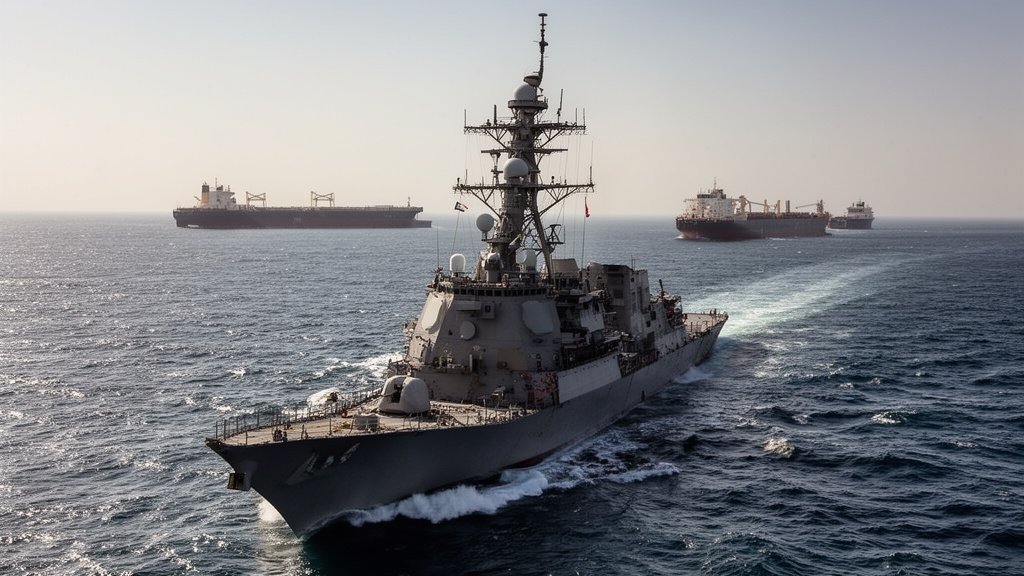
While diplomatic talks remain stalled, the military landscape is becoming increasingly crowded. With three U.S. aircraft carrier groups—the USS Abraham Lincoln, the USS Gerald R. Ford, and the USS George H.W. Bush—deployed in the region, the U.S. is signaling an overwhelming readiness to enforce the status quo. These carrier groups provide not just a deterrent against Iranian aggression, but the strike capacity required should the administration decide that the nuclear threat has reached an intolerable threshold.
Conversely, Iran’s asymmetric capabilities—ranging from drone swarms to the threat of mining the Strait—remain a potent deterrent that forces the U.S. to tread carefully. The conflict has become a grinding game of attrition, where the U.S. relies on the efficacy of its naval blockade and intelligence-gathering, while Iran relies on the strategic value of the Strait and the resilience of its proxy networks, particularly in Lebanon.
FAQ: People Also Ask
Why is the Strait of Hormuz so critical to the global economy?
The Strait of Hormuz is the world’s most important oil chokepoint. Located between Oman and Iran, it connects the Persian Gulf with the Gulf of Oman and the Arabian Sea. Roughly one-fifth of the world’s total oil consumption transits through this narrow passage, making any closure or threat of closure a massive risk to global energy security and economic stability.
Why did the US reject the Iranian proposal?
The Trump administration rejected the proposal because it attempted to separate the maritime issue from the nuclear issue. The U.S. views the nuclear program as the “core” threat. Administration officials fear that if they lift the blockade to reopen the Strait, they lose the economic leverage needed to force Iran to halt its nuclear enrichment, effectively allowing Iran to stabilize its economy without making the fundamental concessions the U.S. demands.
What is Pakistan’s role in these negotiations?
Pakistan has been acting as a primary mediator, facilitating communications between Washington and Tehran. Because the two nations have no direct diplomatic relations, Pakistan acts as a conduit for proposals and counter-proposals. However, its effectiveness is limited by the reality that the two primary actors are currently far apart on the fundamental sequencing of peace talks.
What are the risks of the current stalemate?
The primary risks include a sustained increase in global oil prices and the potential for the conflict to escalate beyond the blockade. If the economic pressure on Iran becomes too great, or if the U.S. perceives that Iran is using the current lull to achieve a “breakout” capability in its nuclear program, the likelihood of direct military engagement—including strikes on Iranian infrastructure—increases significantly.