World oil prices surged over 5% on Wednesday, July 8, 2026, following U.S. President Donald Trump’s declaration that the ceasefire with Iran was over, after fresh strikes in the West Asia region. Brent crude rose 5.3% to $78.09 a barrel, and West Texas Intermediate advanced 5.4% to $74.23 a barrel. These developments occurred after Iran’s latest attacks on commercial vessels in the Strait of Hormuz. U.S. Defense Secretary Pete Hegseth was reportedly planning a visit to Israel. Iranian President Pezeshkian departed Iraq for Iran after U.S. strikes. Iran’s foreign ministry stated that U.S. attacks violated a treaty and warned of retaliation, while NATO Secretary General Mark Rutte defended the U.S. strikes as necessary. The EU’s top diplomat, Kaja Kallas, noted that exchanges of fire between the U.S. and Iran complicate peace talks.
Key Highlights:
- U.S. President Donald Trump officially declared the ceasefire with Iran terminated.
- Global oil prices jumped more than 5% on July 8, 2026, reacting to the escalating tensions.
- Iran launched new attacks on commercial vessels in the Strait of Hormuz.
- U.S. Defense Secretary Pete Hegseth is reportedly en route to Israel.
- International diplomats expressed concerns about the impact on peace talks.
Geopolitical Tensions Escalate as Ceasefire Collapses
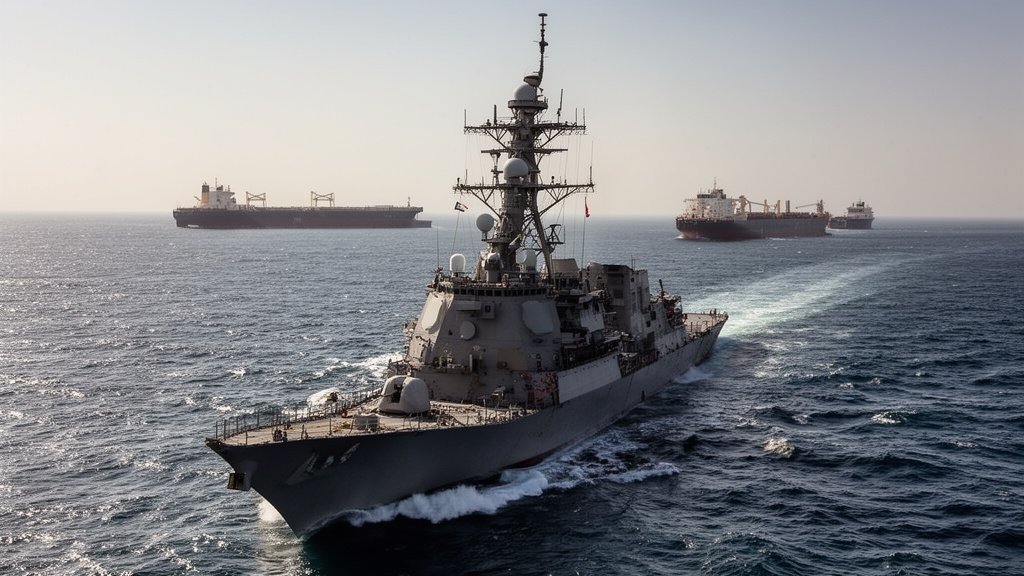
The fragile peace between the United States and Iran shattered on Wednesday, July 8, 2026, when President Donald Trump announced the definitive end of the existing ceasefire. This dramatic pronouncement came in the wake of Iran’s latest aggressive actions, including direct attacks on commercial shipping lanes within the critical Strait of Hormuz. The immediate aftermath saw global energy markets react with significant volatility. Brent crude oil futures experienced a sharp ascent of 5.3%, reaching $78.09 per barrel, while West Texas Intermediate (WTI) saw a comparable increase of 5.4%, trading at $74.23 per barrel. This price hike underscores the market’s sensitivity to instability in one of the world’s most vital oil transit points.
International Reactions and Diplomatic Fallout
The breakdown of the ceasefire has triggered a flurry of diplomatic activity and sharp-tongued responses from involved parties. Iran’s Ministry of Foreign Affairs issued a stern statement, asserting that the recent U.S. strikes constituted a violation of international treaties and explicitly warned of impending retaliation. This assertion positions Iran as a reactive party, though its prior actions against commercial vessels are cited as the direct cause for the U.S. response. Meanwhile, NATO Secretary General Mark Rutte offered a nuanced defense of the U.S. strikes, characterizing them as a necessary measure. Adding to the complexity, Kaja Kallas, the European Union’s top diplomat, voiced concerns that the ongoing exchanges of fire between the U.S. and Iran are significantly complicating any prospects for renewed peace negotiations. The situation remains highly fluid, with potential for further escalation.
Strategic Movements and Regional Implications
Amidst the escalating rhetoric and military actions, strategic movements are also underway. Reports indicate that U.S. Defense Secretary Pete Hegseth was preparing for an imminent visit to Israel, a key U.S. ally in the region. This potential visit signals a heightened focus on regional security architecture and potentially coordinated responses. Concurrently, Iranian President Pezeshkian was reported to have departed Iraq for Iran, a move that could signify a shift in focus back to domestic and immediate regional concerns following the U.S. strikes. The Strait of Hormuz, a narrow waterway through which approximately 20% of global oil consumption passes, has once again become the focal point of international concern. Iran’s control over this strategic chokepoint gives it significant leverage, and any disruption here has immediate and far-reaching economic consequences, as evidenced by the sharp rise in oil prices.
Historical Context: A Pattern of Escalation
This current flare-up is not an isolated incident but rather the latest chapter in a long and often contentious history between the United States and Iran. Decades of strained relations, punctuated by proxy conflicts, sanctions, and moments of direct confrontation, have created a deeply entrenched mistrust. The current administration’s “maximum pressure” campaign and Iran’s responses, including actions against shipping and its nuclear program, have contributed to a cycle of escalation. Previous attempts at diplomatic engagement have often been derailed by such incidents, making the current situation particularly challenging for international mediators seeking to de-escalate tensions and prevent a wider regional conflict. The economic repercussions of such conflicts, especially on global energy markets, are a constant reminder of the stakes involved.
Economic Ramifications and Future Outlook
The immediate economic consequence of the collapsed ceasefire and renewed fighting is the surge in oil prices. This increase impacts consumers globally through higher fuel costs and affects businesses reliant on energy. For the U.S., which has sought to achieve energy independence, the global market’s reaction still poses a significant factor in economic stability. The future outlook remains uncertain and heavily dependent on the de-escalation efforts, or lack thereof, by both Washington and Tehran. Further military actions or aggressive posturing could lead to sustained high oil prices and potential supply disruptions. Conversely, a renewed diplomatic push, however challenging, could stabilize markets. Analysts are closely watching for any signs of restraint or further provocation from either side, with the global economy poised to feel the effects of any miscalculation.
FAQ: People Also Ask
Q1: Why did President Trump declare the ceasefire with Iran over?
President Trump declared the ceasefire over following Iran’s latest attacks on commercial vessels in the Strait of Hormuz, which he deemed a violation of the existing agreement.
Q2: How much did oil prices increase?
Oil prices increased by over 5% on July 8, 2026. Brent crude rose 5.3% to $78.09 a barrel, and West Texas Intermediate advanced 5.4% to $74.23 a barrel.
Q3: What is the significance of the Strait of Hormuz?
The Strait of Hormuz is a vital chokepoint for global oil transit, with approximately 20% of the world’s oil passing through it annually. Any disruption there has significant economic implications.
Q4: What was Iran’s response to the U.S. strikes?
Iran’s foreign ministry stated that the U.S. attacks violated a treaty and warned of retaliation.
Q5: What is the international community’s reaction?
NATO Secretary General Mark Rutte defended the U.S. strikes as necessary, while the EU’s top diplomat, Kaja Kallas, expressed concern that the exchanges of fire complicate peace talks.