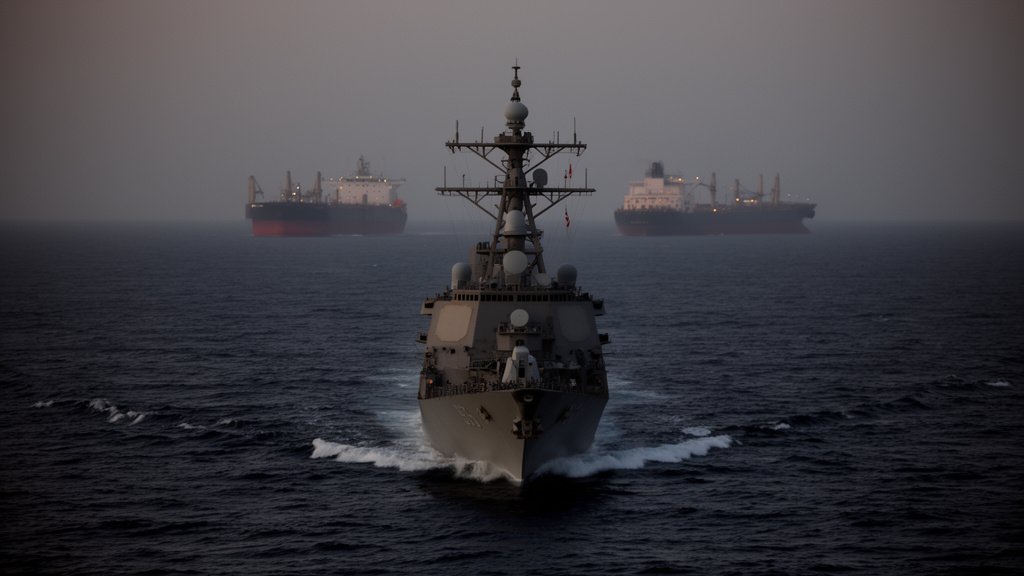
The United States has entered an 11th consecutive night of precision military operations targeting critical Iranian logistics hubs and drone manufacturing infrastructure. This sustained campaign, aimed at degrading the tactical capabilities of Iranian-linked networks, has exacerbated an already fragile geopolitical landscape. As diplomatic channels remain effectively frozen, the prolonged military engagement is exerting significant upward pressure on global energy markets, with Brent crude oil prices breaching the $92 per barrel threshold—a sharp rise driven by investor anxiety over regional supply chain stability.
Key Highlights
- 11 Nights of Operations: The US military has maintained a continuous, high-tempo strike campaign for 11 nights, specifically targeting drone assembly facilities and key military logistics nodes.
- Energy Market Volatility: Global oil benchmarks have surged past the $92-per-barrel mark, reflecting the market’s reaction to the sustained instability in the region.
- Diplomatic Gridlock: Efforts to de-escalate the situation through international diplomatic channels remain stalled, with no breakthrough expected in the immediate future.
- Strategic Focus: The mission is explicitly designed to dismantle the logistical supply chains that support drone proliferation across the Middle East.
The Strategic Fallout: Deepening Tensions and Economic Consequences
The current escalation marks a significant departure from previous, more sporadic US interventions in the region. By extending the campaign into an 11th night, US forces under the operational oversight of CENTCOM have signaled a shift toward a systematic degradation strategy rather than mere deterrence. The primary objective has shifted from reactionary defense to the proactive neutralization of drone infrastructure—a critical component of regional proxy warfare. This sustained activity has necessitated a high-readiness posture for US naval assets in the region, particularly near the vital Strait of Hormuz, through which a significant portion of the world’s oil transits.
The Precision Targeting of Drone Infrastructure
Military analysts point out that the focus on drone manufacturing and logistics is strategic. Drones have become the weapon of choice for asymmetric warfare in the Middle East due to their cost-effectiveness and ability to bypass traditional radar defenses. By striking assembly points and staging areas, the US is attempting to disrupt the capability of regional actors to conduct long-range strikes. However, this strategy carries inherent risks, as each night of operations brings the potential for accidental escalation or the triggering of retaliatory measures that could further destabilize the region.
Economic Shockwaves: Why $92 Oil Matters
The breach of the $92 per barrel price point is a direct response to the uncertainty permeating the energy sector. Oil markets thrive on predictability; when military action targets logistics near the Persian Gulf, risk premiums are immediately baked into futures contracts. The combination of sustained airstrikes and the threat of regional retaliation has created a ‘fear premium’ that is driving costs higher. Should the campaign continue beyond this 11-day window, analysts from major investment firms warn that we could see a test of the $100 per barrel ceiling, a level that would significantly impact global inflation rates and economic recovery efforts.
The Diplomatic Deep Freeze
Perhaps most concerning to international observers is the complete lack of diplomatic progress. The usual ‘back-channel’ negotiations that often prevent military escalation appear to have stalled. The Islamic Revolutionary Guard Corps (IRGC) has issued standard condemnations, but the lack of substantive de-escalation talks suggests a hardening of positions on both sides. Without a diplomatic off-ramp, the risk of a miscalculation during these nightly operations grows, threatening to pull additional regional actors into the conflict.
Secondary Angles: Examining the Broader Impact
Historical Precedent and Regional Escalation:
Historically, prolonged US-led aerial campaigns in the Middle East have often led to a ‘sunk cost’ dilemma. Examining the Iran-Iraq tanker war of the 1980s provides a sobering context for the current scenario. In that era, targeted military interventions often required massive naval escorts for commercial vessels, a dynamic that current market volatility suggests could return. The long-term presence of naval assets now acts as both a deterrent and a flashpoint for potential confrontation.
Supply Chain Vulnerabilities:
The focus on drone logistics is not just about military hardware; it is about the global supply chain for dual-use technologies. The current conflict highlights how reliant the modern defense industry is on specific, globally sourced electronic components. If this campaign causes a long-term disruption in the regional logistics network, it could force a fundamental rethink of how such high-tech conflicts are sustained over time, potentially leading to increased domestic production requirements for the US military.
Future Predictions: The ‘New Normal’ in the Strait:
Looking ahead, the most likely outcome of this 11-day surge is not a cessation of conflict, but a transition into a ‘grey-zone’ war. The US is attempting to set a new threshold for what constitutes acceptable behavior regarding drone proliferation. If successful, this could reduce drone attacks in the medium term. However, the cost of this success is a permanently elevated risk premium on energy prices. Investors and policy makers should prepare for a period where regional volatility is the baseline, rather than an exception to the rule.
FAQ: People Also Ask
Q: Why is the US targeting drone infrastructure specifically?
A: Drones are increasingly the primary tool for asymmetric proxy attacks. By targeting assembly sites and logistical hubs, the US aims to reduce the ability of regional forces to conduct precise, long-range strikes against coalition interests.
Q: How does this military campaign affect global oil prices?
A: The conflict creates regional uncertainty. Because the operations are occurring in a theater close to key maritime oil transit routes like the Strait of Hormuz, markets react by increasing the risk premium on oil, driving prices above $92 per barrel.
Q: What is the likelihood of diplomatic de-escalation?
A: Currently, diplomatic channels are described as stalled or frozen. The lack of active, high-level negotiation suggests that both sides are currently prioritizing military positioning over compromise.
Q: Are these strikes part of a larger, long-term conflict?
A: While the current campaign is focused on a 11-day operational surge, analysts view this as part of a broader, long-term effort to deter regional destabilization and disrupt the proliferation of drone technology to non-state actors.