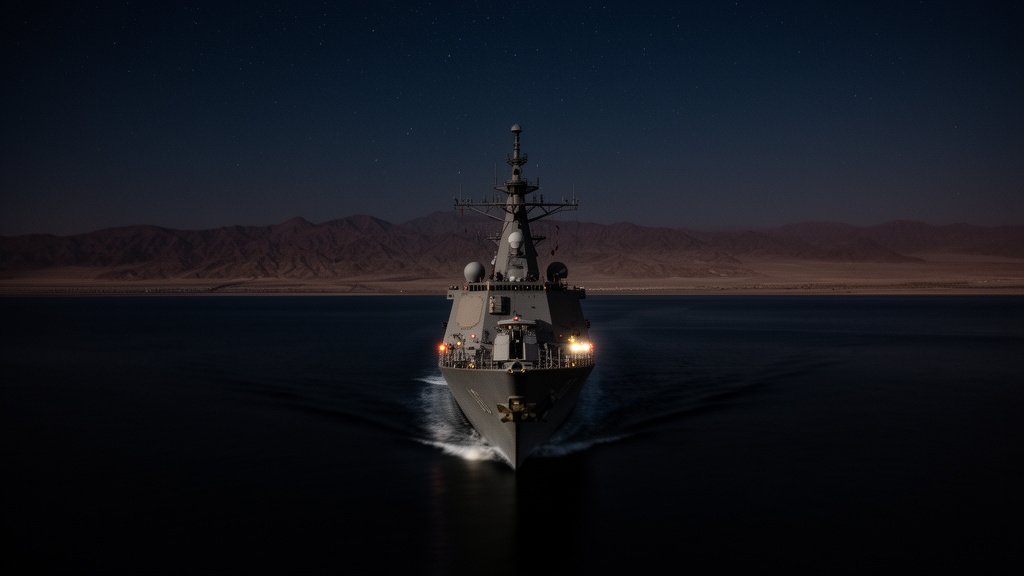
US forces have sustained a campaign of military strikes against Iranian positions for the 11th consecutive night, marking a critical escalation in the ongoing geopolitical struggle for control over the Strait of Hormuz. The consistent tempo of these operations indicates a shift from reactive maneuvering to a sustained effort to neutralize specific threats. As the exchange of fire enters its second week, the international community watches with growing concern, fearing that the volatility in one of the world’s most vital maritime chokepoints could spiral into a broader regional conflict with devastating economic consequences.
Key Highlights
- 11th consecutive night of US military operations targeting Iranian defensive and offensive assets.
- The Strait of Hormuz remains the primary flashpoint, with shipping safety and freedom of navigation at risk.
- No immediate signs of de-escalation as both sides remain locked in a cycle of action and reaction.
- Global energy markets remain hyper-sensitive to the instability, with oil premiums fluctuating on every report of new engagement.
The Strategic Siege: Understanding the 11-Night Campaign
The decision to maintain strike operations for 11 straight nights represents a significant departure from typical tactical pauses. In modern military doctrine, a sustained multi-night campaign is rarely about singular targets; it is about systematic degradation. By striking consistently, the US is attempting to disrupt the logistical and command-and-control capabilities of Iranian forces, specifically those operating in and around the Strait of Hormuz. This is not merely a retaliatory measure but a strategic attempt to re-establish deterrence in a region that has become increasingly contested.
From a tactical perspective, the sustained nature of the strikes implies that US intelligence has identified a dense network of persistent threats—likely advanced radar systems, drone launch sites, and fast-attack craft depots—that cannot be neutralized in a single night. The 11-night duration suggests that the US is systematically “peeling the onion” of Iran’s coastal defense strategy, aiming to force Iranian command to retreat from the maritime threshold or risk losing critical infrastructure permanently.
The Geopolitical Gravity of the Strait of Hormuz
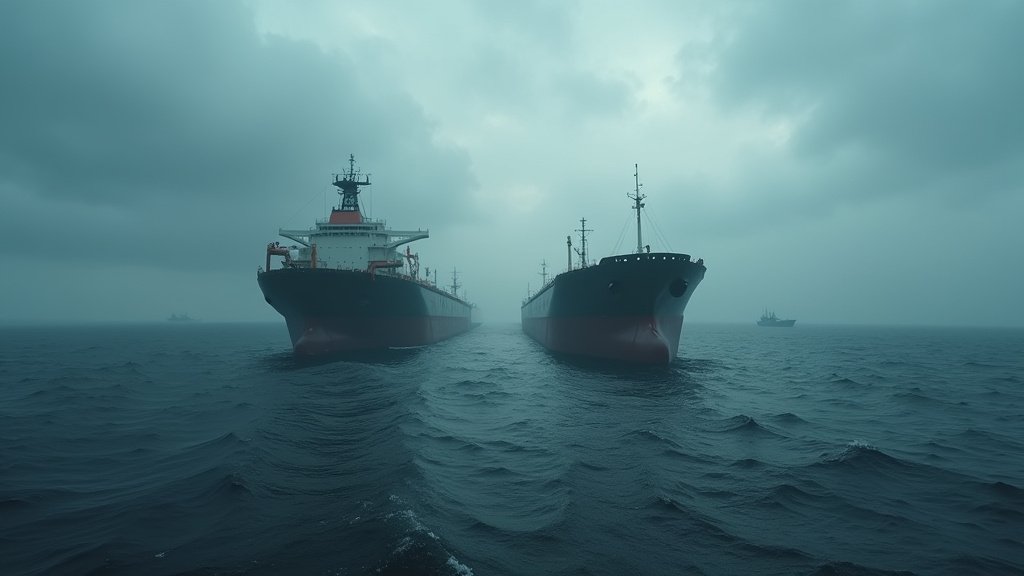
To understand the intensity of this conflict, one must recognize the absolute necessity of the Strait of Hormuz to the global economy. Approximately 20% of the world’s total oil consumption passes through this narrow passage, which separates Iran from the Arabian Peninsula. For decades, the Strait has been viewed as a global “chokepoint”; even a temporary disruption to shipping traffic here would trigger an immediate and drastic shock to international oil prices.
When the US military focuses its attention here, it is not just fighting a proxy conflict; it is defending the arteries of global energy commerce. Iran, conversely, views its ability to influence traffic in the Strait as its ultimate trump card against Western sanctions and diplomatic isolation. This creates an existential “red line” for both parties: for the US, the Strait must remain open and free; for Iran, the capacity to threaten the Strait remains its most effective form of asymmetric leverage.
Economic Volatility and Global Energy Markets
Financial markets react instantly to the sounds of gunfire, and the 11-night campaign has kept the energy sector in a state of high anxiety. Analysts tracking the price of Brent crude have noted that every night of strikes brings a new wave of hedging. While a full-scale blockage of the Strait remains an extreme scenario, the “risk premium” added to oil barrels is climbing. Insurance premiums for tankers transiting the Persian Gulf are reportedly surging, a classic indicator of high-risk war zones.
Should the conflict continue, the economic impact will likely expand beyond oil. International shipping companies are beginning to reroute vessels, adding days to transit times and significantly increasing operational costs. If these reroutes become permanent or if the security situation forces a wider exclusion zone, the inflationary pressure on global consumer goods will be unavoidable. The world is watching not just the military scoreboard, but the daily fluctuations in the commodities market that are being driven by these late-night engagements.
The Diplomatic Deadlock
The most alarming aspect of this 11-day period is the perceived lack of an “off-ramp.” Traditional diplomatic channels, which have historically been used to de-escalate US-Iran tensions, appear to be frozen. Both nations are currently prioritizing military posturing over negotiation. The US, backed by its regional allies, is signaling that it will not accept the harassment of international vessels as the new status quo. Iran, meanwhile, appears emboldened, using the strikes as a narrative tool to reinforce its defiance against Western influence.
There is a growing fear among international observers that the 11th night is just a milestone in a much longer, more dangerous trajectory. Without a credible diplomatic mediator or a significant shift in internal political calculations on either side, the conflict risks “mission creep.” Each night of strikes adds a new variable to the equation, and every new target hit invites a potential counter-strike, increasing the probability of a miscalculation that could lead to open, high-intensity warfare.
FAQ: People Also Ask
1. Why is the US targeting these specific locations?
US operations are generally focused on degrading Iranian anti-ship missile capabilities, drone launching sites, and radar infrastructure that monitor or threaten commercial shipping in the Strait of Hormuz.
2. Does this mean the Strait of Hormuz is closed to shipping?
No. As of now, shipping continues, but it is doing so under high-risk conditions. Many tankers and cargo vessels are taking extra precautions, and the presence of international naval forces has increased to ensure safe passage.
3. How does this conflict affect global oil prices?
When the Strait of Hormuz is threatened, oil prices typically rise due to fears of supply disruption. The current 11-day cycle of strikes has created a “war risk premium,” making global energy markets volatile.
4. Is this considered a full-scale war?
Currently, it is categorized as an escalation of regional hostilities or “grey zone” warfare. It has not escalated into a full-scale declared war between the two nations, though the risk of miscalculation remains high.
5. What is the role of the IRGC in these events?
The Islamic Revolutionary Guard Corps (IRGC) controls many of the coastal defense assets in Iran. They are the primary entity responsible for the operations in the Strait, making them the direct focus of US military intelligence and targeting operations.