
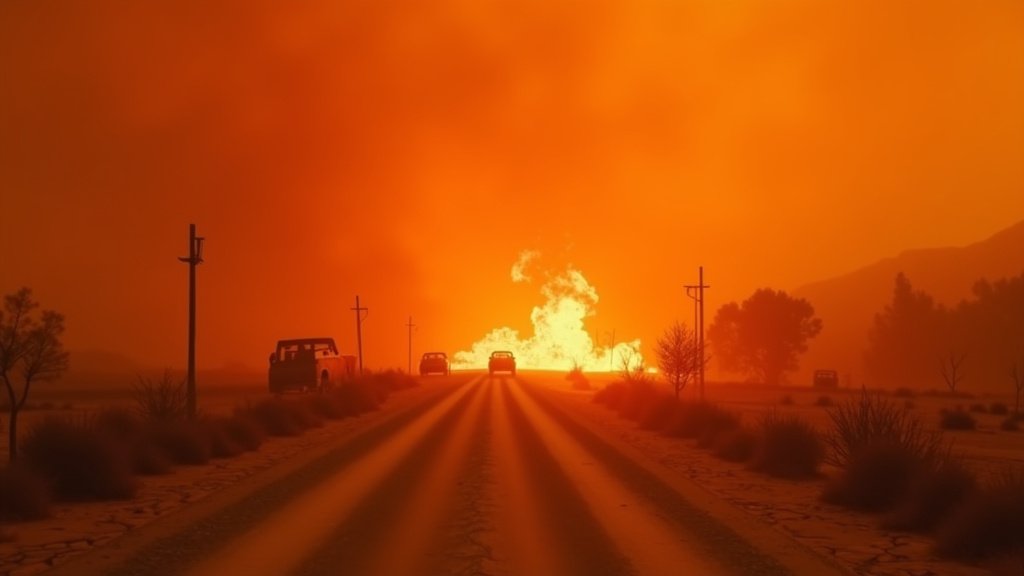
A wildfire in Spain’s rural Andalusia has resulted in a tragic death toll of at least 12 individuals. The blaze, which spread with alarming speed, turned roads into “death traps” as flames engulfed vehicles, trapping and killing victims who were “burned in cars.” The fire particularly impacted villages near Los Gallardos, forcing residents into desperate situations where they had to choose between sheltering indoors amidst thick, choking smoke or attempting to flee through increasingly impassable and dangerous routes. The harrowing accounts describe the situation as “quite terrifying,” highlighting the sheer speed and destructive power of the inferno. This incident underscores the growing threat of wildfires in the region, exacerbated by current climate conditions.
Key Highlights:
- At least 12 fatalities confirmed due to the wildfire.
- Victims were reportedly burned inside vehicles on roads rendered impassable by flames.
- The fire rapidly spread through rural villages in Andalusia, near Los Gallardos.
- Residents faced a critical choice between smoke-filled interiors or hazardous escape attempts.
Spain’s Andalusia Wildfire: A Deadly Inferno Unfolds
The wildfire that erupted in southern Spain’s Andalusia region has resulted in a grim tally of at least 12 confirmed deaths, according to initial reports. The ferocity of the blaze, amplified by dry conditions and potentially strong winds, created a catastrophic scenario for those caught in its path. Eyewitness accounts and preliminary investigations suggest that victims were unable to escape their vehicles as flames consumed the roadways, transforming once-familiar routes into scenes of unimaginable horror. The proximity of the fire to populated areas, specifically rural villages surrounding Los Gallardos, meant that many residents were directly in the line of danger.
The Cruel Choice: Escape or Endure
As the fire advanced with terrifying speed, residents of the affected villages were faced with an agonizing dilemma. With roads becoming impassable and filled with flames, escape was often not a viable option. Many were forced to remain in their homes, enduring the increasingly toxic and life-threatening smoke that filled the air. The decision to stay or to attempt a perilous flight through a landscape rapidly consumed by fire presented an impossible choice, underscoring the desperate nature of the situation. The “quite terrifying” nature of the event has been widely reported, with survivors recounting scenes of chaos and destruction.
Geographical Context and Environmental Factors
The wildfire specifically affected the region of Andalusia, a southern autonomous community in Spain known for its arid climate and susceptibility to wildfires during hot summer months. While the exact ignition point and cause are still under investigation, the rapid spread suggests a combination of factors, likely including high temperatures, low humidity, and possibly dry vegetation acting as fuel. The area near Los Gallardos, where the fatalities occurred, is characterized by rural landscapes, making evacuation efforts more complex and potentially slower than in more urbanized areas. The impact of climate change on increasing the frequency and intensity of such extreme weather events is a growing concern for the region and globally.
Emergency Response and Investigation
Emergency services were deployed to combat the blaze and assist affected residents. However, the speed and intensity of the wildfire presented significant challenges to firefighting efforts. The focus quickly shifted to search and rescue operations in the aftermath of the most intense fire activity. Authorities are expected to launch a full investigation into the cause of the fire and the circumstances surrounding the tragic deaths. The incident is likely to prompt reviews of wildfire preparedness and evacuation protocols in similar rural areas across Spain.
Secondary Angles and Wider Implications
This devastating event highlights several critical secondary angles. Firstly, it brings into sharp focus the vulnerability of rural communities to natural disasters, particularly those exacerbated by climate change. The lack of robust infrastructure and potentially limited emergency resources in sparsely populated areas can amplify the impact of such events. Secondly, the economic repercussions for the affected region, including potential loss of property, agricultural land, and tourism, could be significant. Finally, the incident serves as a stark reminder of the ongoing need for global cooperation and investment in climate change mitigation and adaptation strategies to prevent future catastrophes of this magnitude.
FAQ: People Also Ask
What is the current death toll from the Spain wildfire?
As of the latest reports, the wildfire in Spain has resulted in at least 12 fatalities.
Where did the Spain wildfire occur?
The wildfire primarily affected rural villages in Andalusia, Spain, near the town of Los Gallardos.
What made the roads dangerous during the wildfire?
Roads became impassable and were described as “death traps” because they were engulfed by flames, trapping victims in their vehicles.
What difficult choices did residents face?
Residents had to choose between sheltering in their homes amidst dangerous smoke or attempting to flee through routes that had become perilous due to the fire.
What is the broader context of such wildfires?
These events highlight concerns about the increasing frequency and intensity of wildfires, potentially linked to climate change, and the vulnerability of rural communities.