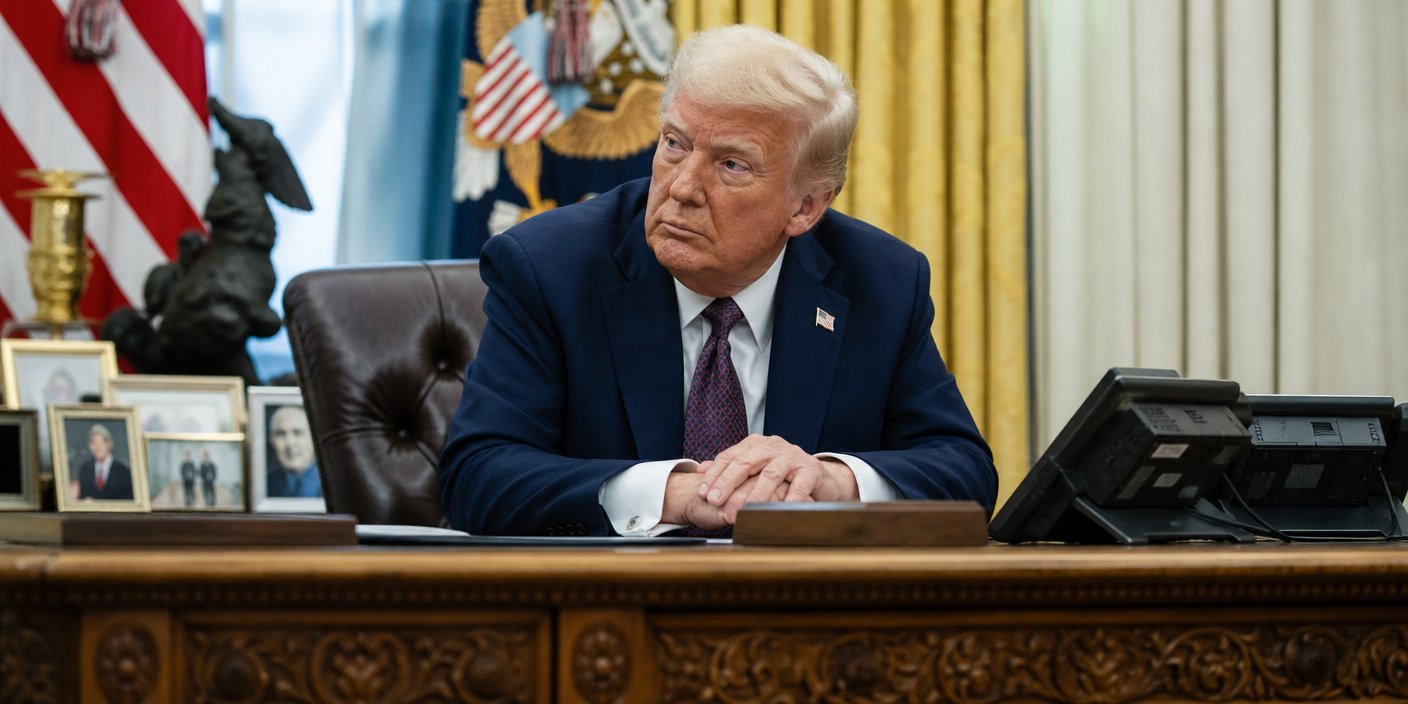
In an abrupt departure from expected military posturing, President Donald Trump has officially confirmed the cancellation of a retaliatory strike against Iran. This decision, described by sources as a last-minute reversal, comes as the United States navigates a volatile landscape in the Middle East. Simultaneously, the US Department of State has issued broad travel advisories for American citizens stationed throughout the region, citing critical security concerns and a ‘heightened threat environment.’
Key Highlights
- Emergency Departure Protocols: The US Department of State has escalated security protocols, advising all non-essential personnel and private US citizens in specific Middle Eastern jurisdictions to consider immediate departure due to persistent regional instability.
- Last-Minute Strike Cancellation: President Trump confirmed he aborted a planned military operation against Iranian assets, citing a strategic preference for diplomatic resolution over the risks associated with kinetic conflict.
- Ceasefire Momentum: The administration attributes the pivot to tangible progress in ceasefire negotiations, noting that diplomatic channels have yielded a temporary opening to de-escalate hostilities.
- Market and Regional Volatility: Global markets are bracing for the fallout of this ‘on-again, off-again’ military strategy, with energy sectors closely monitoring the stability of transit routes in the Persian Gulf.
The Strategic Pivot: Diplomacy Over Kinetic Force
The decision to cancel a direct retaliatory strike against Iran represents a high-stakes gamble in presidential foreign policy. According to internal briefings, the military action was in its final planning stages—targeting specific radar and missile battery sites—when the administration identified a window for renewed diplomatic dialogue. President Trump, addressing the situation, underscored that the potential cost of lives was deemed disproportionate to the tactical gains, particularly when ceasefire progress—though fragile—was being reported by regional envoys.
This shift suggests that the ‘maximum pressure’ campaign, characterized by sanctions and naval maneuvers, is currently being balanced against the fear of a broader regional conflict. Analysts observe that the administration is attempting to thread a needle: maintaining the posture of strength while providing the necessary ‘off-ramp’ for Iranian leadership to de-escalate without losing face.
Assessing the Embassy Departure Warnings
While the White House focuses on high-level diplomacy, the operational reality on the ground remains tense. The US State Department’s latest travel advisories for the Middle East are not mere procedural updates. They represent a significant risk assessment, accounting for the possibility of Iranian-backed proxies or regional instability threatening US personnel. Embassies have effectively entered a ‘heightened threat’ phase, often characterized by strict movement restrictions for staff, the suspension of non-essential visa services, and the preparation of contingency plans for emergency evacuations.
These warnings serve as a blunt instrument of public safety, effectively signaling to private American citizens that the risk of collateral damage or targeted harassment has reached a critical threshold. The instruction to leave is a stark indicator that the diplomatic window, while open, is not yet a guarantee of security.
The Fragility of Ceasefire Progress
The ‘positive developments’ cited by the administration refer to back-channel communications, likely facilitated by third-party intermediaries—often Oman, Switzerland, or members of the Gulf Cooperation Council (GCC). These negotiations generally revolve around a ‘freeze-for-freeze’ arrangement: a temporary cessation of Iranian regional provocations in exchange for the suspension of specific US retaliatory military posturing and a potential easing of economic sanctions.
However, the history of such negotiations suggests these breakthroughs are often ephemeral. The primary challenge is the disconnect between the moderate diplomatic wing in Tehran and the hardline Islamic Revolutionary Guard Corps (IRGC), which often dictates regional military operations.
Secondary Angles: Understanding the Wider Context
1. The Energy Market Ripple Effect
Global energy markets are perhaps the most sensitive barometer of this crisis. The Persian Gulf remains a chokepoint for a massive percentage of the world’s daily oil production. Every rumor of a US strike cancellation is followed by a predictable fluctuation in oil prices. As long as the threat of conflict persists, the ‘war premium’ on crude oil remains embedded in global futures, creating an inflationary pressure on international economies that depend on stable Gulf transit. Investors are currently treating the news of the canceled strike as a temporary reprieve rather than a permanent resolution.
2. The Precedent of US-Iran Military Engagement
This incident highlights a growing shift in the US-Iran military dynamic. Both sides are playing a game of ‘brinksmanship,’ where each party attempts to escalate just enough to gain leverage without crossing the threshold into full-scale war. The cancellation of this strike signals that the US administration is acutely aware of the ‘sunk cost’ of war. The precedent set here suggests that the White House may be leaning toward a doctrine of ‘deterrence through posture’ rather than ‘deterrence through engagement,’ creating a dangerous game of chicken where miscalculation remains a constant threat.
3. The Domestic Political Narrative
The cancelation has provided fodder for the domestic political debate. Proponents of the President’s ‘America First’ policy argue this demonstrates a leader willing to defy the military establishment to protect lives and avoid ‘endless wars.’ Conversely, critics argue the oscillation creates a perception of uncertainty and lack of resolve, potentially emboldening adversaries who view the retreat as a sign of weakness. This event will likely serve as a recurring touchstone in the discourse surrounding the current administration’s capability to handle acute foreign policy crises.
FAQ: People Also Ask
Q: What does a ‘Security Level 4’ travel advisory mean for American citizens currently in the region?
A: Security Level 4 is the highest advisory tier, indicating ‘Do Not Travel’ due to high levels of terrorism, civil unrest, or armed conflict. For those already in the country, it implies that the government’s ability to provide routine or emergency consular services is severely compromised and that citizens should organize their own departure plans immediately.
Q: How reliable is the current ‘ceasefire progress’ mentioned by the administration?
A: While the White House describes these as ‘positive developments,’ experts remain cautious. Such progress in the Middle East is historically volatile and can be reversed by a single incident—such as a rogue action by a proxy group or a breakdown in back-channel trust—making the situation highly unpredictable in the short term.
Q: Will the US impose more sanctions now that the strike has been canceled?
A: Historically, the US uses a dual-track strategy. If kinetic strikes are avoided, the administration often compensates by intensifying ‘soft power’ pressure through expanded sanctions. Expect the Treasury Department to potentially target new financial entities if the diplomatic talks stall or fail to produce a long-term solution.