
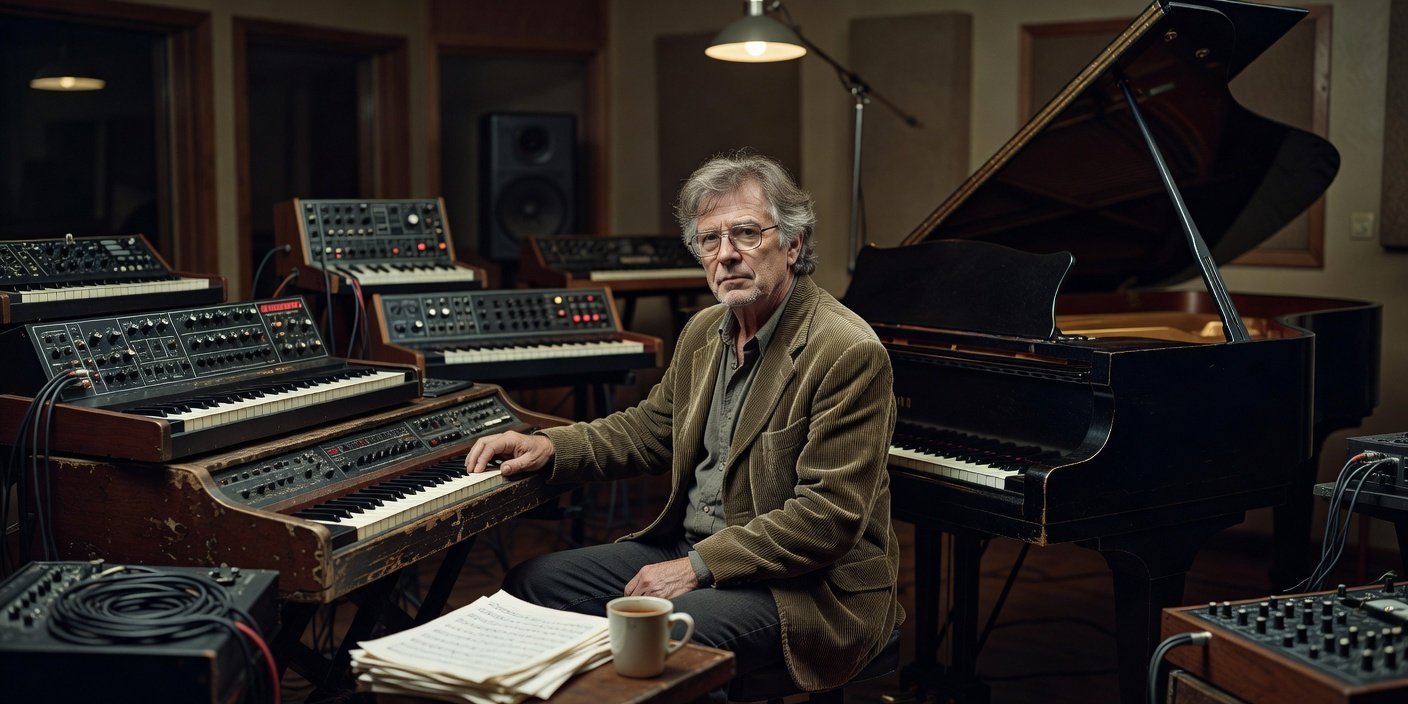
Legendary singer, pianist, and composer Bruce Hornsby has returned with a bold new artistic statement, Indigo Park, a 10-song concept album that masterfully navigates the intersection of melody and complex, avant-garde arrangements. Released this week, the album serves as a reflective exploration of Hornsby’s own life, pulling from his childhood memories and a four-decade musical journey that has traversed rock, jazz, bluegrass, and contemporary classical landscapes.
Embracing Musical Complexity
Known for his ability to seamlessly blend pop sensibility with challenging harmonic structures, Hornsby makes no apologies for the eccentricities within Indigo Park. The Grammy Award-winner openly admits that while some long-time listeners may find the album’s more experimental moments jarring, that tension is intentional. By utilizing dissonance, irregular time signatures, and sudden shifts in tone, Hornsby forces the listener to remain engaged. He views the project as a “window into my goofy world,” showcasing a restless musical creativity that continues to evolve, refusing to rest on the laurels of his early commercial successes.
The Art of Memory and Collaboration
At its core, Indigo Park acts as a multi-dimensional inquiry into how we remember the past. Hornsby notes that the album oscillated between extremes—light and dark, fantasy and reality—as he mulls over his roots. The production, helmed by Hornsby alongside Tony Berg and Will Maclellan, provides a crisp backdrop for an impressive array of guest contributors. The album features high-profile collaborations with Vampire Weekend’s Ezra Koenig, Bonnie Raitt, and the late Grateful Dead guitarist Bob Weir, marking one of Weir’s final recording sessions. These features do not merely act as ornamentation; they integrate into the album’s thematic fabric, enhancing the emotional depth of tracks that contemplate eternity and the passage of time.
Moving Beyond Burnout
Following a prolific five-year stretch of studio releases, including Deep Sea Vents (2024), Hornsby initially sought to step back from the writing process to manage creative fatigue. However, his impulse to create prevailed. The album’s creation highlights his discipline, as he continues to play for hours daily, constantly stretching his capabilities as a composer. By incorporating literary references and math-inspired concepts like the Fibonacci sequence, Hornsby transforms the album into a intellectual tapestry, proving that even after 40 years in the industry, he is more focused on pushing artistic boundaries than chasing fleeting trends. With an extensive US tour scheduled to support the record, Hornsby remains a vital, forward-thinking force in modern music, continuing to challenge his audience while staying true to his unique, introspective voice.
14 thoughts on “Bruce Hornsby Unveils Reflective Concept Album ‘Indigo Park’”
Comments are closed.