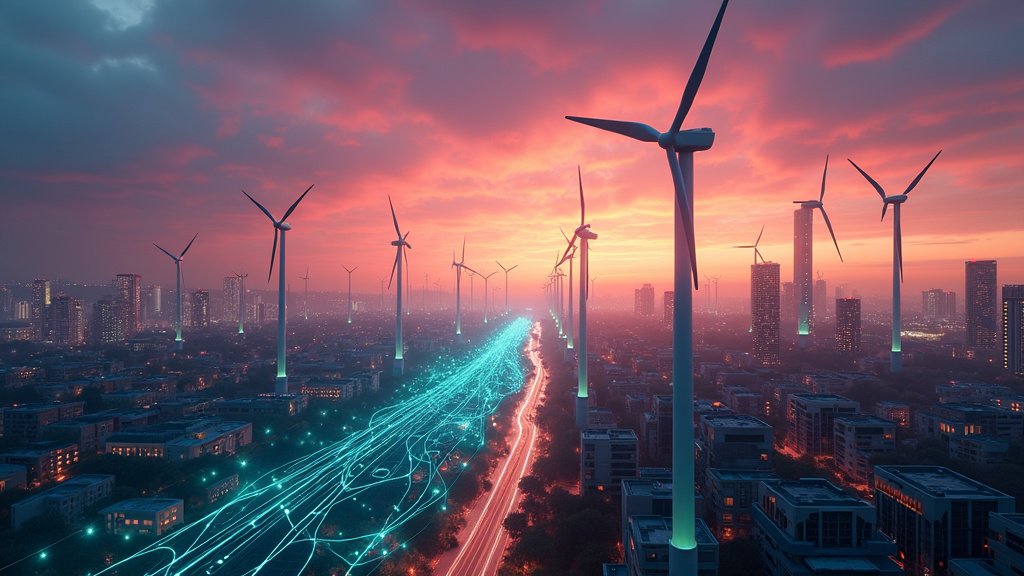
The European Union has reached a major milestone in its commitment to EU Green Energy. For the first time, wind and solar power generated more electricity than fossil fuels in 2025, marking a significant shift in energy production and a crucial step towards cleaner energy sources. This achievement highlights the accelerating clean energy transition across the bloc and underscores the growing importance of EU Green Energy in the global energy landscape.
Historic EU Green Energy Crossover
For the first time ever, renewables led the EU’s electricity generation, a testament to the progress in EU Green Energy adoption. Wind and solar combined produced 30.1% of the bloc’s power in 2025. Fossil fuels, including coal and gas, supplied 29.0% during the same period. This data comes from a new report by the Ember think tank. It analyzes full-year electricity generation for all 27 EU countries. This event is a clear sign of progress, showing a rapid transition away from carbon-emitting sources and a significant step towards achieving its EU Green Energy targets.
The Rise of Solar Power in EU Green Energy
Several factors contributed to this landmark achievement for EU Green Energy. Solar power, in particular, saw remarkable growth. It surged by over 20% for the fourth year running. Solar generation reached a record 13% of EU electricity in 2025. This share surpassed both coal and hydro power. This trend was widespread. Every EU country saw increased solar generation. Hungary, Spain, Cyprus, Greece, and the Netherlands all had solar account for over 20% of their electricity. Overall, renewables provided nearly half of the EU’s power (48%), solidifying the importance of EU Green Energy.
Global Green Energy Trends and EU Green Energy
This EU milestone reflects a broader global shift, underscoring the worldwide embrace of EU Green Energy. In China and India, coal power generation also decreased in 2025, marking the first simultaneous drop since 1973. Both nations deployed record amounts of renewables. These countries are major drivers of global CO2 emissions, therefore, this trend is extremely important. The news highlights a worldwide move towards cleaner energy, demonstrating that the focus on EU Green Energy aligns with evolving global green trends.
Implications for Energy Security EU
This green energy transition has significant implications for energy security EU. It reduces the EU’s reliance on imported fossil fuels. Energy blackmail from fossil fuel exporters poses risks. The shift enhances the EU’s energy security, a key benefit of prioritizing EU Green Energy. It also strengthens its bargaining power globally. Experts view this as a key development for economic and political stability. Geopolitical uncertainties make this transition even more critical. It offers a path to greater energy autonomy through robust EU Green Energy infrastructure.
Navigating Future Challenges for EU Green Energy
Despite this success in EU Green Energy, challenges remain. Gas generation saw an increase of 8% in 2025, largely due to reduced hydro output. However, gas power is still 18% below its 2019 peak. The EU’s gas import bill rose to €32 billion, putting upward pressure on electricity prices during peak gas-use hours. The report emphasizes the need for grid upgrades and developing electricity storage solutions. These are crucial for handling abundant renewable power and integrating clean energy effectively, ensuring the continued growth of EU Green Energy.
A New Era Dawns for EU Green Energy
In 2025, wind and solar generated more electricity than fossil fuels in 14 EU countries, a significant achievement for EU Green Energy. This development is not just a statistical change. It represents a fundamental transformation and shows the speed of Europe’s green energy race. This news is critical for understanding future energy dynamics. The continuous growth of renewables signals a new energy era and points towards a more sustainable and secure future for the EU, driven by the sustained momentum for EU Green Energy.