Summary Lead
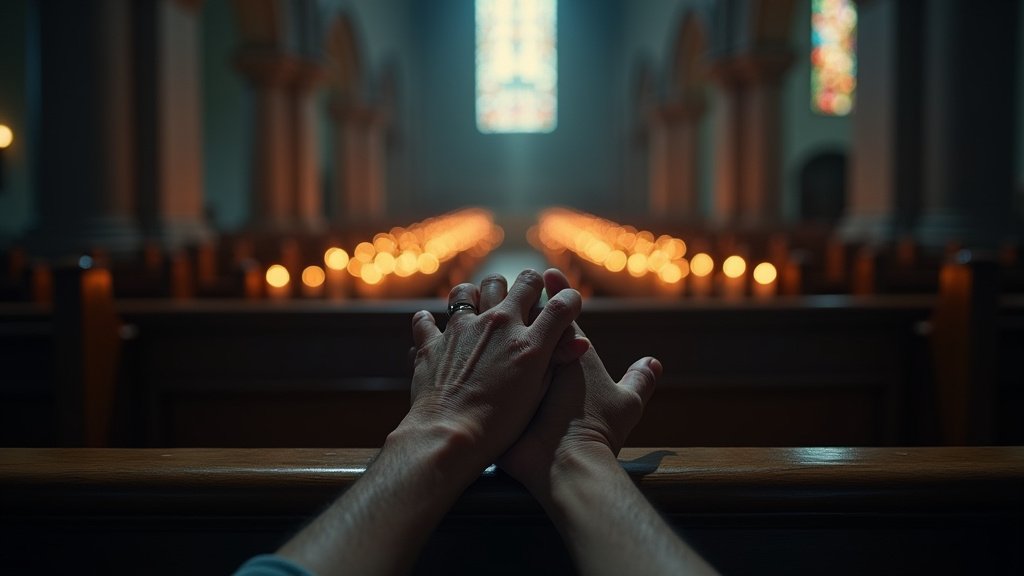
As global tensions reach a critical inflection point following the escalation of the U.S.-Israel conflict with Iran, Catholic communities across the globe are answering a profound call to spiritual action. On April 11, 2026, dioceses, parishes, and individual believers are uniting in a synchronized prayer vigil for peace, responding directly to an urgent initiative launched by Pope Leo XIV. Coinciding with the Pontiff’s own vigil at St. Peter’s Basilica in the Vatican, this grassroots movement seeks to shift the focus from geopolitical maneuvering to the transformative power of prayer, aiming to stem the tide of violence and indifference currently gripping the international landscape.
Key Highlights
- Global Mobilization: Catholic bishops’ conferences in the United States, New Zealand, Italy, Spain, and beyond have officially endorsed the vigil, urging faithful to participate locally, virtually, or through personal prayer.
- The Pope’s Vision: Pope Leo XIV first introduced the initiative during his Easter Sunday Angelus address, where he emphasized that the peace offered by Christ “is not merely the silence of weapons, but the peace that touches and transforms the heart of each one of us.”
- Geopolitical Stakes: The call comes amidst a volatile regional conflict sparked on February 28, with the Church positioning itself as a moral counterweight to the “logic of the strongest” that currently dominates global military and diplomatic rhetoric.
- Diverse Participation: Events range from livestreamed rosary recitations in Pittsburgh and Washington D.C. to parish-wide Holy Hours in New Zealand, reflecting the decentralized yet unified nature of this global Catholic response.
A Spiritual Response to a World at the Brink
The call for a global prayer vigil is not merely a symbolic gesture; it represents a deliberate ecclesiastical intervention in a moment of extreme instability. The conflict between U.S.-Israeli forces and Iran, which escalated rapidly in late February, has resulted in thousands of casualties and threatened to destabilize global markets and international relations. In this climate, the Vatican has emerged as one of the few global institutions prioritizing human dignity and de-escalation over military objectives.
The Theology of Peace in Action
Pope Leo XIV’s emphasis during his Easter address—in which he used the word “peace” 13 times—underscored a theological distinction that sits at the heart of this vigil. The Pope argues that true peace cannot be imposed by force or merely negotiated through backroom diplomatic deals. Instead, he posits that peace must begin within the human heart.
This perspective challenges the prevailing realpolitik of the day. By urging the faithful to participate in vigils on April 11, the Pope is essentially fostering a massive, collective exercise in moral witness. The theology here is clear: by turning toward the “Prince of Peace,” the Church aims to create a spiritual atmosphere that rejects the “globalization of indifference,” a term frequently invoked by the Vatican to describe the world’s desensitization to suffering in war-torn regions.
Diplomatic Pressure and Moral Authority
While the Vatican remains a neutral arbiter, its influence is felt in the moral language it provides for the global community. Cardinal Pietro Parolin, Vatican Secretary of State, recently warned that the logic of the strongest risks becoming the only prevailing language in international relations. He noted that the Pope’s voice risks becoming a “voice crying in the wilderness” unless the faithful concretely support this prophetic stance.
This vigil serves as a concrete manifestation of that support. It is a signal to policymakers that a significant global constituency—spanning across borders and political divides—is actively demanding a shift away from the spiral of rearmament and toward international cooperation. The Catholic Church, with its vast network of parishes, is uniquely positioned to convert this theological demand into a social force, putting pressure on leaders to prioritize dialogue.
Local Echoes of a Global Plea
Across the United States, the response has been swift and organized. Archbishop Paul S. Coakley of Oklahoma City, president of the U.S. Conference of Catholic Bishops, issued a direct plea for Catholics to participate, whether in cathedrals or the “quiet of their hearts.” In Washington, Cardinal Robert W. McElroy is celebrating a Mass for Peace at the Cathedral of St. Matthew the Apostle, effectively making the seat of U.S. political power a center for this spiritual mobilization.
The logistical execution of these vigils highlights the role of modern technology in ancient religious practice. Many parishes are using livestreaming to connect with the Vatican’s event in Rome, allowing for a synchronized experience of prayer that transcends time zones. In New Zealand, parishes are dedicating ten minutes after every Mass to liturgy focused on peace, demonstrating that the scope of this call is truly global, reaching the smallest communities far removed from the immediate epicenter of the Middle Eastern conflict.
FAQ: People Also Ask
1. What is the specific purpose of the April 11 vigil?
The vigil is a global initiative led by Pope Leo XIV to pray for an end to current global conflicts, specifically the U.S.-Israel-Iran war, and to advocate for a peace that is rooted in justice and spiritual transformation rather than just the cessation of hostilities.
2. How does the Church distinguish its call for peace from political negotiations?
The Church advocates for “peace that touches the heart,” emphasizing that political and military solutions often fail because they lack the foundation of forgiveness, dialogue, and genuine encounter. The vigils are intended to change the moral atmosphere rather than influence specific military tactics.
3. Is this vigil only for Catholics?
While the call originated from the Vatican, bishops worldwide have invited “all people of goodwill” to join, recognizing that the crisis requires a broad coalition of human compassion, regardless of religious affiliation.
4. Where can I find a local vigil?
Most diocesan websites are currently listing event schedules. Many parishes are hosting Holy Hours, rosary recitations, or special Masses throughout April 11, and some are providing livestream links to the primary vigil at St. Peter’s Basilica.