The holiday season has officially received a jolt of 90s-era nostalgia as McDonald’s Corporation unveils its latest high-profile collaboration. By partnering with cultural icon Macaulay Culkin, the global fast-food giant aims to capture the spirit of the season with the launch of the ‘Home Alone’ Meal. This campaign is not merely a promotional menu addition; it is a calculated effort to leverage deep-seated childhood memories to drive Q4 engagement, inviting consumers to ‘Leave Adulthood Behind’ and embrace the chaotic joy of the iconic holiday film franchise.
The Strategic Pivot: Nostalgia as Currency
McDonald’s has successfully identified that the most potent marketing currency in the current economic climate is not discounting, but rather emotional resonance. The ‘Home Alone’ campaign arrives at a moment where consumers are increasingly seeking comfort-oriented experiences. By aligning the brand with a film that has become synonymous with the holiday season, McDonald’s is effectively positioning its menu as a central component of festive tradition. This strategy mirrors the success of previous viral campaigns like the ‘Cactus Jack’ meal and the ‘Grimace’ shake, yet it refines the approach by focusing on a distinct, multi-generational demographic—the Millennial and Gen X cohorts who grew up with Kevin McCallister.
Deconstructing the ‘Home Alone’ Menu
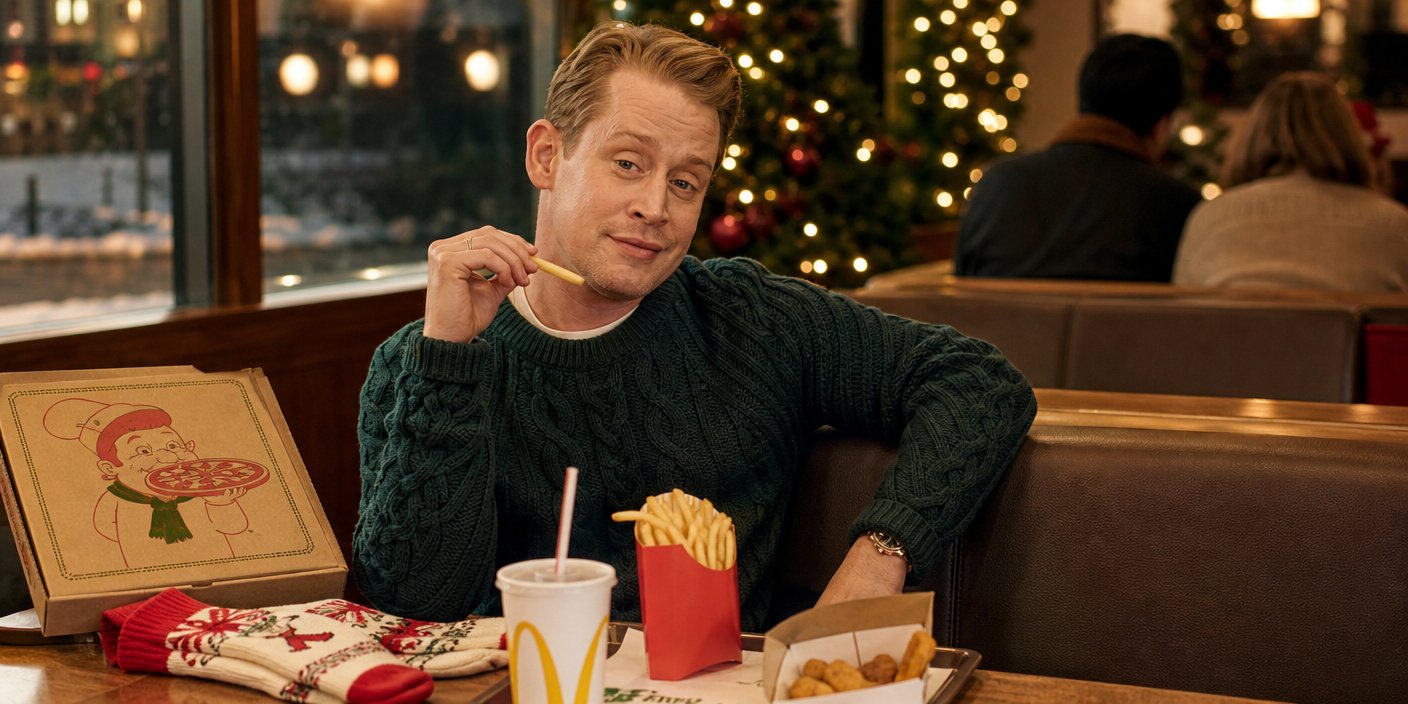
Central to the campaign is the thematic menu, headlined by the ‘Little Nero’s Pizza McShaker Fries.’ This product, a playful nod to the fictional pizza company featured in the original Home Alone film, represents a significant operational innovation. The McShaker Fries utilize a proprietary seasoning blend that mimics the flavor profile of a classic thin-crust pizza—tangy tomato, oregano, and savory parmesan.
Beyond the fries, the meal package is designed as a total-experience SKU. It includes a medium fry, a standard 10-piece Chicken McNuggets, and a seasonal beverage. However, the true value add, according to industry analysts, lies in the limited-edition collectible merchandise. The branded socks, which feature patterns inspired by the McCallister family’s Christmas sweaters and the iconic paint can traps, are designed to generate secondary market interest and social media viral loops. By tying tangible goods to the meal purchase, McDonald’s is engineering a ‘collect-all’ mentality that encourages repeat visits throughout the holiday window.
The Evolution of the Celebrity Collaboration
Unlike traditional celebrity endorsements, where the star is merely the face of a campaign, the Macaulay Culkin partnership represents a deeper creative integration. Culkin’s public persona, often characterized by a self-aware, dry humor, aligns perfectly with the brand’s ‘Leave Adulthood Behind’ tagline. This campaign avoids the pitfalls of generic product placement; instead, it leans into the meta-narrative of the actor reprising his most famous role in a modern, commercial context. This approach elevates the campaign from a simple advertisement to a piece of ‘branded content,’ which is essential for penetrating the ad-blocked, cynical consumption habits of the modern digital landscape.
Q4 Financials and Market Impact
The timing of this campaign is no accident. Retail analysts point to the ‘Home Alone’ launch as a cornerstone of McDonald’s Q4 financial strategy. By creating a ‘must-have’ cultural moment, the brand is positioning itself to outperform competitor holiday offerings that rely solely on traditional seasonal flavors like peppermint or eggnog. This strategy is also expected to bolster mobile app engagement, as the collectible merchandise is tied to specific digital reward redemptions. The integration of physical merchandise within the digital app ecosystem provides the company with valuable first-party data, allowing for deeper segmentation of high-value, nostalgia-driven customers.
Cultural Significance: The ‘Little Nero’s’ Legacy
From a cultural standpoint, the inclusion of the ‘Little Nero’s’ branding is a masterstroke of copyright-friendly homage. It taps into the lore of the film without infringing on non-partnered assets, allowing McDonald’s to maintain full creative control over the aesthetic. This level of granular detail—right down to the packaging design that mimics the pizza box from the film—signals a sophisticated understanding of fan culture. It treats the customer not just as a consumer of calories, but as a fan of cinema, thereby deepening brand loyalty in a way that standard promotions cannot achieve. As the retail landscape continues to shift toward experiential marketing, this campaign sets a new benchmark for how legacy brands can remain relevant by acting as curators of culture rather than just providers of convenience.