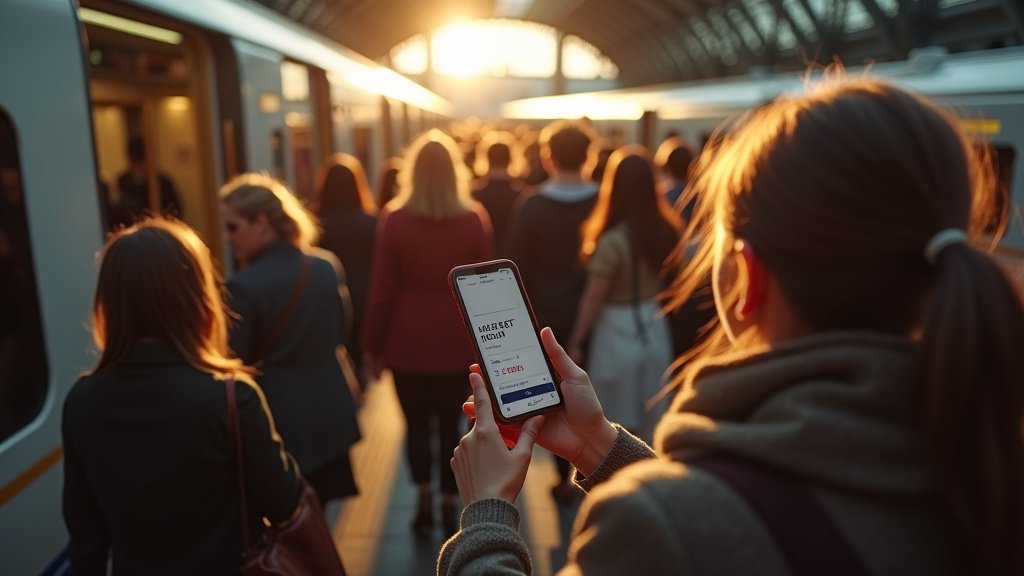
In a landmark decision aimed at easing household financial pressures, the UK government has announced a freeze on regulated **UK Rail Fares** across England. This historic move, the first of its kind in three decades, will ensure that millions of commuters do not face price increases on season tickets, peak commuter returns, and off-off-peak returns between major cities until March 2027. The announcement, made by Chancellor Rachel Reeves and Transport Secretary Heidi Alexander ahead of the upcoming Budget, marks a significant intervention to combat the rising cost of living and support economic growth through stable **UK Rail Fares** and improved **rail travel affordability**.
Commuters Set for Significant Savings with Frozen UK Rail Fares
The fare freeze is set to deliver tangible financial relief to a vast number of rail passengers, impacting **UK Rail Fares** significantly. Commuters on more expensive routes are expected to save upwards of £300 annually. For instance, a typical commuter using flexi-season tickets three days a week could save approximately £315 per year travelling from Milton Keynes to London. Similar savings include £173 per year for those commuting from Woking to London, and £57 annually for journeys between Bradford and Leeds. This measure applies to regulated **UK Rail Fares**, which constitute about 45% of all ticket types sold in England, potentially benefiting over a billion passenger journeys each year, contributing to **commuter savings**.
A Move to Ease Living Costs and Limit Inflation Through Fixed UK Rail Fares
Government officials have framed the fare freeze as a crucial step in their strategy to address the **cost of living crisis**. With **transportation costs** accounting for around 14% of average household spending, keeping **UK Rail Fares** stable is intended to provide immediate relief and support **household budgets**. The decision is also designed to directly limit inflation by controlling a major component of everyday expenses, representing effective **inflation control**. Chancellor Rachel Reeves stated that the freeze is part of the government’s commitment to making “fair choices” to cut NHS waiting lists, reduce national debt, and ease the financial burden on working families. The freeze on **UK Rail Fares** will be confirmed in the Budget on November 26, 2025.
Rebuilding Great British Railways for Value and Modernity with Controlled UK Rail Fares
Beyond immediate savings, the fare freeze is positioned as a key element in the broader reform and rebuilding of Britain’s railway system under the forthcoming **Great British Railways** (GBR) initiative. GBR, a new publicly owned entity, aims to manage infrastructure and operations, moving away from the fragmentation of previous years. Plans include modernizing ticketing systems with tap-in, tap-out technology and investing in superfast Wi-Fi. The government’s long-term ambition is to transition away from “annual blanket increases” towards a more transparent and predictable fare structure, ensuring better value for money for passengers and more stable **UK Rail Fares**.
Scope and Broader Industry News on UK Rail Fares
It is important to note that the freeze applies specifically to regulated **UK Rail Fares** in England and services operated by English train companies. Fares in Scotland and Wales are managed by devolved governments. While unregulated fares, such as advance tickets and first-class seats, are not covered by the freeze, train operators are expected to align their pricing broadly with regulated levels. In related news, British Steel has secured a significant £35 million contract to supply rail for Turkey’s high-speed rail network, bolstering UK export deals worth over £400 million and creating jobs locally. This news highlights the broader economic impact related to rail infrastructure and **UK Rail Fares**.
Separately, a memorial in Omagh, County Tyrone, has been upgraded ahead of the 75th anniversary of a tragic rail accident that claimed five lives. Meanwhile, Network Rail is addressing ongoing issues with over-height vehicles repeatedly striking a bridge over the Cambrian railway line, which has caused significant delays and repair costs. New signage is planned to mitigate these avoidable incidents.
A Positive Outlook for Rail Passengers with Affordable Travel
The news has been warmly welcomed by rail unions and passenger advocacy groups, who have long called for more affordable travel. Ben Plowden, CEO of Campaign for Better Transport, commented that freezing **UK Rail Fares** will not only help households but also encourage more people to choose rail, thereby reducing road traffic and benefiting the environment. As the government navigates economic challenges, this freeze represents a significant step towards making rail travel more accessible and sustainable for millions across the country, contributing to **inflation control**. The decision is currently trending across UK news outlets as a major policy announcement regarding **UK Rail Fares** and the future of **rail travel affordability**.