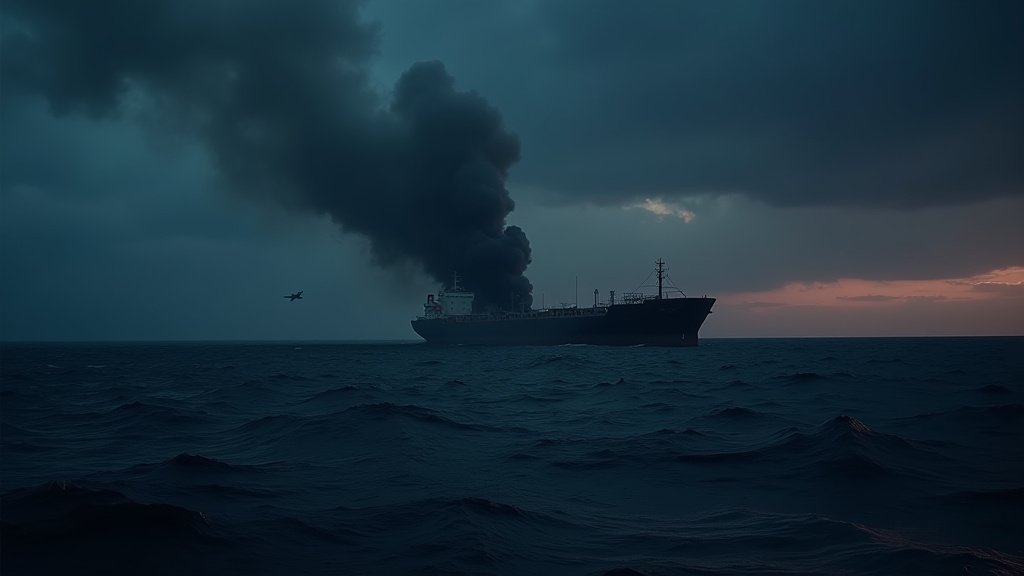
The U.S. Central Command (CENTCOM) confirmed today that a U.S. fighter jet engaged an Iranian oil tanker in the Strait of Hormuz, an incident that occurred against the backdrop of ongoing diplomatic efforts between the United States and Iran. The precise circumstances leading to the engagement remain under investigation, but the event has injected further tension into the already delicate geopolitical climate.
Key Highlights:
- A U.S. fighter jet fired upon an Iranian oil tanker in the Strait of Hormuz.
- The incident occurred during active peace talks between the U.S. and Iran.
- CENTCOM has confirmed the engagement and stated an investigation is underway.
- The Strait of Hormuz is a critical chokepoint for global oil transit.
Escalation in a Sensitive Waterway
The waters of the Strait of Hormuz, a vital maritime chokepoint through which a significant portion of the world’s oil supply transits, have once again become the stage for a concerning military engagement. U.S. Central Command announced that a U.S. fighter jet discharged its weapons, targeting an Iranian oil tanker. While CENTCOM has acknowledged the incident and committed to a thorough investigation, details regarding the specific threat or communication that precipitated the action are scarce. This event, occurring concurrently with what are described as peace talks between the two nations, raises immediate questions about the stability of the current diplomatic process and the potential for miscalculation in a region already fraught with tension.
Geopolitical Tensions and Diplomatic Overtures
The timing of this military action is particularly sensitive. The United States and Iran have been engaged in complex, often indirect, negotiations aimed at reviving or establishing new frameworks for their bilateral relationship, particularly concerning Iran’s nuclear program and regional security. The Strait of Hormuz has long been a flashpoint, with both countries conducting military exercises and engaging in naval encounters. Iran has previously threatened to close the strait, a move that would have severe global economic repercussions. The U.S. presence in the region is largely focused on ensuring freedom of navigation and deterring Iranian aggression. This latest incident could derail nascent diplomatic progress, forcing both sides to address an immediate security concern that overshadows their long-term objectives.
The Role of the Strait of Hormuz
Economically and strategically, the Strait of Hormuz is unparalleled. This narrow waterway, separating Iran from Oman and the United Arab Emirates, is the only sea passage from the Persian Gulf to the open ocean. Approximately 30% of the world’s seaborne oil exports pass through it daily. Any disruption, whether intentional or accidental, can send shockwaves through global energy markets, impacting prices and supply chains worldwide. The U.S. Navy routinely patrols these waters to ensure the free flow of commerce and to counter maritime threats from Iran and its proxies.
Investigation and Accountability
CENTCOM’s commitment to an investigation is crucial. Understanding the full context of the engagement – including whether the tanker posed an imminent threat, the rules of engagement followed by the U.S. pilot, and any communication attempts made – will be vital for de-escalating tensions and preventing future incidents. International bodies and independent maritime security analysts will be closely monitoring the findings. Accountability for any actions that violate international norms or escalate conflict is paramount in maintaining regional stability.
Future Implications for Diplomacy
The repercussions of this incident on the ongoing peace talks are a significant concern. If the engagement is perceived by Iran as an aggressive act that undermines the diplomatic process, it could lead to a hardening of their negotiating stance or even a complete withdrawal from talks. Conversely, if the U.S. can demonstrate that the action was a justified response to a clear threat, it might be viewed internally as a necessary measure to maintain deterrence. The delicate balance of power and perception in the region means that such events can have disproportionately large impacts on diplomatic trajectories.
FAQ: People Also Ask
What is the U.S. Central Command (CENTCOM)?
CENTCOM is one of the United States’s five unified combatant commands, responsible for military operations in the Middle East, North Africa, and Central Asia. Its area of responsibility includes significant geopolitical hotspots and strategic waterways like the Strait of Hormuz.
What is the significance of the Strait of Hormuz? Why is it a chokepoint?
The Strait of Hormuz is a critically important maritime passage connecting the Persian Gulf to the Gulf of Oman and the open ocean. It is only about 21 miles wide at its narrowest point, making it a strategic chokepoint. A substantial portion of the world’s oil supply, particularly from Saudi Arabia, Iran, Iraq, Kuwait, and the UAE, transits through this strait daily. Its strategic importance means that any disruption here can have immediate and severe global economic consequences.
What are the current peace talks between the U.S. and Iran about?
The specific details of the current peace talks are often not publicly disclosed due to their sensitive and complex nature. However, discussions generally revolve around Iran’s nuclear program, sanctions relief, and regional security issues. These talks have been ongoing, with periods of intense negotiation and periods of stalemate, often influenced by regional and international events.
What are the potential consequences of a U.S. fighter jet firing on an Iranian oil tanker?
Such an incident can significantly escalate tensions between the U.S. and Iran, potentially jeopardizing ongoing diplomatic efforts. It could lead to retaliatory actions, increase the risk of wider conflict in the region, and cause volatility in global oil prices and supply chains. The event also raises concerns about maritime security and freedom of navigation in international waters.
What are the rules of engagement for U.S. military forces in international waters like the Strait of Hormuz?
U.S. military forces operate under strict rules of engagement (ROE) designed to protect U.S. personnel and assets while adhering to international law. These rules typically authorize the use of force only when necessary to respond to an imminent threat or to defend against hostile acts. The specifics of ROE can vary depending on the operational environment and intelligence assessments, and are subject to review following any engagement.