
Vice President JD Vance touched down in Islamabad, Pakistan, on Saturday morning, marking the commencement of a high-stakes diplomatic mission aimed at solidifying a two-week ceasefire between the United States and Iran. Accompanied by U.S. Special Envoy Steve Witkoff and presidential advisor Jared Kushner, Vance’s arrival has triggered an unprecedented security lockdown across the Pakistani capital, signaling the gravity of these historic negotiations. The talks represent the highest-level engagement between Washington and Tehran since the 1979 Islamic Revolution, with the global economy and regional stability hanging in the balance as both sides navigate a dense minefield of competing preconditions, demands for asset releases, and the volatile reality of ongoing conflict in Lebanon.
Key Highlights
- Strategic Arrival: Vice President JD Vance landed in Islamabad with a delegation including Steve Witkoff and Jared Kushner, positioning Pakistan as a crucial mediator in the escalating West Asia conflict.
- The Diplomatic Objective: The primary goal is to convert a fragile, two-week-old ceasefire into a long-term peace agreement, though initial posturing from both Washington and Tehran remains hardened.
- Iranian Preconditions: Tehran has explicitly conditioned its participation on a mandatory ceasefire in Lebanon and the unfreezing of Iranian assets, creating a tense atmosphere for the initial rounds of talks.
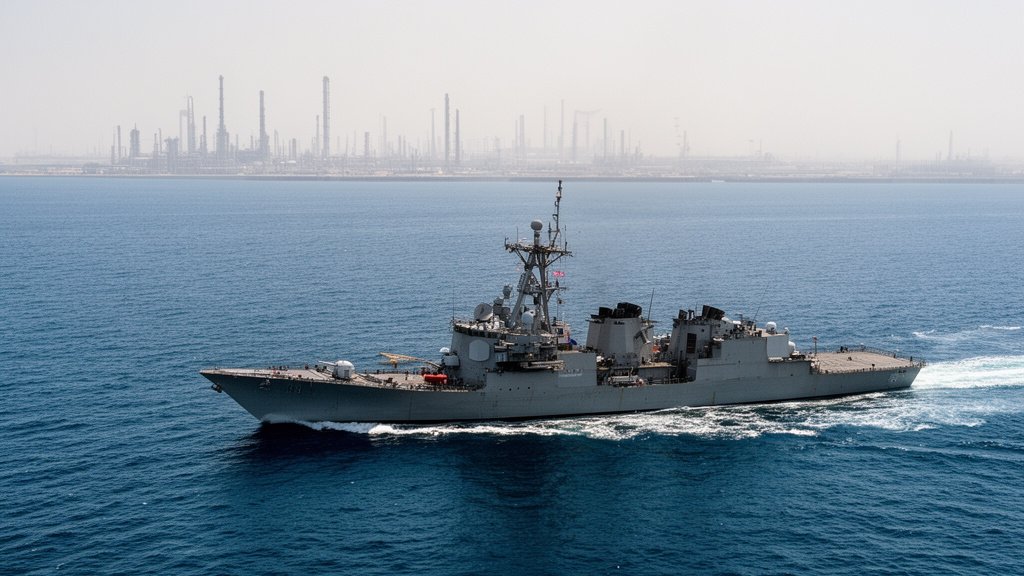
- Global Economic Stakes: The conflict has significantly disrupted the Persian Gulf, impacting global energy prices and vital trade routes, making the success of these negotiations a top priority for the White House.
The Diplomatic Gambit: Navigating a Fractured Geopolitical Landscape
The arrival of the American delegation in Islamabad is far more than a ceremonial diplomatic visit; it is a calculated risk in a geopolitical theater that has been defined by rapid escalation and profound uncertainty. For weeks, the Persian Gulf has been effectively severed from the broader global economy, a consequence of the widening conflict that has sent energy markets into a tailspin and tested the resolve of international alliances. As Vice President Vance stepped off the aircraft, the weight of the administration’s policy—one that has oscillated between assertive military deterrence and the necessity of direct negotiation—was palpable. The White House, under President Donald Trump’s guidance, has framed this mission as an “open hand” approach, yet the warnings issued by the Vice President prior to his departure—that the U.S. would not be “played” by insincere actors—underscores the fragile nature of the trust deficit between the two nations.
The Role of Pakistan as a Regional Power Broker
Pakistan’s selection as the host for these negotiations is highly strategic. Islamabad has long maintained a delicate balancing act, nurturing strong historical and security ties with the United States while simultaneously navigating a complex relationship with its neighbor, Iran. By hosting the delegation, Pakistan is attempting to position itself as the indispensable broker of regional stability. Prime Minister Shehbaz Sharif’s administration has expressed a clear desire for a “durable solution,” recognizing that a continued conflict on its border poses an existential threat to its own economic stability and internal security. The massive security deployment currently blanketing Islamabad—involving military, paramilitary, and aerial surveillance units—reflects both the potential for external interference and the host nation’s intense desire to ensure these talks do not collapse before they can truly begin.
Decoding the Iranian Strategy: Leverage and Demands
Tehran enters these talks from a position of paradoxical strength and weakness. While the Iranian leadership feels emboldened by its resilience in the face of what they describe as a massive U.S.-Israeli military campaign, the domestic cost of the conflict has been severe. The economic pressure from the maritime blockade of the Strait of Hormuz, coupled with the cumulative damage to infrastructure across the region, has forced the Iranian regime to reconsider its immediate tactical posture. However, the demands presented by the Iranian delegation—led by Parliament Speaker Mohammad Bagher Qalibaf—are non-trivial. By insisting on a ceasefire in Lebanon and the release of blocked assets as a prerequisite for deeper discussions, Iran is attempting to shift the narrative from one of “defeat” to one of “conditional cooperation.” This creates a significant impasse: the U.S. delegation seeks to ensure that Iran’s nuclear ambitions and regional proxy activities are permanently curtailed, while Tehran views these concessions as sovereign bargaining chips that they are loath to relinquish without significant reciprocal gains.
The Human and Economic Cost of War
Beyond the boardroom, the real-world implications of the war are staggering. With casualty numbers climbing—thousands killed in Iran, Lebanon, and across the Gulf—the humanitarian toll has become a rallying point for international criticism. The disruption of global energy supplies has hit developing nations particularly hard, threatening to trigger a domino effect of economic instability that extends far beyond the Middle East. Observers note that the “two-week ceasefire” that preceded these talks was likely a necessary pause for both sides to catch their breath and assess their respective war chests. The question now is whether this pause is merely a tactical rearrangement for future conflict or a genuine opportunity to reset the status quo. The presence of Jared Kushner, known for his work on the Abraham Accords during the previous administration, suggests that the U.S. is aiming for a creative, perhaps unconventional, diplomatic framework rather than traditional, protracted treaty negotiations. This signals a desire for a “quick win” or a fundamental reconfiguration of alliances in the region.
Historical Context: A Tipping Point?
To understand the significance of Vance’s presence, one must look at the historical trajectory of U.S.-Iran relations. Since the 1979 revolution, the two nations have largely operated in a state of suspended animation, alternating between periods of “managed” hostility and brief, often failed, attempts at dialogue. This mission differs in several key aspects. First, it is occurring during a high-intensity kinetic conflict rather than a “cold” diplomatic standoff. Second, the direct involvement of the Vice President—rather than lower-level state department officials—indicates that the White House views this not as a marginal policy exercise, but as a central pillar of the current administration’s foreign policy legacy. If successful, this could be hailed as a masterstroke of assertive diplomacy; if it fails, it risks entrenching the administration in a conflict that voters are increasingly eager to see resolved.
FAQ: People Also Ask
Q: Why was Pakistan chosen as the location for these talks?
A: Pakistan serves as a strategic intermediary. It maintains critical, long-standing relationships with both the United States and Iran, making it a rare neutral ground that both parties are willing to engage with for high-level mediation.
Q: What is the main goal of the U.S. delegation in Islamabad?
A: The primary objective is to transition the existing two-week ceasefire into a long-term, durable peace agreement while ensuring that Iran cannot develop nuclear capabilities and that regional proxy conflicts are de-escalated.
Q: What are the main obstacles to a successful agreement?
A: The major hurdles include Iran’s insistence on a ceasefire in Lebanon and the unfreezing of assets, contrasted against the U.S. demand for concrete assurances regarding Iran’s nuclear program and regional security commitments.
Q: Who is accompanying JD Vance on this trip?
A: The delegation includes U.S. Special Envoy Steve Witkoff and presidential advisor Jared Kushner, representing a mix of diplomatic, business, and political expertise tailored to the complex nature of the negotiations.