
In a week that has redefined our understanding of both the fundamental laws of physics and the resilience of life on Earth, researchers have unveiled findings that challenge long-held assumptions. From the microscopic behavior of light waves to the genetic trajectory of our own species and the surprising survival strategies of Arctic predators, the current scientific landscape is shifting rapidly. This week’s discoveries provide a unique look at how the universe operates when we push the boundaries of what we believe to be possible, proving that nature—and the laws governing it—is far more flexible than we previously dared to imagine. As we navigate a world of rapid technological advancement, these stories remind us that the most profound mysteries often lie just beneath the surface of what we think we know.
Key Highlights:
- Physicists have experimentally confirmed that ‘dark points’ within light waves can move at superluminal speeds, re-framing the concept of darkness not as a substance, but as a geometric phenomenon.
- New genetic research confirms that human evolution has not ceased; rather, it continues to accelerate, with natural selection actively shaping populations in response to dietary and environmental shifts over the last 10,000 years.
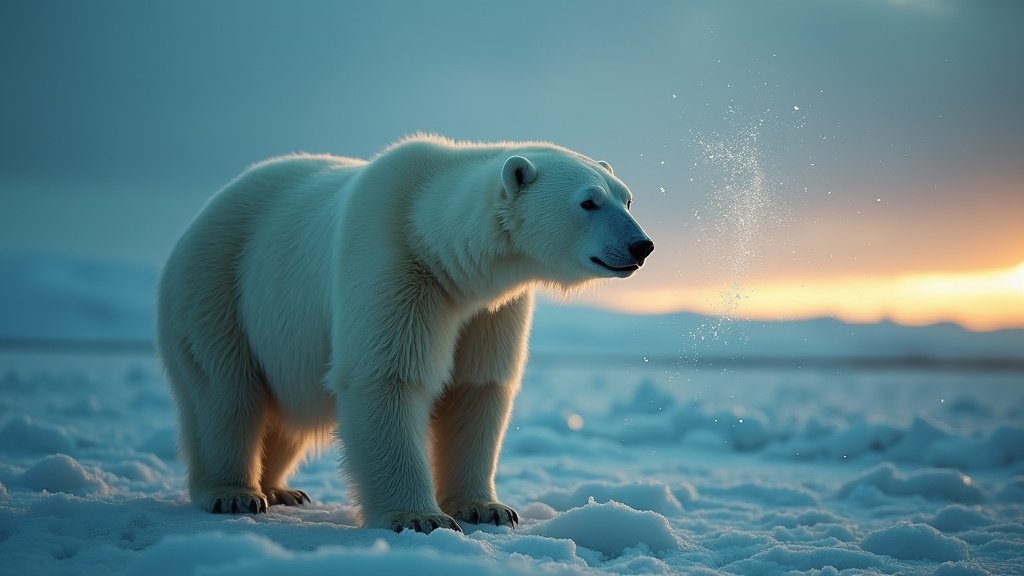
- Svalbard polar bears are defying climate predictions, with data showing a trend of increasing body fat despite rapid sea ice loss, suggesting a high degree of behavioral and dietary adaptation.
- These discoveries collectively highlight the importance of challenging scientific dogmas, from the speed of light to the pace of human and animal adaptation in a changing climate.
Unraveling the Mysteries of the Modern Scientific Landscape
The Superluminal Shadow: Rethinking the Speed of Darkness
For over a century, the cosmic speed limit of 299,792,458 meters per second has been the bedrock of physics. Established by Albert Einstein’s theory of general relativity, this speed limit applies to the movement of matter and the transmission of information. However, this week brought an exhilarating development: an international team of researchers confirmed that ‘darkness’—or more accurately, ‘dark points’ within light waves—can exceed this speed. This does not violate relativity, because these dark points carry neither mass nor information.
To understand this, one must look at the nature of ‘dark points’ (often called singularities or vortices). Think of a light wave as a turbulent river. Within this river, there are vortices where the motion cancels itself out—a zero-amplitude point. Researchers at the Technion–Israel Institute of Technology used a specialized laser setup and a hexagonal boron nitride (hBN) flake, a material that allows light to transform into light-matter hybrids known as polaritons. These polaritons move much slower than light in a vacuum, allowing scientists to track these singularities with unprecedented temporal precision. What they discovered is that these points of ‘complete darkness’ can move across the field faster than the speed of light itself. The phenomenon is essentially a geometric trick: the darkness is an absence of light, and the way that absence shifts across the medium can be manipulated to appear superluminal. This discovery serves as a fascinating reminder that in the quantum realm, the absence of something can behave with a complexity that rivals the presence of matter.
The Persistent Pulse of Human Evolution
Perhaps the most persistent myth in anthropology is that human evolution has ‘stopped.’ The narrative suggests that because we have created modern medicine, climate control, and agricultural technology, we have buffered ourselves against the harsh pressures of natural selection. A landmark study published this month in Nature, alongside supporting research, definitively puts this idea to rest. By analyzing the DNA of thousands of ancient human remains and comparing them to modern populations, researchers have identified 479 genetic variants that have been shaped by natural selection in just the last 10,000 years.
This period of history, which saw the rise of agriculture and urbanization, introduced new evolutionary pressures. The ability to digest milk as adults, resistance to malaria, and metabolic changes related to starchy diets are all clear fingerprints of recent evolution. The ‘Bio-Evolutionary Anthropocene’ hypothesis suggests that our culture is now a primary driver of our evolution. We are not just adapting to nature; we are co-evolving with the environments we construct. This process is accelerating, not slowing down. Whether it is genetic adaptations to high-altitude living in Tibet or subtle shifts in our immune systems to combat novel pathogens in densely populated cities, the human genome remains a work in progress. Evolution is not a destination; it is a continuous dialogue between our biology and the world we create.
The Arctic Paradox: Why Polar Bears Are Getting Fatter
In the realm of conservation biology, the polar bear is frequently the ‘canary in the coal mine’ for climate change. As Arctic sea ice vanishes, the standard ecological model predicts a decline in polar bear health due to the loss of their primary hunting grounds for seals. Yet, a paradoxical, multi-year study of the Svalbard polar bear population has turned this expectation on its head.
Researchers found that despite a significant reduction in sea ice duration, the Svalbard bears have been gaining weight and, on average, have better body condition scores than they did two decades ago. How is this possible? The answer lies in behavioral plasticity. These bears have diversified their diet. They are not merely relying on sea ice-dependent ringed seals; they are opportunistically preying on bird eggs, reindeer, and other terrestrial food sources that have become more accessible or more abundant in a warming, greener Arctic. This is not to say that climate change is harmless—the loss of traditional hunting grounds is a genuine, long-term existential threat. However, the Svalbard findings emphasize that species are not passive victims of climate change. They are active, intelligent agents capable of shifting their behaviors to survive in novel ecological niches. This serves as a vital lesson in resilience and the necessity of nuanced, local-level ecological research over generalized global assumptions.
FAQ: People Also Ask
Does ‘faster-than-light’ darkness mean we can communicate instantly across the universe?
No. The speed of light constraint remains absolute for information transfer. Since the ‘dark points’ observed in the experiment carry no mass, energy, or information, they cannot be used to transmit data faster than light. It is a physical phenomenon akin to the ‘lighthouse effect,’ where a shadow moving across the face of the moon can technically move faster than light, but it carries no signal.
Are humans evolving to be smarter or physically stronger due to recent selection?
Evolution does not necessarily mean ‘improvement’ in a human-centric sense; it means adaptation to local environments. Recent selections have been largely metabolic and immunological. We are adapting to the modern diet, high-density living, and specific geographic challenges, rather than evolving toward a monolithic goal of ‘greater strength’ or ‘intelligence.’
Will polar bears survive climate change if they keep adapting?
While the Svalbard study is a positive sign of behavioral plasticity, experts warn that it is not a cure-all. Polar bears are highly specialized predators; there is a physical limit to how many bird eggs or land-based animals can support a bear population the size of the Arctic’s. If sea ice disappears entirely, the species will likely lose its foundational niche, making long-term survival precarious.