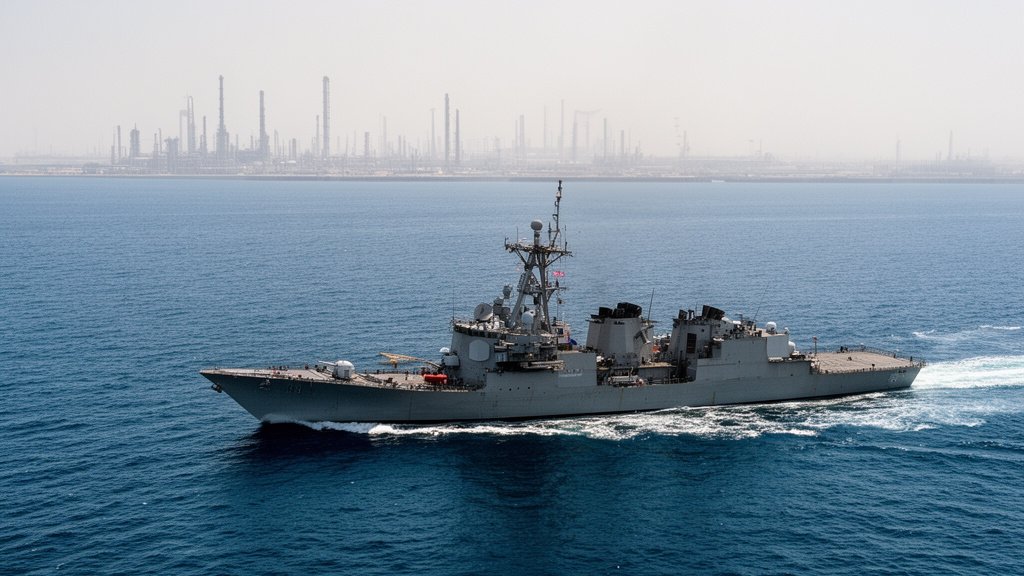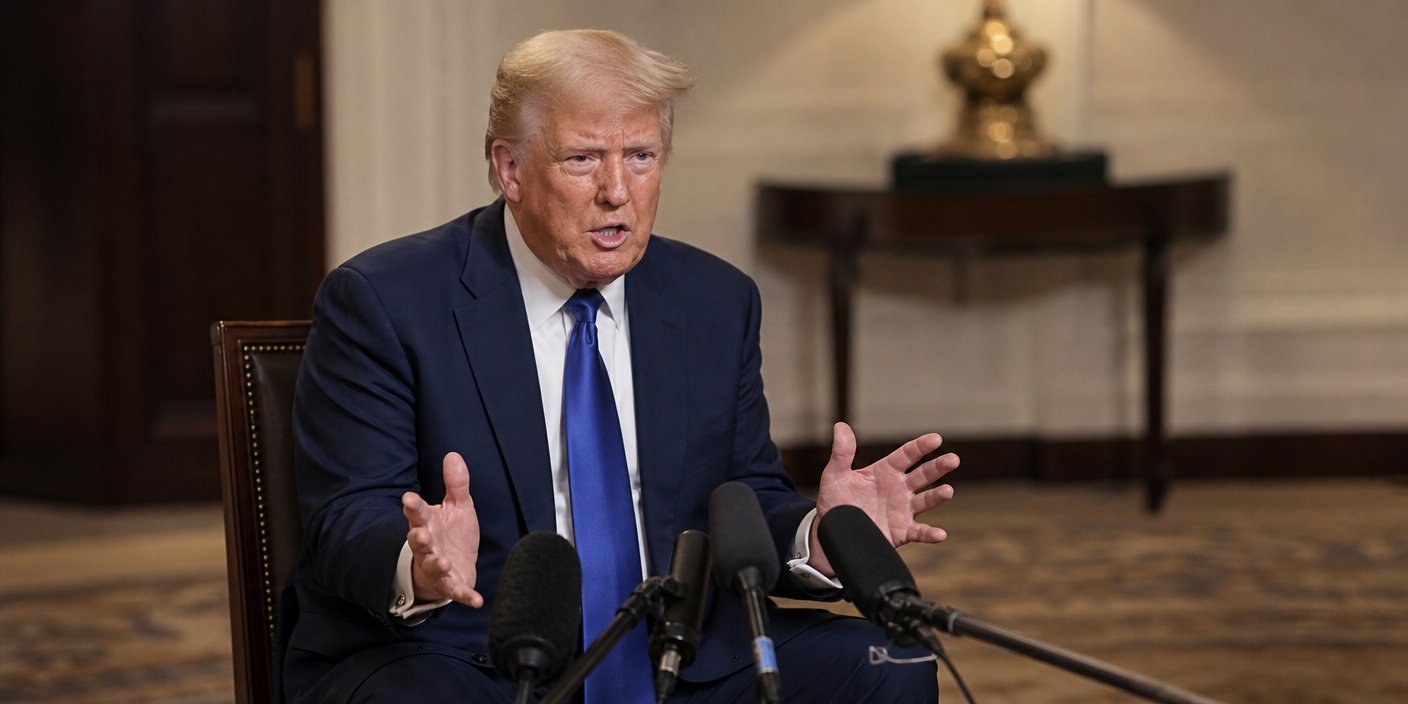
President Donald Trump announced on Sunday that U.S. forces have successfully intercepted and taken custody of the Iranian-flagged cargo ship ‘Touska’ in the Gulf of Oman, an operation that marks the first major direct engagement since the imposition of a U.S. naval blockade on Iranian ports. The maneuver, carried out by the guided-missile destroyer USS Spruance, involved disabling the 900-foot vessel by firing on its engine room after the crew reportedly ignored multiple warnings. The seizure has sent shockwaves through the region, casting deep uncertainty over upcoming peace negotiations scheduled to take place in Pakistan.
Key Highlights
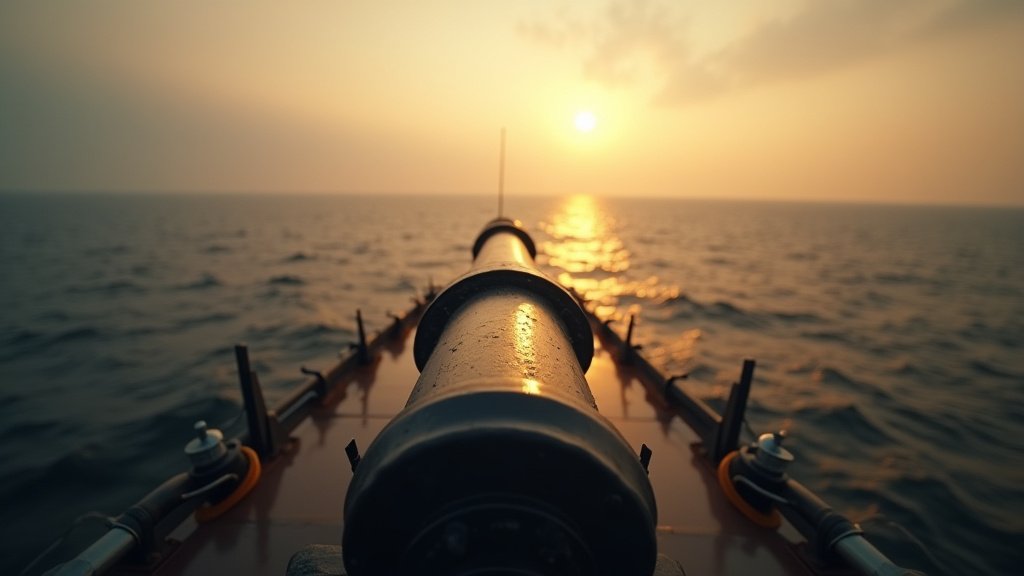
- Direct Engagement: The USS Spruance disabled the Touska by firing its 5-inch MK 45 gun into the ship’s engine room following a six-hour standoff.
- U.S. Custody: Marines from the 31st Marine Expeditionary Unit (MEU) boarded the vessel and have taken full control; the ship is now being inspected for illicit cargo.
- Diplomatic Fallout: Iran has denounced the seizure as “maritime piracy” and a violation of the fragile ceasefire, with Tehran signaling that it may pull out of scheduled peace talks in Islamabad.
- Regional Tensions: The incident occurs amid an ongoing naval blockade in the Strait of Hormuz, significantly raising the risk of broader regional conflict and impacting global energy markets.
Operation Touska: A Hardline Enforced
The operation to seize the Touska represents a significant hardening of the U.S. position in the Middle East. According to U.S. Central Command (CENTCOM), the interception was the result of a deliberate, professional, and proportional enforcement of the naval blockade that has been in place since April 13. The blockade was established in response to Iran’s persistent interference with international shipping lanes near the Strait of Hormuz, which remains the world’s most critical maritime energy chokepoint.
The Tactical Seizure
The Touska, a sanctioned vessel with a history of alleged illicit activity, was intercepted while transiting the Arabian Sea toward the Iranian port of Bandar Abbas. Video footage released by CENTCOM reveals the intensity of the engagement, showing the USS Spruance issuing repeated warnings via bridge-to-bridge radio before ultimately using disabling fire to force the vessel to stop. The decision to use kinetic force against a commercial, albeit sanctioned, cargo ship underscores a shift from passive monitoring to active interdiction by U.S. naval forces.
The Diplomatic Crossroads
The timing of this operation is particularly volatile. Washington and Tehran were ostensibly moving toward a fragile ceasefire, with negotiators from both sides expected to gather in Islamabad for a critical round of talks. By seizing the Touska, the Trump administration has signaled that it will not tolerate attempts to circumvent the blockade, even at the cost of diplomatic progress. Iranian officials, including spokespeople for the Khatam al-Anbiya Central Headquarters, have used aggressive rhetoric, warning of retaliatory action and labeling the incident a direct violation of international law. Whether this escalation serves as a catalyst for a broader conflict or forces Iran back to the table remains the central question for regional analysts.
Global Implications & Future Outlook
Beyond the immediate tactical success, the seizure of the Touska carries profound implications for the global economy and international law.
Economic Vulnerability
The Strait of Hormuz is the world’s most important oil chokepoint, through which a significant percentage of the world’s daily petroleum output passes. The enforcement of a blockade, coupled with the threat of Iranian retaliation, has already caused volatility in energy markets. Shipping insurers are closely monitoring the situation, and any further escalation could lead to spikes in insurance premiums for vessels traversing the region, effectively acting as a ‘war risk’ tax on global trade.
Legal & Ethical Debates
The operation has reignited the debate over the legality of the U.S. blockade. While the U.S. asserts that its actions are necessary to uphold freedom of navigation and enforce sanctions, Tehran’s characterization of the event as ‘maritime piracy’ resonates with a segment of the international community concerned about the potential for wider regional war. Legal experts are divided on whether the blockade adheres to international maritime protocols or if it constitutes an act of aggression, a point that will likely be contested in international forums.
The Shadow of War
Ultimately, the seizure of the Touska is a barometer for the state of the U.S.-Iran relationship. With ceasefire talks hanging by a thread, the next 48 hours will be critical. If Iran chooses to strike back—either through asymmetric naval warfare, drone attacks, or by closing off parts of the Strait—the current ‘standoff’ could quickly devolve into a sustained military confrontation with global consequences.
FAQ: People Also Ask
1. What is the status of the crew on the ‘Touska’?
While U.S. forces have taken custody of the ship and its cargo, specific details regarding the status of the crew members have not been fully disclosed by CENTCOM, other than that they are currently under U.S. control as part of the vessel’s seizure.
2. Is the Strait of Hormuz closed?
Technically, the Strait remains open, but it is under a strict U.S.-enforced naval blockade. Only vessels that comply with U.S. protocols or are not flagged by nations currently under specific restrictions are permitted to pass.
3. Will the peace talks in Islamabad still happen?
It is currently unclear. Iranian officials have stated they have no plans to attend, citing the seizure as an act of “piracy,” while U.S. representatives are still expected to head to Pakistan to signal a willingness to continue the dialogue.
4. Why did the U.S. use a 5-inch gun to stop the ship?
CENTCOM stated that the ship failed to comply with multiple warnings over a six-hour period. The use of disabling fire was a calculated move to stop the vessel’s propulsion without sinking it, ensuring the ship and its cargo could be preserved for inspection.