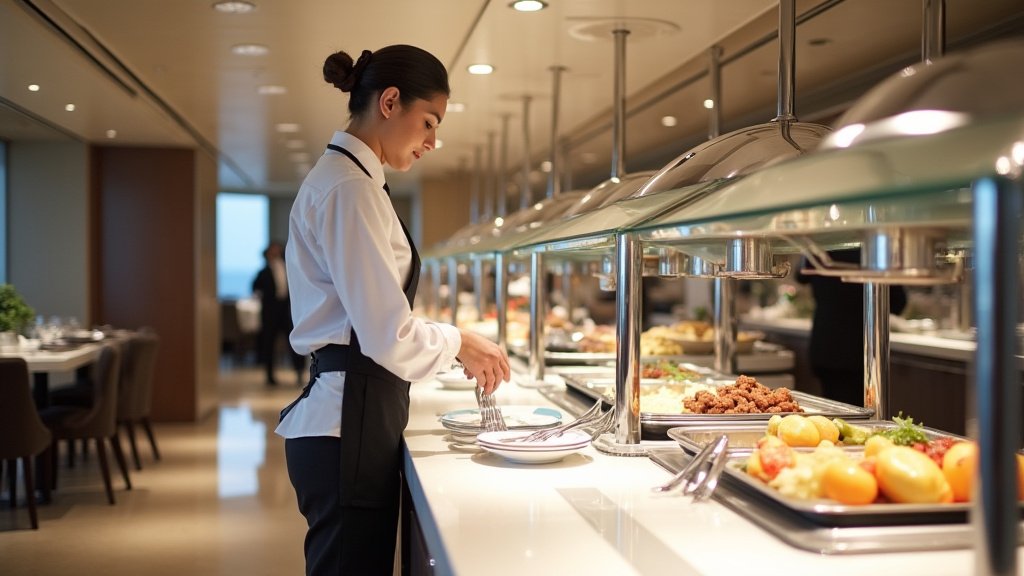
The cruise ship industry is grappling with a viral sanitation nightmare that has turned stomachs across the globe. A video, which has amassed more than 28 million views across social media platforms, captured a passenger in a buffet line brazenly using a shared serving utensil to scrape fungus from their foot. The footage, which has been widely condemned as a major health violation, forced the cruise line to issue a swift public response, confirming the immediate removal and disposal of the contaminated utensils and a thorough sanitization of the affected service area.
Key Highlights
- Massive Viral Reach: The footage documenting the incident has surpassed 28 million views, triggering global outrage and conversations regarding public hygiene.
- Immediate Remediation: The cruise line confirmed that all utensils in the affected buffet section were pulled from service and replaced following the verification of the incident.
- Sanitation Protocols: Cruise lines have doubled down on reminding passengers of their ‘Guest Code of Conduct,’ which dictates strict behavioral expectations in dining areas.
- Public Health Concern: Medical experts warn that such behavior is not just socially reprehensible but poses genuine risks regarding the transmission of pathogens in high-traffic, semi-enclosed food service environments.
The Anatomy of a Viral Contamination Event
The incident began as a casual vacation post but quickly devolved into a case study on public health risks and digital behavior. The video shows the passenger, who appears unaware or indifferent to the surrounding diners, utilizing a standard buffet serving fork to tend to a foot condition. The immediate reaction from the online community was visceral, with millions of viewers expressing deep disgust and alarm. For the cruise industry—which already operates under a microscope of public health scrutiny due to the historical prevalence of Norovirus and other communicable diseases—the event was a PR and operational disaster.
Cruise ships function as contained ecosystems. Unlike a land-based restaurant, where a staff member might witness such an infraction and intervene immediately, the sheer scale of cruise ship buffets often leaves management reliant on the social contract between guests. When that contract is shattered by a single individual seeking viral content, the logistical burden falls on the cruise line to maintain the perception and reality of cleanliness. The swift action of pulling the utensils was not merely a reaction to the public backlash, but a necessary step to reassure passengers that the ship’s health protocols remained intact.
The Shift in Operational Protocols
Following the event, internal sources from the hospitality sector have indicated a heightened focus on ‘active monitoring’ in buffet areas. Historically, cruise lines have prioritized self-service to handle the massive volume of passengers efficiently. However, this incident has accelerated discussions regarding the potential end of ‘truly self-service’ buffets. Many industry experts argue that the future of large-scale maritime dining may shift toward manned serving stations, where staff—rather than guests—have exclusive control over the serving equipment. This transition, while logistically expensive, would mitigate the risk of cross-contamination and ensure that individual passengers cannot interfere with shared items.
Furthermore, the cruise line involved has reiterated its stance on its Guest Code of Conduct. While these codes have always existed, their enforcement is now being modernized. Security teams are increasingly utilizing onboard CCTV footage not just for theft or safety, but to monitor behaviors that could jeopardize the health and well-being of the broader guest population. Passengers identified engaging in such behavior face a range of consequences, from stern warnings to being banned from future sailings or offloaded at the next port of call.
The Psychology of ‘Content-First’ Behavior
Beyond the sanitary issues, this incident highlights a troubling trend: the ‘content-first’ mindset. In the race to generate viral clips, some vacationers are willing to cross significant moral and social boundaries, effectively weaponizing gross-out tactics for online engagement. The passenger in question likely understood that the act would provoke a strong reaction; in the economy of attention, negative reactions are as valuable as positive ones.
This creates a unique challenge for cruise operators. They are no longer just managing a hospitality environment; they are managing a digital stage. When every passenger has a smartphone and a motivation to record, the potential for ‘staged’ or ‘performative’ grossness increases. Cruise lines are now effectively in the business of crowd control, requiring a nuanced approach to surveillance and etiquette enforcement that does not ruin the vacation experience for the majority of guests.
Protecting Yourself in High-Traffic Environments
For the average traveler, this video serves as a sobering reminder of why sanitation hygiene is critical. Even in the absence of intentional misuse by other passengers, buffet lines are inherently high-risk environments. To minimize exposure, health experts suggest following these best practices: avoid the first and last hours of service when potential cross-contamination is highest; utilize hand sanitizing stations placed at the entry of dining areas consistently; and consider dining at the ship’s specialized, served restaurants rather than the open buffet if hygiene concerns are paramount.
FAQ: People Also Ask
Q: Did the cruise line identify the passenger involved in the video?
A: While specific identification details have not been released due to privacy policies, the cruise line confirmed they investigated the footage and took appropriate administrative action in accordance with their Guest Code of Conduct.
Q: Are cruise ship buffets actually dangerous?
A: Cruise ship buffets are subject to stringent health inspections and international maritime sanitation regulations. The risk of foodborne illness is generally low, provided that proper food-handling standards are maintained. However, as this viral event highlighted, passenger behavior is an uncontrollable variable.
Q: What is the standard procedure for contaminated utensils on a cruise ship?
A: Any item suspected of contamination is immediately removed from service. The specific area is then cleared, sanitized using industrial-grade disinfectants, and the affected inventory is typically replaced with fresh, sterilized equipment to ensure no residue or pathogens remain.
Q: How are cruise lines preventing future incidents like this?
A: Major cruise operators are exploring a combination of increased CCTV monitoring, active staff supervision in buffet zones, and revised guest agreements that clearly outline the consequences for public health violations, including potential ejection from the vessel.