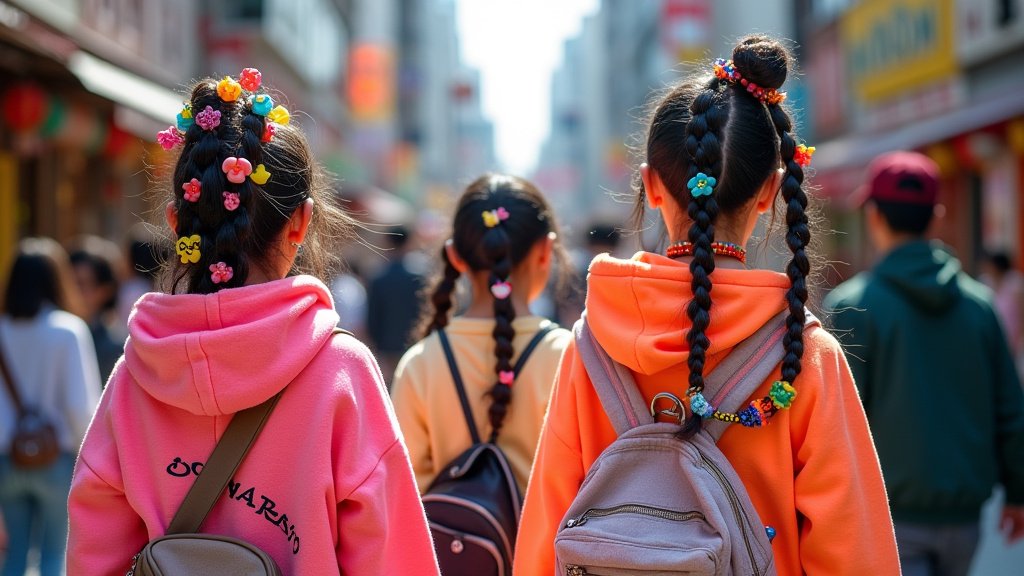
International Decora Day, observed annually on July 25, serves as a global testament to the enduring influence of Japan’s most vibrant street fashion subculture. Originating in the bustling districts of Harajuku, Tokyo, during the mid-1990s, the Decora movement—short for ‘decoration’—represents a defiant embrace of maximalist self-expression. By prioritizing an abundance of colorful hair clips, layered clothing, and nostalgic trinkets, the subculture has evolved from a local Tokyo trend into a recognized form of artistic freedom that continues to influence contemporary youth fashion globally. As the world celebrates this day, the movement remains a profound study in how aesthetic rebellion can foster community and creative autonomy.
Key Highlights
- Origins: Emerging in the mid-1990s in Harajuku, Japan, Decora was popularized through magazines like Fruits and the influence of cultural icons like Tomoe Shinohara.
- Philosophy of Excess: The style rejects minimalist conformity, favoring ‘more-is-more’ layering, bright neon palettes, and childhood-inspired accessories.
- Economic Impact: The subculture catalyzed local economies in Tokyo, particularly in Takeshita Street, fueling demand for specialized craft-making, toy-based jewelry, and indie boutique apparel.
- Digital Evolution: In the modern era, Decora has transitioned from physical street meetups in Tokyo to a global digital phenomenon, with social media algorithms amplifying its reach to Gen Z populations worldwide.
The Maximalist Manifesto: Decora’s Artistic Legacy
The story of Decora begins in the narrow lanes of Harajuku, where youth culture sought to shatter the monotony of traditional Japanese dress codes. While the 1990s in Japan were often characterized by the stoic, business-centric attire of the ‘salaryman,’ the Decora scene provided a literal explosion of color and kinetic energy. At its core, the style is not merely about fashion; it is a psychological reclamation of childhood wonder. By wearing plastic trinkets, oversized badges, and layers of neon fabric, adherents created a portable fortress of joy, effectively using their bodies as a canvas to reject societal pressure to grow up or blend in.
The Anatomy of the Aesthetic
The visual language of Decora is highly specific. An ‘authentic’ Decora look often involves a specific layering strategy: a base layer of neon or pastel shirts, followed by a plethora of colorful sweaters or hoodies, and an overwhelming volume of plastic hair clips—often arranged symmetrically along the bangs. These clips are rarely functional; they are decorative symbols, often representing favorite childhood cartoons, animals, or sweets. The inclusion of ‘decora’—plastic beads, bells, and layered wristbands that jingle while walking—adds an auditory component to the visual spectacle, turning the wearer into a sensory experience. This meticulous assembly is a form of discipline; it requires an acute understanding of color theory and spatial balance to layer dozens of accessories without looking cluttered, showcasing a sophisticated grasp of design disguised as chaos.
Economic and Cultural Drivers
Beyond the visuals, Decora played a pivotal role in the micro-economy of Tokyo. The demand for specific, often kitsch, accessories turned small, independent boutiques along Takeshita Street into hubs of innovation. Many of these shops were family-run or operated by young designers who sourced vintage toys and repurposed them as high-fashion jewelry. This created a circular economy of ‘Kawaii’ (cute) goods, where value was derived from rarity and personal customization rather than luxury branding. The subculture’s insistence on DIY methods—altering store-bought clothes with lace, patches, and glitter—challenged the dominance of fast fashion, proving that individual creativity could hold more cultural capital than mass-produced trends. Today, while high-end fashion houses have occasionally sampled the maximalist ethos of Decora, the movement remains most potent in its grassroots form.
A Future Defined by Digital Expression
As we observe International Decora Day in 2026, the movement has undergone a significant transformation. While the original Harajuku street meetups remain, the primary theater for Decora now resides within the digital realm. On platforms like Instagram and TikTok, hashtags dedicated to the subculture facilitate a global exchange of ideas, where a teen in Tokyo might influence a content creator in London or New York. This digital democratization has allowed the aesthetic to evolve, incorporating new materials like digital-inspired neon, 3D-printed charms, and tech-wear elements. However, the core ethos remains unchanged: the assertion that fashion is a tool for mental liberation. As society faces increasing pressure toward homogenization, the ‘maximalist manifesto’ of Decora serves as a necessary reminder that artistic individuality is a vital, non-negotiable human right.
FAQ: People Also Ask
1. What is the history of Decora?
Decora emerged in Harajuku, Tokyo, in the 1990s. It was popularized by cultural figures like Tomoe Shinohara and documented extensively by the street fashion publication Fruits, which captured the rise of unique subcultures in Japan.
2. Is Decora still popular in Japan?
Yes, while the ‘peak’ of the 90s street fashion boom has evolved, Decora remains a cornerstone of Japanese fashion history. It is frequently celebrated by enthusiasts who maintain the tradition, and it continues to inspire modern designers and global trends.
3. How can someone start dressing in Decora style?
Start by focusing on layering and accessorizing. The key is ‘maximalism’—don’t be afraid to mix bright colors, use multiple hair clips, and add plenty of bracelets or necklaces. The goal is to express personal joy through an abundance of items.
4. Why is July 25th International Decora Day?
July 25th was established by the community to honor the spirit of the movement, encouraging followers worldwide to wear their most vibrant, maximalist outfits as a display of artistic freedom and to celebrate the history of the subculture.