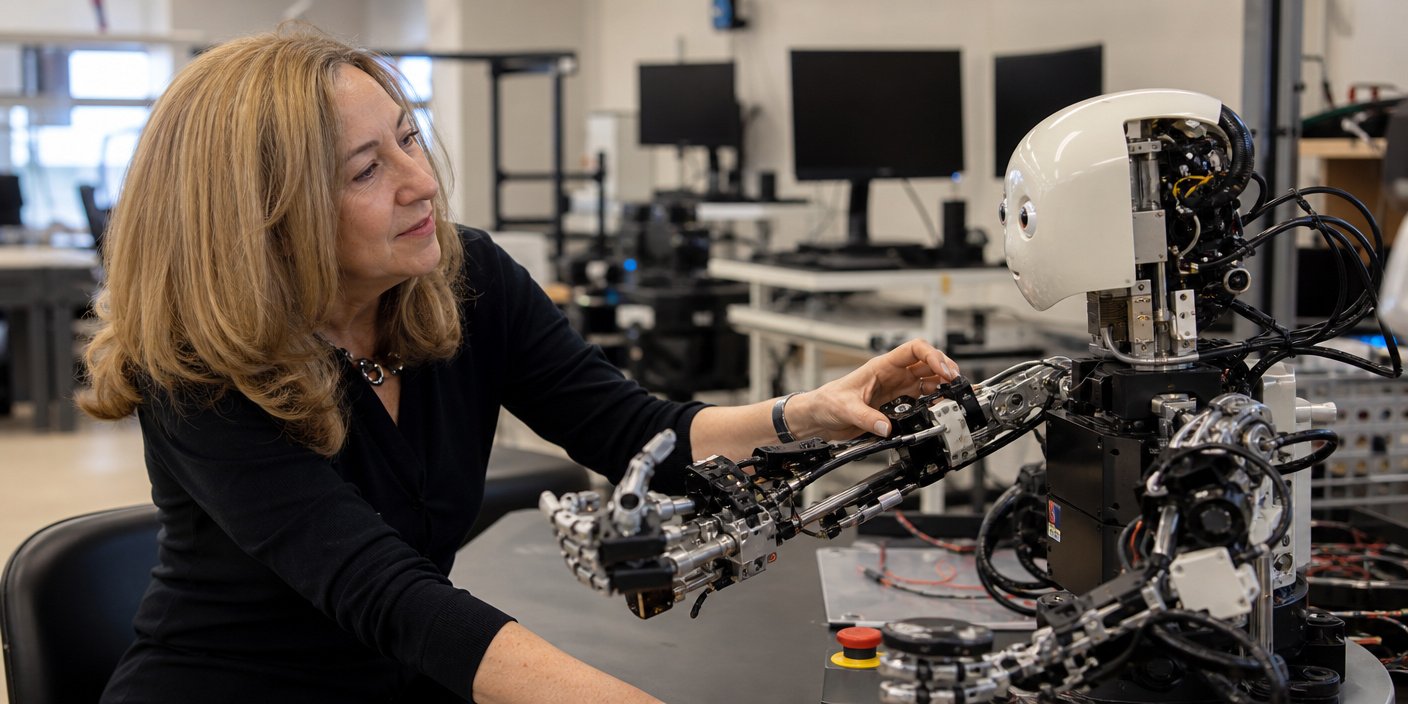
The tech industry stands at a precarious intersection of rapid innovation and systemic stagnation. While technological capability grows exponentially, the demographic profile of those building these systems remains stubbornly narrow. In honor of Women in Tech Week and the annual commemoration of Ada Lovelace Day—the 19th-century mathematician often credited as the world’s first computer programmer—organizations like the UK’s Met Office are taking a public stand. By highlighting the contributions of women who are actively shaping the future of weather forecasting, climate modeling, and supercomputing, these institutions are not merely celebrating achievement; they are highlighting the urgent necessity of inclusive leadership in the digital age.
The Met Office: A Case Study in Inclusive STEM
The Met Office, as a national weather service, is fundamentally a technology company that happens to forecast the weather. Its work relies on high-performance computing, massive data analytics, and complex algorithmic modeling. However, the organization recognizes that its technological prowess is only as strong as its human capital. During Women in Tech Week, the Met Office has shifted the spotlight onto its own internal talent pool. By showcasing women in roles ranging from software engineering to data science, the organization is aiming to demystify technical careers for the next generation.
The strategic focus here is visibility. By providing role models within high-stakes technical environments, the Met Office is attempting to counteract the ‘leaky pipeline’—the phenomenon where girls show early interest in STEM subjects but exit the pathway before reaching leadership positions. This visibility is not just internal; it is a critical signal to the broader industry that technical brilliance is not gender-coded.
The Data Crisis: Understanding the Representation Gap
The broader context of these celebrations is sobering. According to recent data from BCS, the Chartered Institute for IT, women still account for only approximately 24% of the tech workforce in the United Kingdom. This figure has remained largely stagnant for the better part of a decade. The discrepancy is not merely a social issue; it is a critical operational risk.
When tech teams are homogenous, the tools they build often carry the same biases, lacking the diverse perspectives required to troubleshoot complex, real-world edge cases. The gender gap manifests in three specific areas:
1. Recruitment: The initial barrier of biased hiring practices and non-inclusive job descriptions.
2. Retention: A corporate culture that fails to offer flexible working environments or adequate support for career progression.
3. Leadership: A lack of women in C-suite or senior architectural roles, creating a glass ceiling for those rising through the ranks.
Beyond the Pipeline: Addressing Retention and Leadership
To move beyond performative celebration, industry leaders are realizing that ‘pipeline’ is not the only issue—the ‘culture’ is the bottleneck. The transition from individual contributor to senior leadership is where the data reveals the steepest drop-off for women. Addressing this requires a move away from generic diversity initiatives and toward concrete structural changes.
Mentorship, while valuable, is no longer considered sufficient. Leading organizations are pivoting toward sponsorship—a model where senior executives are held accountable for the career advancement and promotion of their mentees. This involves active advocacy for high-impact projects, visible promotion opportunities, and pay-equity audits that ensure women are not just entering the field, but are compensated and empowered to lead it.
At the Met Office and similar scientific institutions, the integration of flexible working policies and return-to-work schemes for parents has proven to be a cornerstone for retention. By acknowledging that technical talent requires a sustainable environment to thrive, these organizations are rewriting the ‘default’ mode of a tech career, making it accessible to those who were previously excluded by rigid, ‘always-on’ work cultures.
The Innovation Multiplier: Why Gender Balance Matters
The most compelling argument for diversifying the tech sector is economic. Research from institutions like McKinsey and the World Economic Forum consistently suggests that gender-diverse teams are more innovative and perform better financially. When diverse perspectives are integrated into the design and development phases of technology, the end products are more robust, more user-centric, and more adaptable to global markets.
For the Met Office, this is literal: better climate models and more accurate weather predictions have direct, real-world impacts on global safety and economic planning. By failing to tap into the full spectrum of available talent, the tech industry is effectively leaving innovation on the table. The push for equality is not about charity; it is about maximizing the potential of our greatest resource: human intelligence.
The Legacy of Ada Lovelace: A Modern Mandate
Ada Lovelace once envisioned computers doing more than just ‘calculating’—she foresaw the potential for machines to process music, art, and complex logic. Her legacy is one of visionary thinking that transcended the limited social roles available to women of her time. Celebrating her today serves as a reminder that the barriers women face in tech are social constructs, not technical limitations. The future of technology requires the vision of diverse minds, and the work being highlighted by institutions like the Met Office is the necessary first step in ensuring that the future is built by everyone, for everyone.