The Gordie Howe International Bridge has officially opened, marking a monumental milestone in cross-border infrastructure. Connecting Windsor, Ontario, and Detroit, Michigan, this massive engineering project stands as a testament to bilateral cooperation and modern industrial necessity. By facilitating smoother, more efficient trade logistics, the bridge promises to transform the busiest commercial land border crossing in North America.
Key Highlights
- Unprecedented Connectivity: The bridge creates a vital new link, significantly reducing wait times and congestion for commercial and passenger traffic between the two nations.
- Economic Catalyst: Designed to streamline the automotive and logistics supply chains, the bridge is projected to inject billions in efficiency savings into the North American economy.
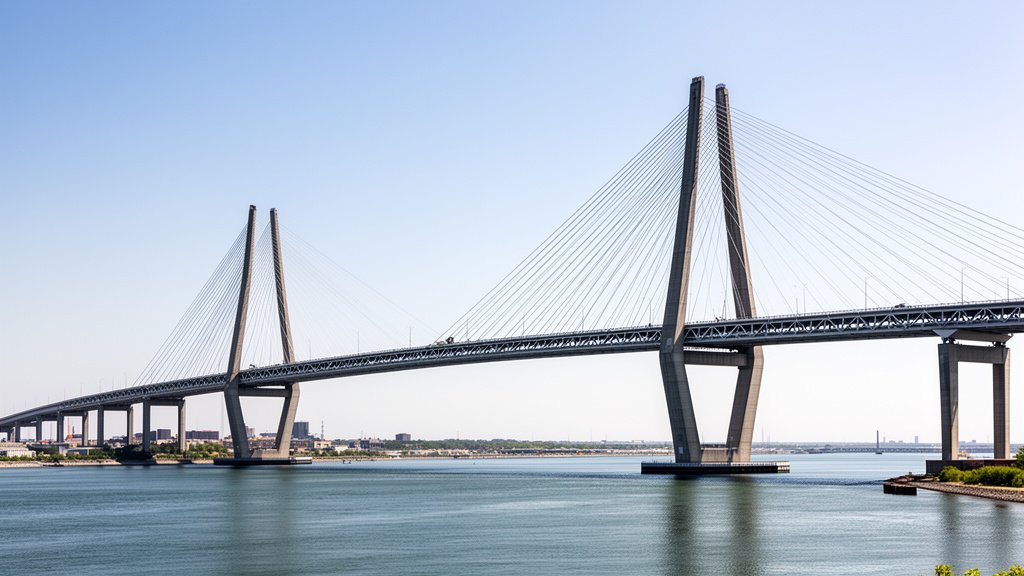
- Architectural Feat: The structure features a state-of-the-art cable-stayed design, reaching unprecedented heights for a North American span, symbolizing the future of regional infrastructure.
A Historic Span: Connecting Economies and Communities
The completion of the Gordie Howe International Bridge is not merely an achievement of concrete and steel; it represents a fundamental shift in how the North American economy moves. For decades, the Ambassador Bridge served as the primary artery for trade between Windsor and Detroit. With the opening of the Gordie Howe span, the region now possesses a redundant, high-capacity pathway that alleviates critical bottlenecks in the global supply chain, particularly for the automotive sector, which relies on the just-in-time delivery of parts across the border.
Engineering the Future: The Anatomy of the Bridge
At the core of this project lies a sophisticated cable-stayed design that is both functional and iconic. The bridge towers, which dominate the skyline, serve as the anchor for the massive deck suspended over the Detroit River. Engineering teams from the Windsor-Detroit Bridge Authority (WDBA) and their private sector partners have utilized high-strength steel and innovative seismic-resistant materials to ensure longevity and safety. The project includes not only the bridge itself but also expansive, modern ports of entry on both the Canadian and American sides, featuring state-of-the-art tolling systems, inspection plazas, and automated border processing technologies. This integration ensures that the flow of goods is as frictionless as modern technology allows.
A Vital Artery for North American Trade
The economic stakes of this project cannot be overstated. The Windsor-Detroit corridor accounts for a significant percentage of total Canada-US trade. Before this bridge, delays at the border were a regular friction point for industries ranging from manufacturing to perishable goods distribution. By providing dedicated lanes for commercial transport and separating them from local passenger traffic, the bridge creates a dedicated corridor for the ‘lifeblood’ of the regional economy. Stakeholders anticipate that the increased capacity will reduce idling time, lower fuel consumption for transport fleets, and enhance the overall reliability of cross-border logistics. Economists suggest this project will yield long-term dividends by attracting new industrial investment to the Detroit and Windsor metropolitan areas, positioning the region as a central hub in the post-pandemic supply chain landscape.
The Legacy of Gordie Howe
Named after the legendary hockey icon who spent much of his professional life in Detroit, the bridge serves as a fitting tribute to the connection between two communities that share a deep cultural and sporting history. The decision to name the bridge after Mr. Howe reflects the desire for the infrastructure to be more than just a transit point; it is intended to be a symbol of unity. Local community leaders have emphasized that the bridge is designed to integrate into the existing urban fabric of both cities, offering new pedestrian and cycling pathways that bridge the social and recreational gap between the two countries, effectively encouraging cross-border community engagement.
Secondary Angles: Future-Proofing the Region
Beyond the immediate trade impacts, the Gordie Howe Bridge project introduces three critical secondary advancements:
1. Technological Integration: The bridge is equipped with smart-monitoring systems. Sensors embedded throughout the structure provide real-time data on traffic flow, structural integrity, and environmental conditions. This ‘digital twin’ approach allows for predictive maintenance, ensuring the bridge remains in peak operational condition for decades.
2. Environmental Sustainability: The project design incorporates extensive stormwater management systems, protecting the Detroit River ecosystem. Furthermore, the efficiency gains achieved by reducing traffic congestion are expected to lead to a measurable reduction in carbon emissions from idling heavy-duty vehicles.
3. Urban Revitalization: The arrival of the bridge has spurred significant development in surrounding districts. In Detroit, neighborhoods near the plaza have seen renewed interest in infrastructure and commercial real estate, while in Windsor, the bridge connection is shifting the development focus, creating a new economic corridor that diversifies the local economy away from heavy reliance on existing transit points.
FAQ: People Also Ask
Q: What is the primary purpose of the Gordie Howe International Bridge?
A: The primary purpose is to provide a much-needed, high-capacity alternative to the Ambassador Bridge, thereby easing border congestion, streamlining automotive supply chains, and increasing the reliability of trade logistics between Canada and the United States.
Q: How does this bridge impact the local economy?
A: It is expected to drive significant economic growth by attracting logistics investment to both Windsor and Detroit, reducing costs for businesses dependent on cross-border transport, and revitalizing the industrial areas surrounding the border crossings.
Q: Who managed the construction of this bridge?
A: The project was overseen by the Windsor-Detroit Bridge Authority (WDBA), a non-profit Canadian Crown corporation, working in collaboration with the Michigan Department of Transportation (MDOT) and the private partner, Bridging North America.