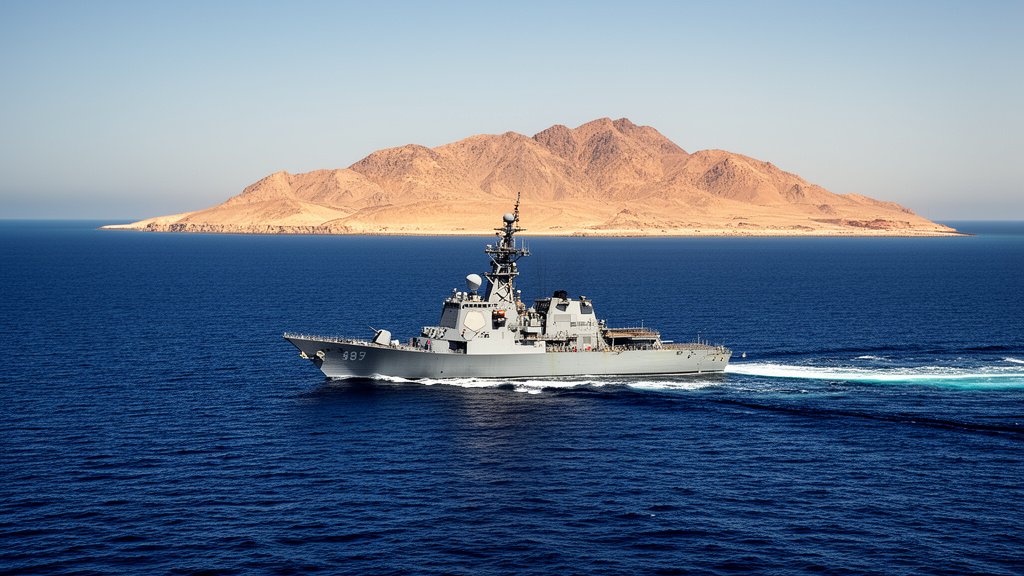
The volatile situation in the Persian Gulf shifted from covert maneuvering to open kinetic conflict today as US forces executed a precision strike against Iranian military infrastructure on Larak Island. The operation, aimed at neutralizing rocket launchers specifically positioned to threaten maritime traffic in the Strait of Hormuz, was immediately countered by a retaliatory volley of ballistic missiles directed at US military facilities within Jordanian borders. The interception of these missiles by Jordanian defense assets prevented potential mass casualties, yet the exchange underscores a dangerous inflection point in US-Iran relations that threatens to destabilize global energy markets and regional security.
Key Highlights
- Precision Strike: US military assets successfully destroyed Iranian rocket launchers on Larak Island, which intelligence confirmed were staged to disrupt commercial shipping in the Strait of Hormuz.
- Ballistic Retaliation: Iran responded to the destruction of the Larak batteries by launching a barrage of ballistic missiles aimed at US military facilities located in Jordan.
- Interception Success: Jordanian forces successfully intercepted the incoming ballistic projectiles, preventing direct impact on the designated US facilities.
- Strait Security: The operation was deemed a necessary measure to protect international maritime transit and the free flow of energy through the world’s most critical oil chokepoint.
The Strategic Shift in the Strait of Hormuz
The decision to engage targets on Larak Island marks a significant departure from standard containment strategies. Larak Island has long served as a strategic outpost for the Iranian Revolutionary Guard Corps (IRGC), functioning as a staging ground for both drone operations and maritime interdiction assets. Intelligence reports collected over the preceding weeks indicated an escalation in the positioning of mobile rocket launchers, a clear tactical signal that the IRGC intended to hold shipping in the Strait of Hormuz hostage to political demands.
Neutralizing the Maritime Threat
US Central Command (CENTCOM) confirmed the operation targeted the specific mobility vehicles responsible for the threat. By removing these launchers, the US has signaled that interference with commercial navigation—through which approximately 20-30% of the world’s oil supply passes daily—will be met with direct military kinetic action. This preemptive destruction of assets is designed to prevent a ‘grey zone’ scenario where Iran could initiate a blockage without triggering a full-scale war. However, the subsequent Iranian response demonstrates that the IRGC is prepared to escalate the theater of operations far beyond the maritime domain.
The Jordanian Front
The choice of Jordan as the target for the retaliatory ballistic missile strike is strategically significant. By striking outside of the immediate Persian Gulf theater, Iran sought to expand the conflict zone and test the defensive integration between the US and its regional partners. Jordan, which has maintained a complex balancing act in its foreign policy, was thrust into the crosshairs of this geopolitical confrontation. The success of the interception confirms the operational readiness of Jordanian air defense systems, which are increasingly integrated with US regional early-warning networks.
Geopolitical Implications and Market Volatility
The escalation has sent immediate shockwaves through global markets. While the Strait of Hormuz remains open, the reality of ballistic missiles crossing international borders in the Middle East introduces a premium on risk that is already being reflected in energy futures. Investors and state actors are now recalibrating their expectations for regional stability.
The ‘Expanding Conflict’ Scenario
Analysts are currently focused on the risk of ‘horizontal escalation.’ If Iran determines that its maritime denial strategy is no longer viable due to aggressive US interdiction, they may pivot toward broader asymmetric warfare. This includes increased pressure on US facilities in Iraq, Syria, and now Jordan. The reliance on ballistic missiles signifies that Iran is moving past the use of proxy groups to conduct direct state-on-state messaging, increasing the likelihood of miscalculation.
Energy Security and the Chokepoint
The Strait of Hormuz remains the world’s most crucial oil chokepoint. The US rationale for the Larak Island strike centers on the ‘freedom of navigation’ doctrine. By actively defending this passage, the US is attempting to reassure global energy consumers that the Iranian threat will not be permitted to materialize into actual blockades. However, the cost of this defense is an increased military footprint that invites further retaliatory cycles.
Integration of Defense Networks
A secondary angle of interest is the deepening of defensive cooperation between the US and its regional allies. The interception by Jordanian forces demonstrates the effectiveness of the regional air defense architecture. This event will likely accelerate the formalization of joint-defense agreements, as Gulf nations and regional partners realize that the threat of ballistic missiles is a shared vulnerability that requires collective, rather than unilateral, response mechanisms.
FAQ: People Also Ask
Why was Larak Island specifically targeted?
Larak Island is located in the Strait of Hormuz and provides a high-ground advantage for monitoring and controlling maritime traffic. The IRGC has used it to station mobile rocket launchers capable of threatening tankers. Striking these launchers was a targeted move to protect international shipping lanes.
Were there any casualties in the ballistic missile strike?
No. US officials have confirmed that the ballistic missiles launched at US facilities in Jordan were successfully intercepted by Jordanian defense forces. No US personnel were injured in the exchange.
Does this move signal the start of a wider war?
While it represents a significant escalation in tactical directness between the US and Iran, both sides are operating within specific constraints. The current objective remains containment, though the risk of miscalculation remains extremely high given the shift toward ballistic engagement.
How will this affect global oil prices?
The market is currently pricing in a ‘risk premium.’ Uncertainty regarding the security of the Strait of Hormuz usually leads to immediate price hikes in energy markets. Until tensions de-escalate, volatility is expected to remain high.