
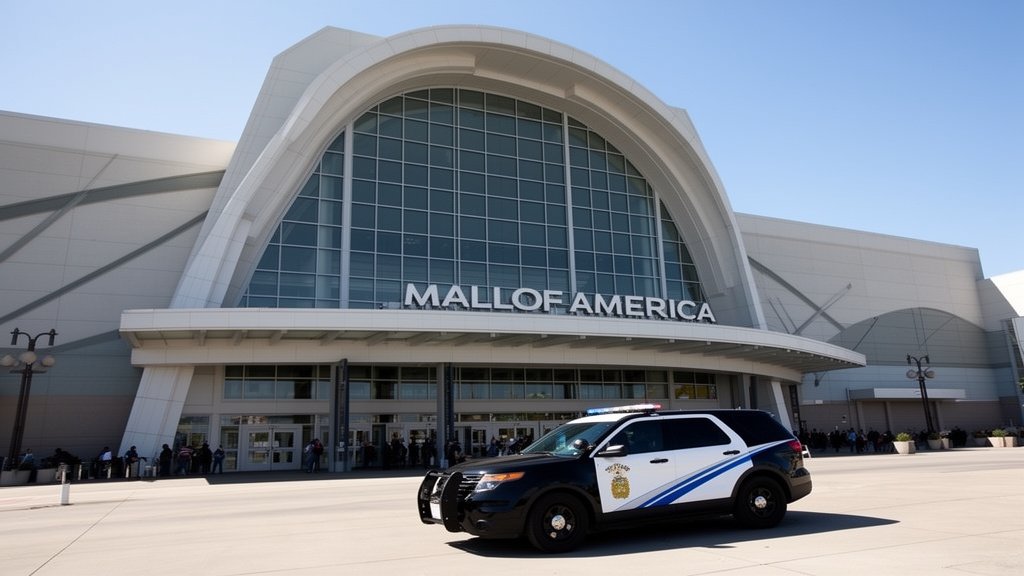
Federal law enforcement has successfully neutralized a credible threat targeting the Mall of America in Bloomington, Minnesota. This interdiction, confirmed by authorities following operations reported on October 7, represents a significant victory for the Federal Bureau of Investigation (FBI) and its partners within the Joint Terrorism Task Force (JTTF). While the investigation remains sensitive, the successful disruption of this plot highlights the complex, ever-evolving nature of domestic security and the effectiveness of modern intelligence gathering in protecting high-traffic, iconic American infrastructure.
Key Highlights
- Successful Interdiction: The FBI confirmed the neutralization of a specific, targeted threat against the Mall of America.
- Operation Date: The counter-terrorism development was formally reported and confirmed by major networks on October 7.
- Enhanced Security: Following the operation, local and federal authorities have increased the security posture at the facility to ensure public safety.
- Collaboration: The operation was the result of high-level coordination between federal, state, and local law enforcement agencies, demonstrating the strength of current inter-agency communication.
The Anatomy of a High-Stakes Counter-Terrorism Operation
The Mall of America stands not only as one of the largest retail and entertainment complexes in the United States but also as a globally recognized symbol of American consumer culture. Its sheer scale—housing over 500 stores, an indoor theme park, and attracting tens of millions of visitors annually—makes it a uniquely challenging environment to secure. The recent FBI operation, which came to light on October 7, serves as a stark reminder of why such iconic venues remain permanent fixtures on the radar of law enforcement and intelligence communities.
Intelligence and Predictive Policing
Modern counter-terrorism relies heavily on predictive intelligence. The successful interdiction at the Mall of America was not merely a reaction to an unfolding event but the culmination of rigorous data analysis, digital surveillance, and human intelligence gathering. The FBI’s approach today integrates sophisticated cyber-tracking with traditional investigative methods. By monitoring encrypted communication channels and analyzing behavioral patterns, federal agents are often able to identify threats long before they manifest in a physical space. The October 7 intervention demonstrates that the investment in these technological and analytical resources is paying dividends in the form of prevented tragedies.
The Logistics of Securing the ‘City Within a City’
Securing a facility as expansive as the Mall of America requires a seamless partnership between the private sector and public law enforcement. Mall management operates a robust, multi-layered security infrastructure, which includes advanced surveillance systems, private security personnel, and dedicated police substations. However, when a threat reaches a level of national security concern, the FBI assumes the lead. This transition from private mall security to federal investigation is a finely-tuned process. The recent operation underscores that the ‘hardening’ of public targets is not just about physical barriers like bollards or metal detectors; it is about the behind-the-scenes intelligence network that serves as the first line of defense.
The Evolving Threat Landscape
Why does a site like the Mall of America continue to attract the attention of bad actors? Analysts suggest that for those seeking to disrupt public life, the target’s value is symbolic rather than purely tactical. An attack on such a venue is intended to create maximum psychological impact, disrupt economic activity, and generate media saturation. This creates a cat-and-mouse game between threat actors and counter-terrorism agencies. As the methods of radicalization and planning shift toward decentralized, digital-first strategies, the FBI’s counter-terrorism division has been forced to adapt by focusing on ‘left-of-boom’ strategies—identifying and neutralizing threats in the planning stages rather than waiting for an attempt to be made.
The Impact on Public and Economic Confidence
Beyond the immediate tactical success, the prevention of an attack has profound implications for the economic engine of the Twin Cities region. Public safety is the foundational requirement for the retail and tourism economy. When visitors feel unsafe, commerce halts. By proactively addressing and nullifying the threat, the FBI has helped maintain the viability of the facility as a safe, family-friendly destination. This operation serves as a testament to the resilience of our public infrastructure and the professional dedication of those tasked with its protection. Moving forward, this case will likely be used as a case study in effective multi-jurisdictional collaboration, proving that silence and secrecy—the hallmarks of effective intelligence work—are the most powerful tools in preventing domestic terror.
FAQ: People Also Ask
1. Is the Mall of America currently safe for visitors?
Yes. Authorities have confirmed that the threat was successfully interdicted. Following the October 7 announcement, the Mall of America and local law enforcement implemented additional security measures as a precautionary step to ensure ongoing safety.
2. How did the FBI discover this plot?
While the FBI generally does not disclose specific operational methods, such interdictions typically result from a combination of digital signal intelligence, tips from informants, and deep-level monitoring of communication networks by the Joint Terrorism Task Force.
3. What is the Joint Terrorism Task Force (JTTF)?
The JTTF is a partnership between the FBI, federal, state, and local law enforcement agencies. These task forces are tasked with investigating, preventing, and prosecuting terrorism in the United States, allowing for the rapid sharing of information and resources between local police and federal intelligence agencies.
4. Are there any expected disruptions to mall operations?
There have been no reports of permanent closures or long-term disruptions to operations. While security remains heightened, the mall continues to function as a public space. Visitors are encouraged to remain vigilant and report suspicious activity, but operations remain normal.