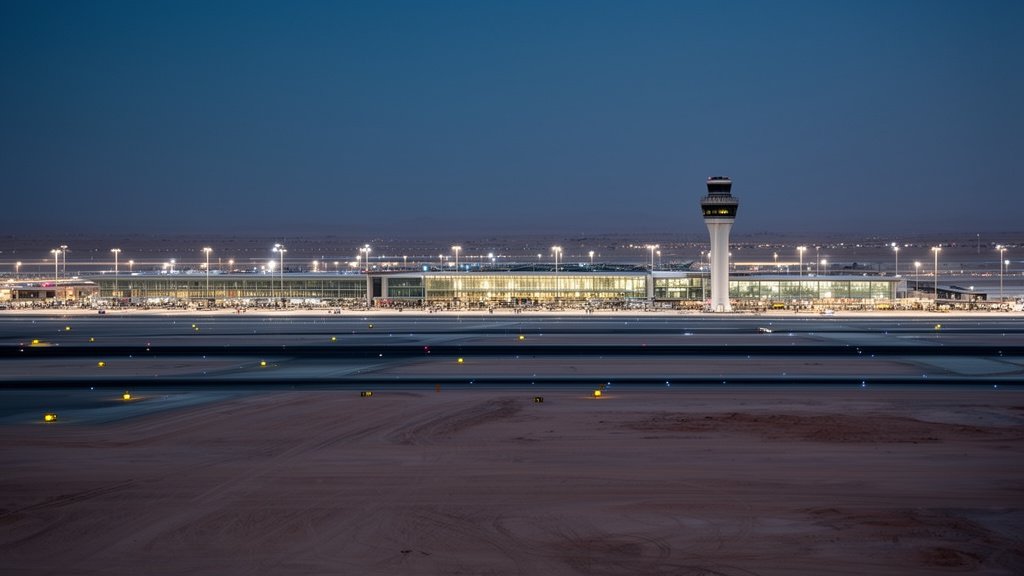
As the Middle East paused to mark the solemn third anniversary of the October 7 Hamas-led attacks, the volatility of the region was underscored by a violent demonstration of continued instability. Houthi forces, the Iran-aligned group operating out of Yemen, launched a fresh series of strikes targeting critical infrastructure within Saudi Arabia, including areas in the vicinity of Riyadh’s King Khalid International Airport. This convergence of historical memory and active combat highlights the fragile security architecture currently governing the Arabian Peninsula and the Levant.
The Houthi Offensive: Strategic Calculations
The timing of these strikes is widely interpreted by regional analysts not as a coincidence, but as a deliberate attempt to exert pressure during a moment of heightened psychological and geopolitical sensitivity. The Houthi movement, formally known as Ansar Allah, has frequently utilized the October 7 anniversary to amplify its regional messaging. By targeting Riyadh, the Houthis are engaging in a signaling strategy intended to demonstrate the reach and persistence of their drone and missile capabilities despite ongoing coalition and international maritime intervention.
These strikes, characterized by the deployment of long-range loitering munitions and potentially ballistic systems, force a recalibration of Saudi Arabian air defense posture. While the Kingdom’s Patriot and THAAD batteries have historically maintained a high interception success rate, the persistent threat posed by the Houthis—who have refined their military hardware with Iranian technological assistance—places a continuous strain on regional military resources. The specific targeting of the Riyadh airport vicinity serves as a dual-purpose move: it creates an immediate economic and logistical anxiety, while simultaneously testing the resolve of regional alliances during an already tense commemorative period.
Saudi Arabia’s Defense and Regional Vulnerability
For Saudi Arabia, the incident presents a complex diplomatic and security dilemma. Riyadh has been actively engaged in complex negotiations to secure a lasting ceasefire in Yemen and has sought to de-escalate tensions with Tehran through various back-channel communications. These renewed strikes directly challenge the efficacy of that de-escalation strategy. If the Houthis continue to strike deep into Saudi territory, it forces the Kingdom to balance its pursuit of a domestic “Vision 2030” economic transformation—which requires stability to attract foreign investment—with the hard security requirements of sovereign defense.
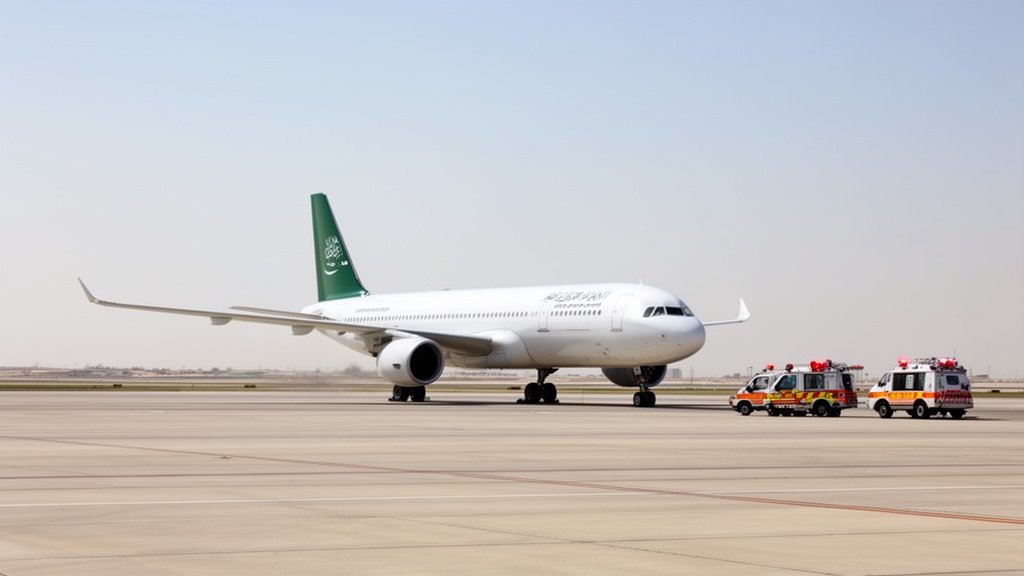
The vulnerability of infrastructure like King Khalid International Airport is not merely a military concern but an economic one. Global markets are notoriously sensitive to disruptions in the energy-rich and logistics-dependent Middle East. A credible threat to the Saudi capital’s primary transport hub introduces a risk premium that can impact everything from insurance rates for commercial shipping to broader investor confidence in the region’s stability.
The October 7 Legacy: Three Years of Regional Realignment
Three years after the events of October 7, 2023, the map of the Middle East has undergone a profound, often violent, realignment. The anniversary, marked in Israel by memorial services and profound national mourning, serves as a focal point for the “Ring of Fire” strategy employed by Iran’s proxies. This strategy utilizes a coordinated, multi-front approach, with the Houthis in the south, Hezbollah in the north, and various militias in Iraq and Syria, all intended to stretch Israeli and regional security capabilities to their breaking point.
This anniversary is fundamentally different from the first or second. The cumulative effect of three years of constant warfare has eroded the regional status quo. Where there was previously an assumption of manageable conflict, there is now an acceptance of a “forever war” paradigm. The Houthi actions on this anniversary are a reminder that the conflict initiated on October 7 has metastasized, moving from a localized tragedy into a regional theater involving multiple state and non-state actors who are increasingly willing to use significant dates as markers for military escalation.
Broader Geopolitical Ripple Effects
Looking beyond the immediate kinetic exchange, the Houthi strikes force international powers—particularly the United States and the European Union—to address the widening scope of the conflict. The integration of Houthi maritime harassment in the Red Sea with their aerial strikes against the Saudi interior suggests an integrated, albeit asymmetric, command structure. This complicates the geopolitical landscape for Western powers who are simultaneously attempting to support Israel’s security, maintain stability in the Red Sea shipping lanes, and prevent a broader direct confrontation between Iran and the Gulf states.
Furthermore, the psychological impact of these strikes on this specific date cannot be understated. By linking their tactical operations to the anniversary, the Houthis aim to insert themselves into the global narrative of the October 7 conflict. It is a form of warfare designed not only to destroy physical targets but to disrupt the regional psychological equilibrium, reminding all parties that the fires ignited three years ago remain far from extinguished.
FAQ: People Also Ask
Q: Why are the Houthis targeting Saudi Arabia now, three years after October 7?
A: The Houthis are utilizing the anniversary of the October 7 attacks to signal their continued involvement in the regional conflict. By targeting Riyadh, they aim to demonstrate their military reach and maintain their relevance within the Iranian-aligned “Axis of Resistance,” while testing regional air defenses during a period of high sensitivity.
Q: How does this affect Saudi Arabia’s goal of regional stability?
A: The strikes complicate Saudi Arabia’s diplomatic efforts to secure a permanent ceasefire in Yemen and stabilize regional relations. Frequent attacks on critical infrastructure force the Kingdom to prioritize defense spending and increase security, which potentially complicates its long-term economic development goals under “Vision 2030.”
Q: Are these attacks related to the ongoing war between Israel and Hezbollah?
A: Yes, analysts view these actions as part of a coordinated multi-front strategy. The Houthis, Hezbollah, and other Iran-backed proxies operate as part of a loosely integrated network. The strikes against Saudi targets are intended to stretch regional security resources and keep international pressure focused on the broader Middle East theater.
Q: What is the significance of targeting Riyadh’s airport vicinity?
A: Targeting the area around the King Khalid International Airport is a high-visibility tactic. It serves to project power into the heart of the Saudi capital, creating economic and logistical anxiety, and serves as a psychological challenge to the Saudi leadership, demonstrating that even protected population centers are vulnerable.