
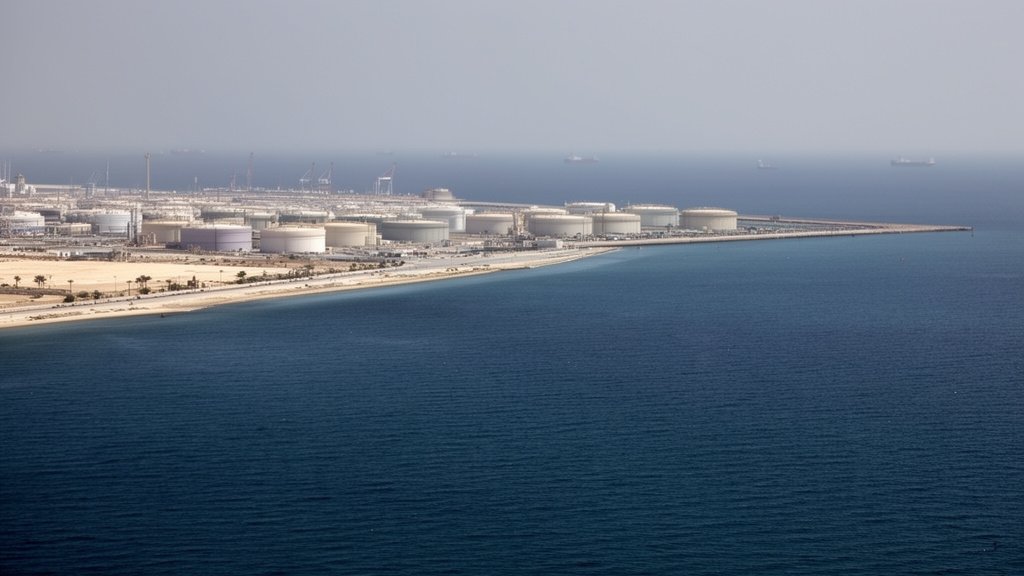
Iran has executed two distinct, calculated strikes against Bahrain, effectively terminating a long-standing period of relative geopolitical stability in the Persian Gulf. The aggressive maneuvers, which Tehran has explicitly characterized as retaliation against the United States, have sent shockwaves through regional capitals and Washington alike. With diplomatic channels currently stalled and regional tensions at a fever pitch, these strikes represent more than a localized dispute; they serve as a potent signal that the strategic environment in the Gulf is shifting into a more volatile phase.
Key Highlights
- Dual Strikes Confirmed: Iran has conducted two separate, confirmed military strikes against targets within Bahrain, ending months of relative silence in the theater.
- Retaliation Narrative: Tehran’s state officials have publicly framed these aggressive actions as direct retribution for United States military and geopolitical influence in the region.
- Diplomatic Stagnation: Efforts to de-escalate have hit a wall, with communication channels appearing increasingly paralyzed, raising fears of a broader conflict.
- Strategic Geography: The strikes specifically threaten the delicate status quo surrounding Bahrain, a nation that houses critical American naval assets.
The Strategic Shift: Decoding Tehran’s Escalation in the Gulf
The recent, dual-pronged offensive by Iran against Bahrain marks a critical pivot in Middle Eastern security dynamics. For months, the Persian Gulf had experienced a tenuous, if brittle, period of relative calm—a period that observers hoped might foster diplomatic openings. That hope has now been comprehensively dismantled. By targeting Bahrain, a nation that occupies a uniquely vulnerable and strategic position, Iran is not merely attacking a sovereign state; it is testing the resolve of the American security architecture in the region.
The Vulnerability of the Fifth Fleet Anchor
To understand the gravity of these strikes, one must look at the specific importance of Bahrain. The Kingdom of Bahrain is the primary headquarters for the United States Fifth Fleet, the naval component of the U.S. Central Command. This facility is the heartbeat of American maritime presence in the Middle East, tasked with protecting the free flow of commerce, oil, and military support throughout the region. When Iran strikes Bahrain, they are essentially signaling to Washington that no asset, regardless of its importance or fortification, is beyond the reach of their regional tactical capabilities.
Historically, Iran has often utilized proxy groups to maintain a level of plausible deniability. However, the nature of these recent strikes suggests a shift toward more direct, state-level signaling. This transition increases the risk of miscalculation. If the United States interprets these strikes as a direct challenge to its own naval dominance, the potential for a conventional military response creates a dangerous feedback loop of escalation that diplomats are currently ill-equipped to manage.
The Breakdown of Regional Mediation
For years, regional powers such as Saudi Arabia and the United Arab Emirates have attempted to carve out a middle path, balancing their security requirements with the economic necessity of keeping the Gulf open for business. These efforts relied heavily on the premise that Iran would maintain a certain threshold of restraint. This threshold has now been violated. The diplomatic deadlock is particularly concerning because the traditional mediators—who have historically maintained open lines of communication with both Riyadh and Tehran—find themselves marginalized as the rhetoric from Iranian officials hardens.
Intelligence analysts suggest that this escalation is likely a reaction to perceived domestic pressures within Iran, combined with a desire to force the United States back to the negotiating table on Tehran’s terms. However, in international relations, leveraging force to demand diplomacy is a high-risk gamble. It forces the targeted state—in this case, Bahrain—and its primary ally, the United States, into a defensive posture that makes compromise increasingly difficult for local political leaders to justify to their own populaces.
Economic and Security Implications
Beyond the immediate tactical threat, these strikes introduce severe economic uncertainty. The Persian Gulf is a chokepoint for global energy supplies. Any disruption in Bahrain, or any expansion of the conflict that leads to the closing or threatening of the Strait of Hormuz, has immediate ramifications for global oil prices. Investors and energy markets are already beginning to price in a “risk premium” based on the possibility that this is only the beginning of a sustained campaign.
Moreover, the security infrastructure of the Gulf Cooperation Council (GCC) is being put to the test. If members of the GCC feel that their collective security agreements are insufficient to deter Iranian aggression, they may feel compelled to accelerate their own defense acquisitions or pursue more aggressive, independent security postures. This could trigger a regional arms race that would further destabilize an already fractured geopolitical landscape.
Assessing the Path Forward
As of this writing, there is no indication that Tehran plans to cease these operations. In fact, official statements continue to reiterate that the actions were justified retaliation, a narrative that effectively traps Iranian leaders into maintaining this aggressive stance to avoid looking weak domestically. For Washington, the challenge is two-fold: how to provide tangible security assurances to Bahrain without triggering a full-scale kinetic war that would be devastating to regional stability.
Moving forward, the international community will be watching for any sign of a U.S. military repositioning or a hardening of sanctions. Simultaneously, back-channel diplomacy remains the only viable off-ramp, though the window for such measures is closing rapidly. If the current trend continues, the Gulf region faces a transition from a period of “cold peace” to a period of “active containment,” where the threat of force becomes the primary language of regional governance.
FAQ: People Also Ask
Q: Why is Bahrain a target for Iran?
A: Bahrain is a prime target because it hosts the U.S. Fifth Fleet headquarters. By striking Bahrain, Iran is able to project power against the United States, challenge the American naval presence in the region, and exploit regional tensions.
Q: How does this impact the U.S. military presence?
A: These strikes force a rethink of U.S. security protocols. The U.S. must now decide whether to increase its defensive posture (which could be seen as escalatory) or maintain current levels (which could be perceived as weakness), complicating the mission of the Fifth Fleet.
Q: What is the current status of diplomatic efforts?
A: Currently, diplomatic efforts are largely stalled. The aggressive rhetoric from Iranian officials and the lack of a clear de-escalation framework have left mediators with very little leverage to facilitate a dialogue between the involved parties.
Q: Is this part of a wider conflict?
A: While these are specific, localized strikes, they are viewed by analysts as part of a broader, long-term regional power struggle between Iran and the U.S.-aligned bloc, encompassing economic, political, and military dimensions.