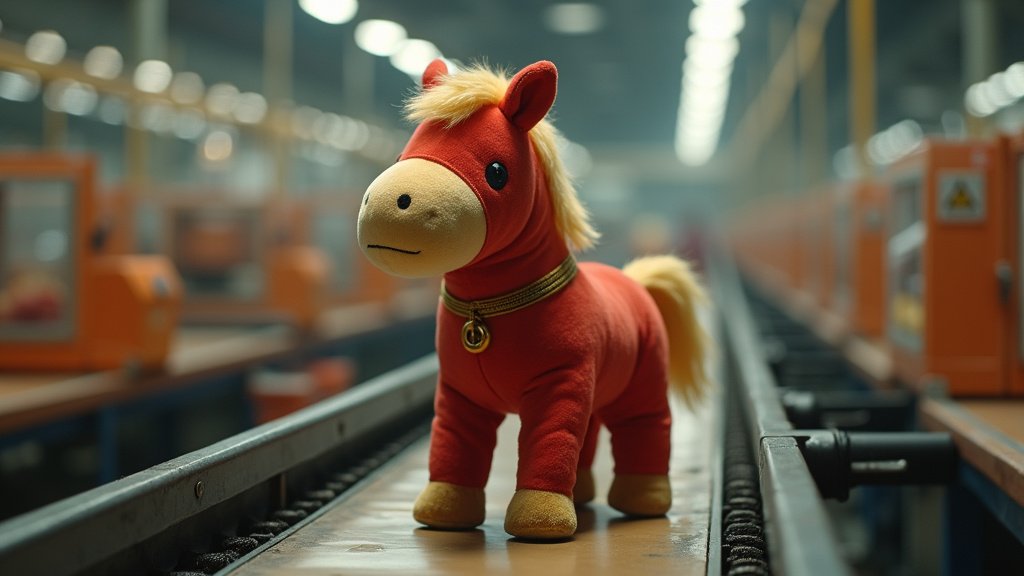
A plush horse toy is taking China by storm. This unexpected sensation began with a simple factory mistake. It was designed for the upcoming Year of the Horse. The toy was meant to be a cheerful mascot. However, a sewing error gave it a sad, downturned mouth.
This accidental pout transformed the toy. It quickly became the “Crying Horse.” The toy’s origin lies in Yiwu, China. This city is a major hub for small commodity production. A worker at the Happy Sister factory made a critical error. They stitched the horse’s mouth upside down. This created a distinctly melancholic expression. The toy featured red for good luck. It also had gold embroidery wishing for wealth.
Initially, the mistake caused concern. The shop owner, Zhang Huoqing, offered refunds. Yet, customers who received the flawed toy kept it. They found its sad face relatable. Photos of the “crying horse” soon spread online. This sparked massive interest. The trend gained serious momentum. It became a major talking point on social media. The hashtag #YiwuCryCry-HorseGoneViral quickly appeared. It garnered about 100 million views on Sina Weibo. Douyin, China’s TikTok, saw over 190 million mentions. This viral happening cemented its status.
However, the “Crying Horse” is more than just a toy. It resonates deeply with young Chinese workers. Many endure demanding work cultures. They often face long hours and pressure. The toy’s sad expression mirrors their feelings. It symbolizes workplace fatigue and burnout. Some call themselves “cattle and horse” laborers. This term reflects their overworked status. The toy offers an “emotional value.” It serves as a comfort. It helps people express hidden frustrations. This trend is part of a broader “ugly-cute” consumer movement. Imperfect designs often connect better with buyers.
The response from the Yiwu factory was swift. Demand for the “crying horse” surged dramatically. Production lines quickly expanded from two to over ten. Daily sales jumped from hundreds to tens of thousands. The factory is now intentionally producing the sad-faced version. This highlights Yiwu’s agility. Manufacturers there are experts at rapid trend adoption. They can pivot production almost overnight. This allows them to capitalize on viral happenings.
Furthermore, the “Crying Horse” exemplifies the “emotion economy.” Emotional fulfillment drives consumption. It also fuels innovation in product design. While some Western media focused on economic gloom, Chinese netizens embraced the toy playfully. It represents resilience. It acknowledges stress but finds humor in it. The toy’s affordability also adds to its appeal. It costs about 25 yuan. This makes it accessible to many. The exclusive story behind this toy shows how a simple error can create a cultural icon. This trending item is a unique commentary. It captures the mood of a generation. The “Crying Horse” stands as a testament to unexpected viral success. It shows how a manufacturing flaw can become a powerful symbol.