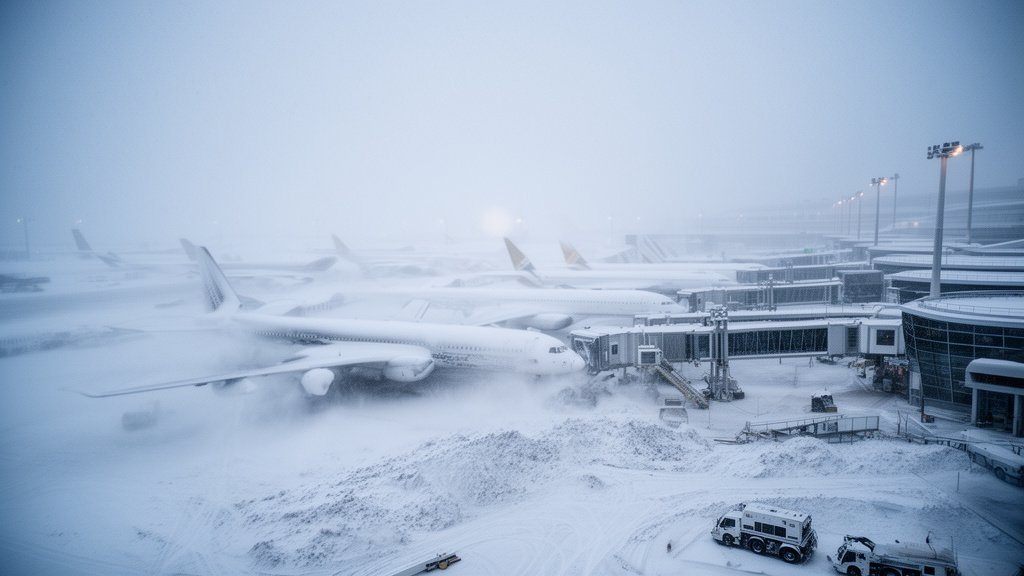
The holiday season has been brought to a jarring halt as a powerful, early-season winter storm system sweeps across the Midwest and Northeast, creating a perfect storm of hazardous road conditions, mass flight cancellations, and significant grid strain. Meteorologists from the National Weather Service (NWS) have issued severe blizzard and wind warnings for multiple states, warning that the storm’s rapid intensification is causing whiteout conditions and making travel effectively impossible in the hardest-hit regions. With millions of Americans projected to be on the roads and in the skies, the intersection of peak holiday volume and severe meteorological instability is pushing transportation networks to their breaking point.
Key Highlights
- Aviation Gridlock: Thousands of flight cancellations and delays have been recorded at major hubs in Chicago, Detroit, and New York, with the Federal Aviation Administration (FAA) instituting ground stops in affected zones.
- Hazardous Travel: State Departments of Transportation (DOT) are reporting extreme icing and drifting snow, leading to widespread highway closures and multiple multi-vehicle accidents.
- Grid Instability: Widespread power outages have been reported across rural areas, with utility companies warning that freezing rain could further damage transmission lines.
- NWS Alert Status: Emergency weather alerts remain in effect, with forecasters advising travelers to delay all non-essential trips until the system passes.
The Anatomy of a Disruptive Holiday Weather Event
The current meteorological event is characterized by a deep, low-pressure system colliding with a frigid arctic air mass, a dynamic that has accelerated the storm’s intensification far beyond initial models. This phenomenon, often referred to by meteorologists as “bombogenesis” when the central pressure drops rapidly, is the primary driver behind the severity of the wind gusts and the extreme accumulation rates. Unlike standard winter storms, this system is stalling over the Great Lakes region, creating an extended period of precipitation that is overwhelming local snow-clearing operations and municipal infrastructure.
The Fragility of Modern Aviation
The aviation sector is arguably the most visible victim of this storm. According to real-time data from FlightAware, the disruption is not localized; rather, it is cascading. Modern commercial aviation relies on a highly interconnected “hub-and-spoke” model, meaning a grounding at a primary hub like Chicago O’Hare (ORD) or Newark Liberty (EWR) creates a ripple effect that delays or cancels flights across the entire country.
When a major hub is impacted, flight crews become displaced, aircraft are stranded without access to de-icing pads, and the logistical coordination required to reset the schedule often takes days, not hours. The FAA has been forced to implement sophisticated traffic management programs, including holding patterns and ground delays, to manage the reduced airspace capacity safely. Airlines have responded by issuing travel waivers, allowing passengers to rebook flights without penalties, but the scarcity of available seats on remaining flights means many travelers are facing indefinite delays.
Grid Resilience and Energy Consumption
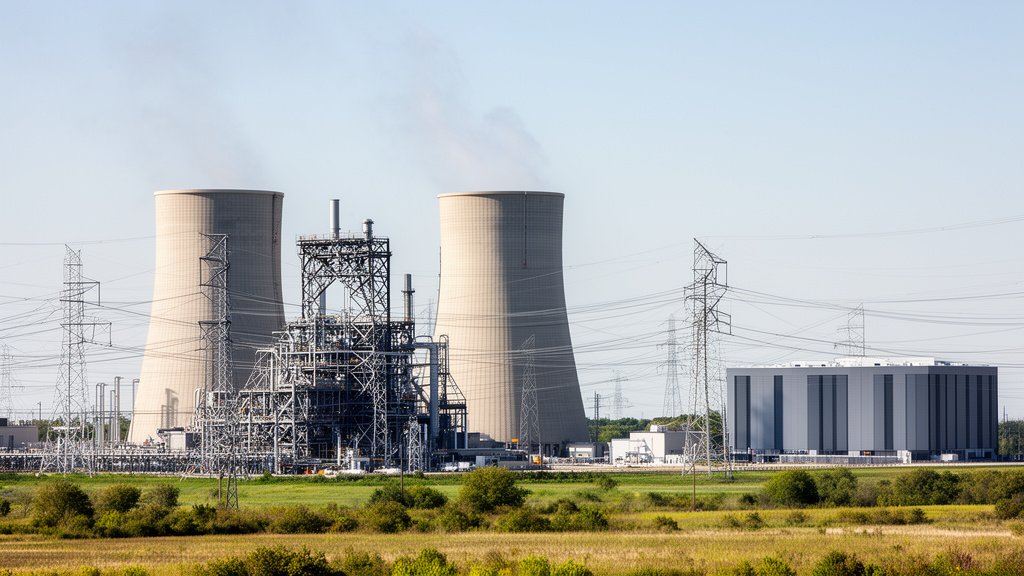
Beyond transportation, the storm is posing a significant challenge to the North American Electric Reliability Corporation (NERC) and regional grid operators. As temperatures plummet, residential heating demand has surged to near-record levels. Simultaneously, the storm’s heavy, wet snow—and in some cases, freezing rain—is accumulating on power lines and tree limbs.
The result is a spike in localized outages. Utility providers in the Midwest have deployed emergency repair crews, but the dangerous road conditions are limiting the ability of these teams to reach damaged infrastructure in a timely manner. The grid is currently under extreme stress, balancing the surge in demand with the logistical nightmare of maintaining distribution lines amidst high winds and ice accumulation. Officials are advising residents to prepare for extended outages by having emergency supplies on hand, including non-perishable food, water, and alternative heating sources.
Secondary Angles: Examining the Systemic Impact
1. The Hub-and-Spoke Fragility:
This storm highlights the inherent vulnerability of the modern aviation network. By centralizing operations in a few key hubs, the system maximizes efficiency during clear weather but creates massive, systemic single points of failure during extreme weather events. The economic impact of these disruptions extends beyond ticket refunds, costing companies millions in logistical re-adjustments and fuel consumption.
2. Supply Chain and Logistics:
While the focus is on passenger travel, the logistics industry is also reeling. Heavy-duty trucking, which handles the majority of the nation’s freight, is effectively halted in areas with major interstates closed due to ice. This creates a secondary bottleneck for holiday retail, as last-minute shipments are delayed, potentially causing store shelves to remain empty in affected regions.
3. Evolving Meteorological Accuracy:
Interestingly, this event serves as a case study for the evolution of weather forecasting. Despite the severity of the storm, meteorologists were able to predict the trajectory with high accuracy nearly 72 hours in advance. This lead time allowed for proactive salt-truck deployment and utility pre-staging. However, even with perfect data, the physical reality of the storm remains unmanageable; the ability to forecast does not equate to the ability to control the environment.
FAQ: People Also Ask
Q: What is the best way to track my flight status during this storm?
A: Do not rely solely on third-party apps. Check the status directly through your airline’s official website or app, as they possess the most real-time data regarding specific gate changes, crew availability, and aircraft de-icing status.
Q: If my flight is cancelled, am I entitled to a full refund?
A: According to Department of Transportation (DOT) regulations, if an airline cancels a flight for any reason, you are entitled to a full refund to the original form of payment if you choose not to be rebooked on an alternative flight. Ensure you explicitly request a refund rather than a travel voucher.
Q: How can I safely prepare for potential power outages?
A: Beyond stocking water and non-perishables, ensure that all backup batteries and power banks are charged now. If you have a fireplace, keep wood dry. If the power goes out, keep refrigerator and freezer doors closed to retain cold as long as possible. If you must use a portable generator, never run it inside a garage or home due to carbon monoxide risks.