
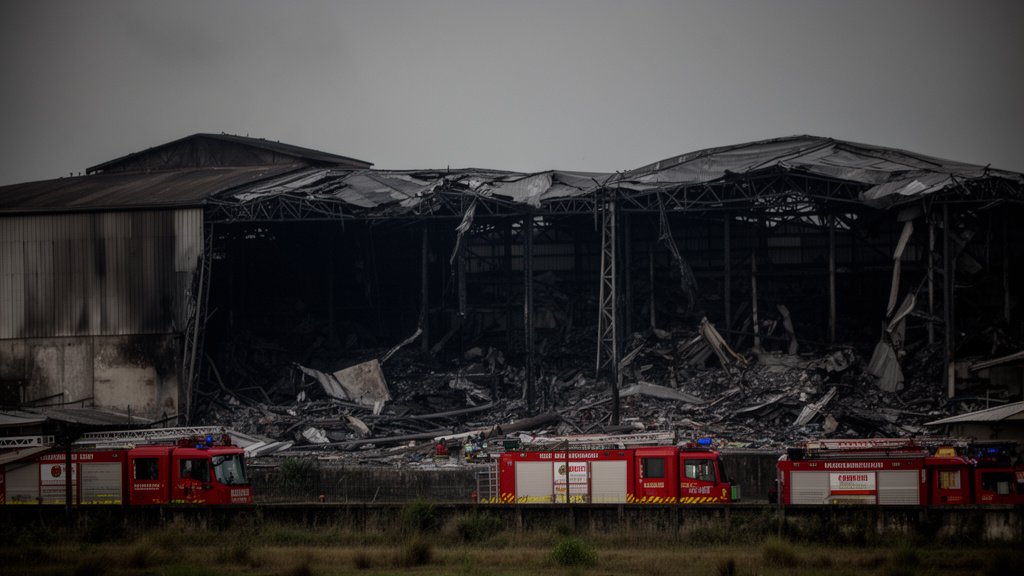
The industrial landscape of Banten, Indonesia, has been shaken by a catastrophic fire that broke out at a prominent candy manufacturing facility, resulting in the confirmed deaths of at least 24 individuals. As emergency response teams continue to navigate the precarious structural remains of the factory, the local community remains in a state of shock, awaiting news on the fate of those still unaccounted for. The tragedy, which has garnered significant attention from government officials and labor safety advocates, highlights the ongoing volatility and regulatory challenges inherent in the region’s rapidly expanding manufacturing sector.
The Incident and Immediate Response
The fire erupted late in the week, rapidly consuming the production wing of the candy factory. Preliminary reports suggest that the blaze escalated with alarming speed, potentially fueled by combustible materials common in confectionery manufacturing, such as sugar dust, packaging plastics, and various chemical additives used in the production process. The Banten provincial police, supported by the National Search and Rescue Agency (Basarnas), have been leading the recovery efforts.
Firefighters faced immense difficulties in containing the inferno due to the dense, toxic smoke and the structural compromised nature of the building. By the time the flames were brought under control, the facility had suffered extensive damage. The primary focus of rescue operations has since shifted from suppression to recovery. Search teams are working under hazardous conditions, sorting through debris that is still cooling and remains at risk of further collapse. The sheer intensity of the heat has complicated the identification process, necessitating the involvement of forensic experts to assist in the notification of the victims’ families.
Regulatory Scrutiny and Safety Protocols
This Indonesia factory fire has reignited a fierce national debate regarding industrial fire safety regulations. While the government has mandated strict building codes and emergency exit requirements for factories, critics and labor unions argue that enforcement remains inconsistent, particularly in older facilities or in zones undergoing rapid, unchecked expansion.
Experts analyzing the incident point to the critical importance of compartmentalization in manufacturing plants. In many incidents of this nature, fire spreads rapidly across open floors that lack fire-rated barriers, turning production lines into chimneys. The investigation is now turning toward whether the factory had adequate sprinkler systems, functional fire alarms, and—most importantly—whether these safety systems were maintained and operational at the time of the ignition. Authorities are currently reviewing the facility’s recent safety audit reports, with the provincial governor promising a comprehensive investigation into whether regulatory negligence played a role in the high casualty count.
Economic and Community Impact
The socio-economic ripple effects of this disaster are profound. The factory was a significant employer in the local Banten district, providing hundreds of jobs to the surrounding community. Beyond the immediate loss of life, the permanent closure of the production site—due to the fire damage—threatens the livelihoods of the surviving workforce and the families who relied on the factory’s regular payroll.
Local authorities have already begun coordinating with local businesses to assess the potential for temporary job placement, but the psychological impact on the community is harder to mitigate. Many of the families of the victims are calling for full transparency in the investigation, demanding that the company owners be held accountable if safety protocols were knowingly bypassed to save costs. This sentiment reflects a growing tension in Indonesia between the push for rapid industrialization and the need to protect the human capital that drives the economy.
Investigative Procedures and Future Outlook
As the investigation continues, authorities are focused on a multi-pronged approach: determining the exact point of origin for the fire, evaluating the integrity of the building’s construction materials, and verifying compliance with fire safety certifications. Forensic teams are utilizing DNA analysis to positively identify the 24 confirmed victims, a process that is expected to continue for several days due to the condition of the remains.
Looking forward, the Indonesian Ministry of Manpower has announced plans for a series of unannounced inspections across similar manufacturing facilities in the Banten province. The goal is to identify similar high-risk environments before another tragedy occurs. This reactive policy shift, while necessary, has drawn calls for a more proactive framework that includes standardized, digitized safety monitoring. The hope is that the lessons learned from this harrowing incident in Banten will serve as a catalyst for a systemic overhaul of factory safety culture across the nation, ensuring that such a loss of life is not repeated.
FAQ: People Also Ask
Q: What is the current status of the search and rescue operation?
A: The search and rescue operation is ongoing. As of the latest update, recovery efforts are focused on the hardest-hit sectors of the factory where structural integrity is lowest. Officials remain cautious about the number of missing persons as they verify rosters against confirmed recoveries.
Q: Has the cause of the Banten factory fire been determined?
A: The official investigation is still in the preliminary stages. Authorities are currently reviewing electrical logs and storage manifests to determine if the fire was caused by an electrical fault, a chemical accident, or another factor. A formal report is expected to be released by the local police in the coming weeks.
Q: How can families receive information about the victims?
A: The provincial government has set up a dedicated crisis center and a hotline for families of the workers. Additionally, a temporary forensic unit has been established at the local hospital to assist with the identification of victims and to provide psychological support to the grieving families.
Q: Will the factory be held liable for the deaths?
A: Whether the company will be held liable depends on the findings of the police investigation. If evidence shows that the factory failed to adhere to mandatory safety laws or maintained illegal working conditions, the company and its directors could face criminal charges and significant civil lawsuits.