
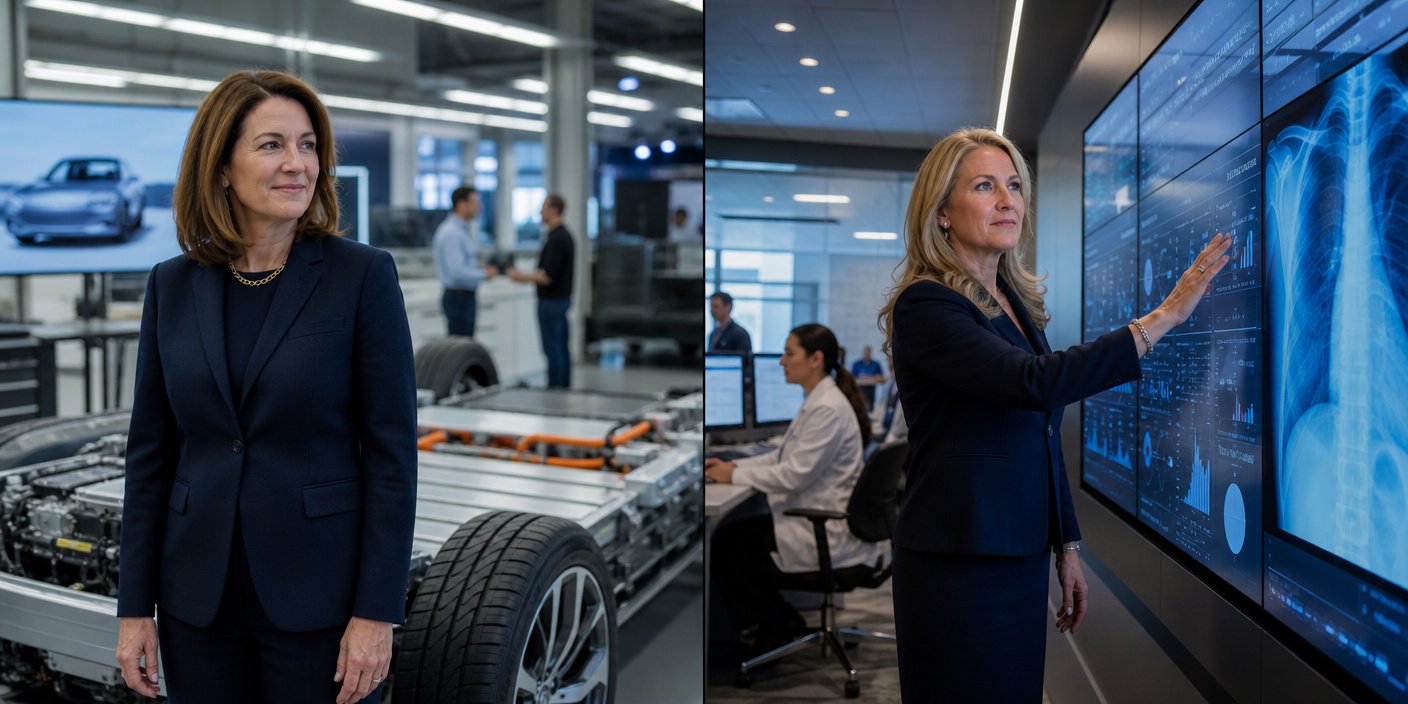
Kettering University’s signature pedagogical model—a rigorous, alternating rotation of classroom instruction and hands-on professional cooperative education—is yielding a generation of executives and innovators who are not merely adapting to global industry shifts but actively driving them. By bridging the gap between theoretical engineering and real-world application, the institution has cultivated a pipeline of talent that has now permeated the upper echelons of the automotive, healthcare, and technology sectors. The recent spotlight on prominent alumni, including Ford CFO Sherry House and healthcare innovator Maria Shaw, serves as a testament to the enduring efficacy of Kettering University alumni in navigating complex, multi-billion-dollar enterprise challenges.
Key Highlights
- Experiential Pedagogy: Kettering’s co-op model requires students to integrate real-world professional work with academic coursework, creating a ‘ready-on-day-one’ workforce.
- Sherry House’s Financial Leadership: As CFO of Ford Motor Company, House exemplifies the strategic versatility required to navigate the automotive industry’s shift toward electric vehicles (EVs) and software-defined mobility.
- Maria Shaw’s Innovation: Shaw’s work illustrates how Kettering’s technical foundation fosters leadership in healthcare, optimizing complex systems for better patient outcomes.
- The ‘Flint Effect’: The university’s historical focus on pragmatic problem-solving in the heart of the American automotive industry continues to produce resilient leaders capable of steering large-scale organizational change.
The Architecture of Industry Leadership
The narrative surrounding Kettering University is increasingly defined by the trajectory of its graduates. Unlike traditional academic institutions that prioritize theory, Kettering has long utilized a model where students alternate between full-time study and full-time employment. This immersion into the corporate environment from the undergraduate level provides a unique ‘industry fluency’ that becomes evident when these alumni reach C-suite and director-level positions. The recent institutional focus on high-achieving alumni is not merely a branding exercise; it is a clear articulation of how the school’s specific educational architecture fosters executive-level problem-solving skills.
Sherry House: Navigating the Automotive Horizon
Few roles in the corporate world are as volatile or high-stakes as that of a CFO in the legacy automotive sector. Sherry House, an alumna of Kettering, stepped into the role of Chief Financial Officer at Ford Motor Company at a pivotal moment in the company’s 120-year history. Her ascent reflects a deep understanding of capital allocation, supply chain logistics, and the massive R&D spending required to transition legacy internal combustion manufacturing into the EV era.
House’s career is a blueprint for the modern executive. Her background involves not only financial oversight but an intrinsic comprehension of the product itself—a hallmark of a Kettering education. By successfully managing the financial complexities of the automotive shift, House demonstrates that technical literacy paired with financial acumen creates a formidable combination in modern corporate governance. Her ability to translate the language of engineering into the language of shareholder value is exactly the kind of hybrid skill set the university’s co-op program was designed to produce.
Maria Shaw: Disrupting Healthcare Paradigms
While the automotive industry often dominates the conversation regarding Kettering alumni, the university’s influence in healthcare is equally profound. Maria Shaw represents a growing cohort of graduates who are applying the same rigorous engineering principles found in automotive manufacturing to the field of healthcare. Innovation in this sector requires more than just clinical knowledge; it demands process engineering, data analytics, and operational efficiency.
Shaw’s contributions underscore the universality of the Kettering ‘Co-op’ mindset. Whether optimizing patient intake systems or leveraging data to improve health outcomes, she applies a systematic, iterative approach to problem-solving. In an era where healthcare costs are skyrocketing and the demand for efficiency is at an all-time high, alumni like Shaw are proving that the systems thinking cultivated in Flint is as valuable in a hospital boardroom as it is on an assembly line.
Secondary Angles: Economic, Historic, and Future Impacts
1. The Economic Engine of Co-op: The economic impact of this alumni network is immense. By producing graduates who can generate ROI for their employers starting during their internships, Kettering contributes to a virtuous cycle of talent retention. Employers invest in students, students gain experience, and those students return to lead those same companies. This cycle strengthens the domestic manufacturing and tech base.
2. Historical Context of Resilience: The university’s location in Flint, Michigan, has required it to be agile. The history of the region is one of boom, bust, and reinvention. Graduates like House and Shaw have developed a form of ‘institutional resilience,’ learning to pivot and thrive in industries undergoing massive structural change, mirroring the evolution of the city itself.
3. The Future of Tech-Leadership: As we look toward the next decade, the convergence of AI, robotics, and advanced manufacturing is blurring the lines between industries. The Kettering model is uniquely positioned for this future. Because its graduates are trained in the ‘doing’ of technology, they are the individuals most likely to lead the integration of AI into physical, real-world assets. The careers of House and Shaw are just the vanguard of a broader trend of Kettering-trained leaders who will oversee the digital-physical transformation of the global economy.
FAQ: People Also Ask
Q: What is the ‘Kettering Model’ of education?
A: The Kettering Model is a cooperative education system where students alternate between terms of classroom instruction and terms of full-time, paid employment with corporate partners. This allows students to gain months of professional experience before they graduate.
Q: Why are Kettering alumni often highlighted in the automotive industry?
A: Kettering University has deep historical roots in the automotive sector. Many of its programs were specifically designed to meet the engineering and management needs of major manufacturers, creating a massive, loyal alumni network in companies like Ford and General Motors.
Q: How do healthcare innovators benefit from an engineering background?
A: Healthcare is increasingly driven by technology, data, and complex process management. The systems-engineering mindset taught at Kettering allows leaders like Maria Shaw to apply analytical frameworks to healthcare delivery, focusing on efficiency, data accuracy, and patient safety.
Q: How does Sherry House’s role at Ford demonstrate Kettering’s value?
A: Sherry House’s role as CFO requires navigating the massive capital transition from traditional manufacturing to electric and software-defined vehicles. Her ability to speak the language of engineers while managing financial risks highlights the value of the technical-financial literacy that is core to the university’s mission.