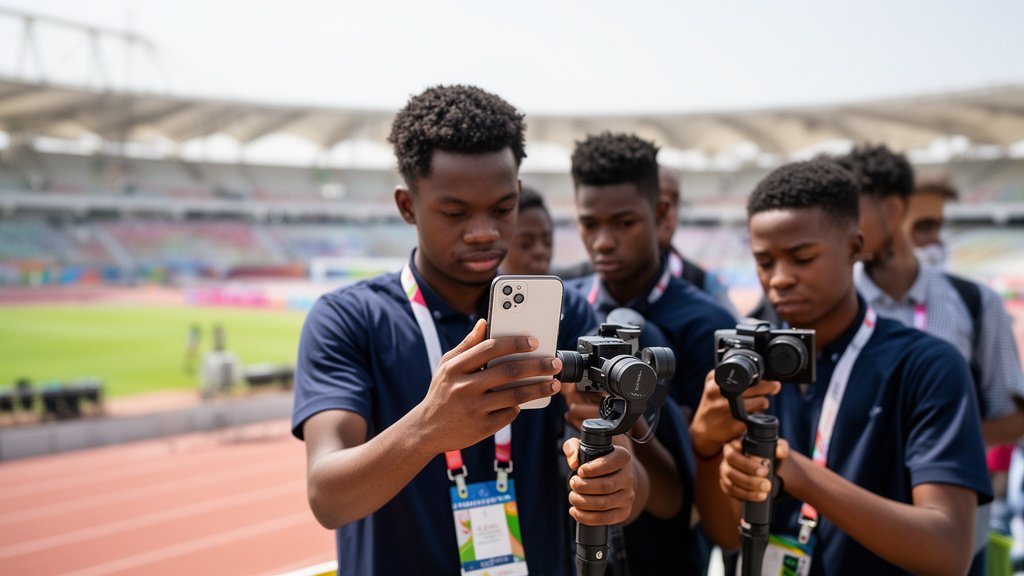
As the world turns its gaze toward the Dakar 2026 Youth Olympic Games, a transformative initiative is quietly reshaping the future of sports journalism. Samsung, a long-standing TOP (The Olympic Partner) of the International Olympic Committee (IOC), has launched an intensive program designed to nurture the next generation of storytellers. By integrating advanced mobile technology with hands-on media training, the initiative provides a cohort of 16 aspiring journalists—hailing from 13 different countries—with the tools to cover the games from the inside, blending traditional reporting ethics with cutting-edge digital storytelling.
The Anatomy of the Initiative
The core of this program lies in its commitment to democratization. For these 16 young reporters, the Dakar 2026 Games are not merely an event to spectate but a professional launchpad. Samsung has curated a comprehensive curriculum that goes beyond basic media literacy. The participants are undergoing rigorous training sessions led by industry veterans, focusing on mobile journalism (MoJo), advanced video editing techniques using mobile hardware, and the ethics of digital content creation in a high-stakes athletic environment.
By leveraging the latest high-performance mobile devices, these journalists are equipped to capture, edit, and publish content instantaneously. This reflects a significant shift in the Olympic landscape: the transition from heavy, cumbersome broadcast equipment to agile, mobile-first solutions. For these 16 individuals, the access provided by Samsung serves as a level playing field, ensuring that talent and creativity—not expensive equipment—become the defining factors of their success.
Digital Innovation and the ‘Creator Economy’
The intersection of Samsung’s technological ecosystem and the Youth Olympic Games represents a larger societal trend: the formalization of the ‘Creator Economy’ within mainstream sports. The 13 countries represented in this cohort reflect a diverse global demographic, bringing unique cultural perspectives to the Dakar Games. The training focuses heavily on immersive storytelling.
Participants are utilizing flagship mobile technology to create content that captures the raw, unfiltered emotions of young athletes. The focus is on the human element—the struggle, the triumph, and the cultural exchange inherent in the Olympic spirit. Samsung’s role is to facilitate this connectivity, ensuring that these stories are not just documented but amplified across global digital platforms. This is not just about taking photos or recording interviews; it is about mastering the art of digital narrative under the pressure of a live international event.
The Pedagogical Approach to Sports Media
Unlike traditional internship programs, the Dakar 2026 initiative is highly experiential. The mentors, comprising seasoned journalists from global media outlets, emphasize the ‘mobile-first’ philosophy. They teach the cohort how to utilize high-dynamic-range (HDR) video, stable handheld cinematography, and live-streaming protocols to cover events as they unfold.
This training is critical because it bridges the gap between amateur social media usage and professional sports broadcasting. The participants learn about copyright, editorial integrity, and the responsibility of the journalist in a digital age. By the end of the program, these 16 reporters are expected to leave Dakar with a professional portfolio that is ready for the global market, effectively bridging the gap between student aspiration and industry reality.
Long-term Career Trajectories and Global Impact
What happens after the closing ceremony in Dakar? This is perhaps the most crucial element of the Samsung-IOC partnership. The program is designed for sustainability. Many of the previous participants in this IOC-led young reporter scheme have gone on to work for major international networks, sports federations, and creative agencies. The Dakar 2026 cohort is inheriting a legacy of professional advancement.
Furthermore, the initiative fosters a cross-cultural network. By bringing together youth from 13 nations, the program builds a global ‘alumni’ network of media professionals who share a common technological and ethical foundation. This creates a lasting impact, as these young journalists return to their home countries not only with technical skills but with an international perspective on how sports can unite people across borders. The connectivity fostered by Samsung is thus two-fold: it is the immediate digital connectivity to the games, and the long-term professional connectivity that will define their careers for decades to come.
The Future of Sports Storytelling
As we look ahead, the Dakar 2026 initiative signals a permanent shift in how sports media will be produced. The traditional gatekeepers of sports journalism are seeing the barrier to entry lower, replaced by a wave of tech-savvy, agile creators who can report on events with immediacy and authenticity.
Samsung’s investment in this program serves as a proof-of-concept for the future of mobile-native broadcasting. As global internet infrastructure continues to improve and mobile hardware capabilities expand, the ability for young journalists to deliver high-quality, professional-grade coverage from remote locations will only increase. This initiative is a vital stepping stone in that evolution, proving that with the right support, the next generation of storytellers is more than capable of handling the weight of the Olympic rings.