
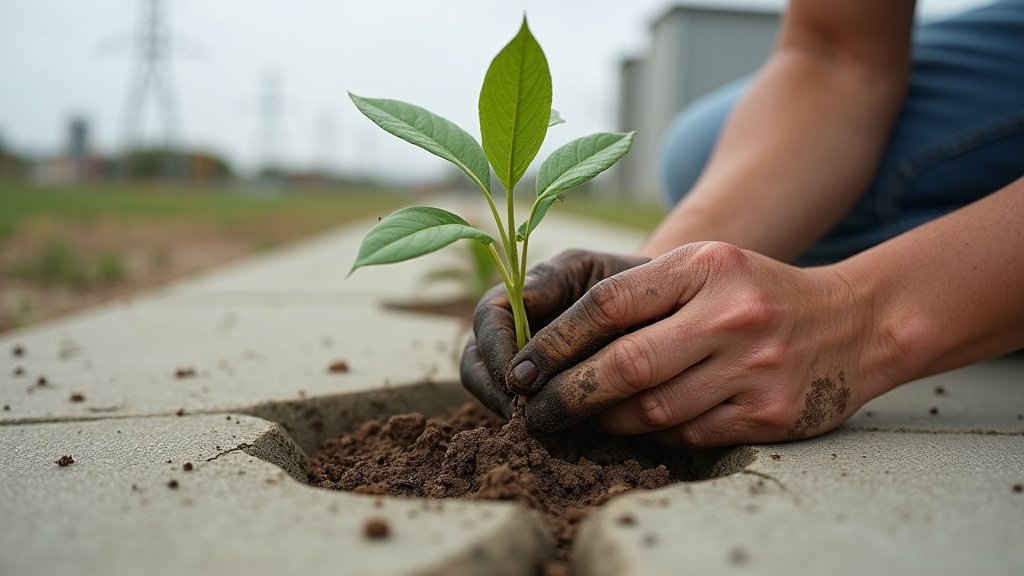
In the shadow of rapid development and industrial sprawl, a quiet revolution is taking root in Oxnard, California. Where city planners see empty lots and neglected concrete, local siblings Diego and Miranda Magaña see potential for a thriving, biodiverse future. Through their nonprofit, MiniNature Reserve, the pair has launched a campaign of “guerilla gardening,” reclaiming neglected urban spaces and planting native flora to combat environmental decay in a city often ignored by mainstream conservation efforts. This is not just a gardening project; it is a direct challenge to the status quo of urban planning in underserved communities.
Key Highlights
- Unauthorized Reclamation: The MiniNature Reserve duo is planting native, drought-resistant species in derelict spaces without city permission to restore local biodiversity.
- Addressing Environmental Inequity: The initiative focuses on combatting the “concrete jungle” effect in Oxnard, a city historically burdened by industrial pollutants and a lack of green infrastructure.
- Community Mobilization: Since 2020, over 1,500 volunteers have joined the effort, resulting in the creation of 21 community-maintained gardens and over 3,500 native plants in the ground.
- Institutional Pushback: The project faces regular challenges, including the city removing installations for being “tripping hazards” and accidental destruction by developers, yet the mission persists.
Reclaiming the Concrete: The MiniNature Movement
For residents of Oxnard, the narrative of their environment is often written by developers and industrial interests. For years, the city has been described as a “dumping ground,” a label that Diego and Miranda Magaña, lifelong residents, have refused to accept. The siblings realized that the lack of resources in their community wasn’t just a funding problem—it was an ideological one. By treating the city’s neglected corners as empty space, the local administration had inadvertently created heat islands and toxic pockets of land that offered no respite for residents.
The Birth of a Rebellion
The Magaña siblings didn’t start with a permit; they started with a seed. Frustrated by the lack of natural spaces, they began propagating native plants in their own backyard. These weren’t just decorative flowers; they were carefully selected species that could survive, thrive, and provide medicinal or nutritional value to the local community. The first planting event, organized via social media with no prior institutional approval, saw eight people show up. That small spark ignited a wildfire of interest.
Today, the MiniNature Reserve operates as a decentralized network of green pockets. The strategy is simple: identify a neglected space, prepare the soil, and introduce native plant life. When the volunteers work, they aren’t just gardening; they are engaging in a form of radical environmentalism that prioritizes the health of the earth over the bureaucracy of the city.
Challenges from the Establishment
The path to a greener Oxnard has not been smooth. The act of “guerilla gardening” inherently puts the creators at odds with local government and private property owners. There have been instances where the City of Oxnard, citing safety regulations—such as labeling plants as “tripping hazards”—has removed the gardens and replaced them with concrete or gravel. These moments of destruction are often viewed by the community as symbolic of a deeper, systemic issue: the prioritization of low-maintenance, lifeless infrastructure over the health and well-being of the local population.
Despite these setbacks, the siblings view them as part of the process. “We just keep going on our mission and get over the roadblocks as they come,” Miranda has stated. The resilience of the movement lies in its ability to adapt and continue. When a garden is removed, the volunteers often simply move to the next site, emboldened by the support of an increasingly vocal community that values the presence of nature in their daily lives.
The Science of Native Restoration
At the core of the project is a deep commitment to native plant species. These plants are uniquely adapted to the Southern California climate, requiring less water and providing essential services that non-native, aesthetic landscaping cannot. Native gardens act as biological corridors, supporting local pollinators like bees and monarch butterflies. They also serve as carbon sinks and help mitigate the urban heat island effect, where concrete surfaces absorb and radiate heat, driving up local temperatures.
By teaching volunteers how to design and maintain these mini-habitats, the Magañas are creating a knowledge base that extends beyond their own efforts. They provide the education necessary for neighbors to reclaim their own spaces, effectively decentralizing the movement and making it sustainable in the long term. This is the hallmark of effective environmental activism: moving from a centralized project to a grassroots phenomenon.
A Future Rooted in Community
The impact of the MiniNature Reserve is measurable not just in square footage, but in cultural shifts. The project works alongside Indigenous groups to host knowledge-sharing workshops, re-connecting the community to the traditional uses of local plants. By linking modern urban struggles with historical knowledge, the Magañas are creating a legacy that honors Oxnard’s rich history of labor advocacy and community organizing.
The fight for Oxnard’s green future is a microcosm of a larger, national conversation. As cities across the United States grapple with the effects of climate change and the need for more equitable urban development, the work of the Magaña siblings offers a blueprint for change. It is a reminder that while funding and policy are essential, the most powerful tool for change often starts with a community that refuses to wait for permission to do what is right for their home.
FAQ: People Also Ask
What is guerilla gardening?
Guerilla gardening is the act of gardening on land that the gardeners do not have the legal rights to cultivate, such as abandoned sites, areas that are not being cared for, or private property. It is often used as a form of protest or a means to improve the aesthetics and ecological health of urban areas.
Why are the Magaña siblings targeting Oxnard?
Oxnard has historically suffered from environmental degradation and a lack of green space compared to its wealthier neighbors like Santa Barbara. The siblings want to counteract this by creating native habitats that improve the quality of life for residents and restore the natural environment.
Is it legal to plant native gardens without permission?
Generally, no. Guerilla gardening exists in a legal gray area. Local ordinances often govern what can be planted on public or private land. The MiniNature Reserve has faced pushback from the city, including the removal of plants deemed to be hazards, which is a common risk for these types of grassroots initiatives.
How can I get involved in the MiniNature Reserve project?
The group engages the public through social media and local workshops. They offer training programs that teach volunteers how to design, install, and maintain these native habitats, effectively empowering community members to start their own projects.