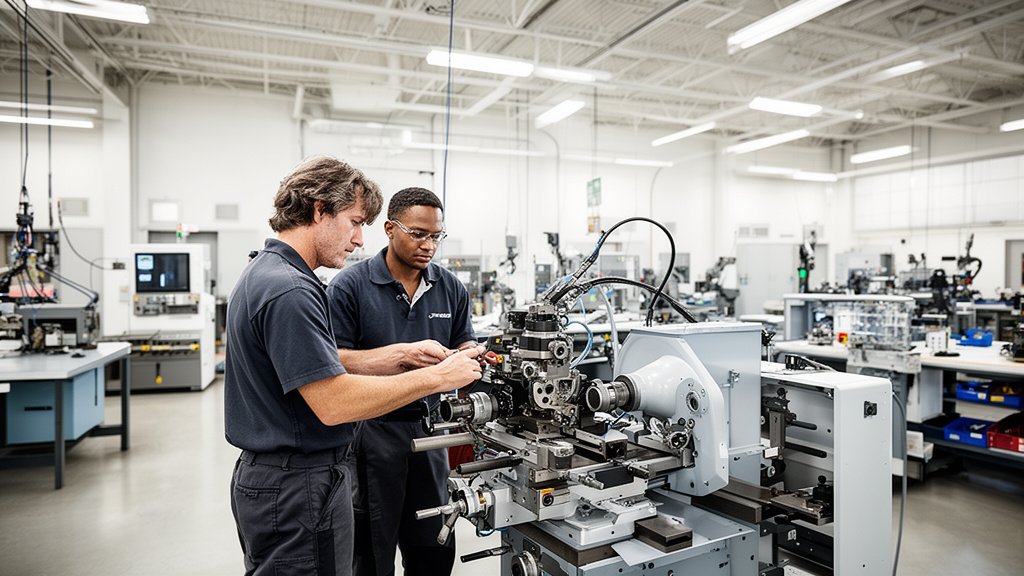

Artificial intelligence is rapidly transforming the development and manufacture of complex molecules, promising accelerated innovation across pharmaceuticals, materials science, and beyond. By leveraging AI-driven process innovation, researchers and manufacturers can overcome long-standing challenges in synthesis, optimization, and scalability, paving the way for novel discoveries and more efficient production.
Key Highlights:
- AI accelerates the discovery and design of new molecular structures.
- Machine learning optimizes complex chemical synthesis pathways.
- AI enhances process control and quality assurance in manufacturing.
- Significant cost and time reductions are achievable with AI integration.
- Ethical considerations and data security are paramount in AI adoption.
AI-Driven Process Innovation: The New Frontier in Molecular Manufacturing
The integration of artificial intelligence into the development and manufacturing of complex molecules marks a paradigm shift. Historically, the creation of intricate chemical compounds has been a laborious, time-consuming, and often serendipitous process. AI, however, introduces a systematic, data-driven approach that can predict molecular properties, optimize reaction conditions, and even design entirely new synthetic routes. This capability is particularly crucial for industries reliant on bespoke molecules, such as pharmaceuticals, where the development of new drugs can take over a decade and cost billions.
Accelerating Discovery and Design
AI algorithms, particularly deep learning models, can sift through vast datasets of existing chemical information to identify patterns and predict the behavior of novel compounds. This allows scientists to design molecules with specific desired properties – such as therapeutic efficacy, material strength, or catalytic activity – much faster than traditional trial-and-error methods. Generative AI models can even propose entirely new molecular structures that human chemists might not have conceived.
Optimizing Synthesis Pathways
Once a target molecule is identified, AI can then be employed to devise the most efficient and cost-effective synthesis pathway. Machine learning models can analyze countless reaction parameters – temperature, pressure, catalysts, solvents – to predict optimal conditions for each step of a complex synthesis. This reduces the number of experimental iterations required, saving valuable time and resources, and minimizes the generation of unwanted byproducts, leading to greener chemistry.
Enhancing Process Control and Quality Assurance
In the manufacturing phase, AI offers sophisticated tools for real-time process monitoring and control. Sensors integrated with AI systems can detect minute deviations in reaction parameters, allowing for immediate adjustments to maintain optimal conditions and product quality. Predictive maintenance for manufacturing equipment can also be implemented, reducing downtime and ensuring consistent output. This enhanced control is vital for ensuring the safety and efficacy of products, especially in the highly regulated pharmaceutical sector.
Economic and Scalability Impacts
The implications of AI-driven process innovation extend to significant economic benefits and improved scalability. By reducing R&D timelines and manufacturing inefficiencies, AI can lower the cost of producing complex molecules. This can make life-saving drugs more accessible and enable the development of advanced materials at a more competitive price point. Furthermore, AI can help scale up production from laboratory bench to industrial quantities more reliably, addressing a common bottleneck in chemical manufacturing.
Navigating Ethical and Security Considerations
As AI becomes more integrated, crucial ethical considerations and data security measures must be addressed. The proprietary nature of chemical formulas and manufacturing processes means that robust cybersecurity is essential to protect sensitive intellectual property. Additionally, as AI aids in the design of potentially powerful molecules, careful consideration must be given to dual-use implications and responsible innovation to prevent misuse.
FAQ: People Also Ask
What is AI-driven process innovation in chemistry?
It refers to the application of artificial intelligence techniques, such as machine learning and deep learning, to improve and automate the processes involved in the research, development, and manufacturing of chemical compounds, particularly complex molecules.
How does AI accelerate drug discovery?
AI can analyze vast biological and chemical datasets to identify potential drug candidates, predict their efficacy and toxicity, and optimize their molecular structures for better therapeutic outcomes, significantly shortening the traditional drug discovery timeline.
Can AI help make chemical manufacturing more sustainable?
Yes, AI can optimize reaction conditions to minimize waste, reduce energy consumption, and identify greener alternative solvents and catalysts, contributing to more environmentally friendly chemical production processes.
What are the main challenges in adopting AI for molecule manufacturing?
Key challenges include the need for large, high-quality datasets, the complexity of integrating AI into existing infrastructure, the high cost of implementation, the requirement for specialized AI expertise, and ensuring data security and intellectual property protection.
Which industries are benefiting most from AI in complex molecule development?
Currently, the pharmaceutical industry is a primary beneficiary, followed by advanced materials science, specialty chemicals, and agrochemicals, where the precise design and efficient production of complex molecules are critical.