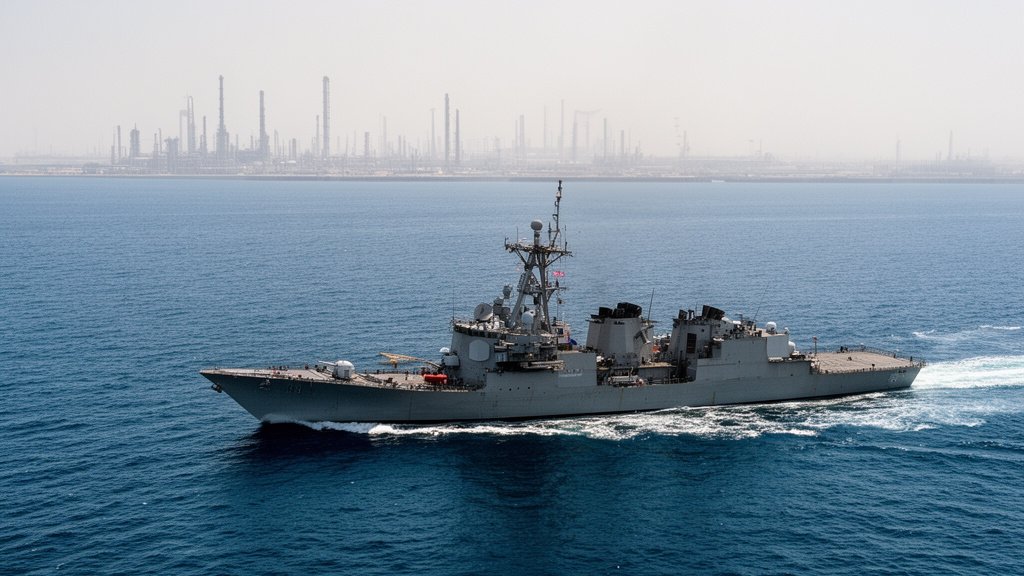
In a decisive shift in the escalating Iran conflict, U.S. officials are finalizing tactical plans to conduct surgical strikes against critical energy infrastructure, utilizing the GBU-43/B Massive Ordnance Air Blast (MOAB) bomb. This strategic pivot follows a deteriorating security situation in the Strait of Hormuz, where multiple vessel sinkings have disrupted global maritime transit. As U.N. diplomatic efforts in Lebanon face growing uncertainty, the deployment of such high-yield conventional weaponry signals a transition from containment to active degradation of Iran’s strategic assets.
Key Highlights
- Military Escalation: U.S. command is evaluating the GBU-43/B for precision strikes against fortified energy facilities in response to regional maritime aggression.
- Maritime Instability: A series of vessel sinkings in the Strait of Hormuz has intensified the economic threat, prompting an urgent U.S. response to secure trade routes.
- Diplomatic Challenges: The U.N.’s diplomatic mission in Lebanon remains under intense pressure as the conflict widens, with current channels struggling to de-escalate hostilities.
- Strategic Deterrence: The potential use of the MOAB serves as both a tactical tool against hardened sites and a heavy-handed signal to regional adversaries regarding infrastructure vulnerability.
Strategic Shift: The MOAB and the Strait of Hormuz Standoff
The briefing provided on October 15, 2026, marks a watershed moment in the ongoing geopolitical struggle. The reported consideration of the GBU-43/B, often colloquially termed the “Mother of All Bombs,” indicates a shift away from traditional limited strikes toward a doctrine of massive conventional force. Unlike guided missiles, the GBU-43/B offers a massive overpressure effect, designed to disable hardened infrastructure and underground facilities that are otherwise resistant to smaller munitions.
The Technological Dimension: Why the GBU-43/B?
For military analysts, the inclusion of the GBU-43/B in contingency planning is highly significant. This munition is not intended for precision sniping; it is an area-denial and structural-destruction tool. By targeting Iranian energy infrastructure—the backbone of the regime’s economic capability—the U.S. aims to impose immediate, tangible costs for the ongoing maritime violence. The sheer scale of the bomb’s blast radius suggests that the goal is not merely to damage equipment but to render major energy nodes inoperable, forcing a tactical re-evaluation by Iranian command.
Maritime Security at a Breaking Point
The sinkings in the Strait of Hormuz have effectively weaponized one of the world’s most vital energy chokepoints. Roughly 20% of the world’s total petroleum consumption passes through this narrow passage. With multiple vessels confirmed as sunk, the insurance risk for commercial shipping has skyrocketed, effectively choking the supply chain. The U.S. Naval presence, while substantial, has been forced into a reactive posture. The decision to escalate to energy infrastructure strikes is a direct counter-move to regain the initiative and stop the “salami slicing” tactics currently employed against shipping lanes.
Diplomatic Fragility in Lebanon
Parallel to the kinetic developments in the Gulf, the U.N. diplomatic presence in Lebanon is navigating an increasingly narrow corridor of influence. The escalation in the Iran conflict has ripple effects that directly undermine local stability in Lebanon. U.N. mediators are currently engaged in “shuttle diplomacy” efforts, but the effectiveness of these channels is being rapidly eroded by the reality of the impending military strikes. There is a palpable concern within the diplomatic community that once the GBU-43/B operations commence, the window for negotiation will effectively close, leaving the region to deal with the immediate aftermath of a significant military escalation.
Secondary Implications: Market Volatility
The economic repercussions of this military planning cannot be overstated. Global energy markets, already jittery due to the long-standing tensions, are reacting to the credible threat of sustained attacks on Iranian energy infrastructure. Analysts are projecting a sharp uptick in crude oil futures, as the market begins to price in a “risk premium” associated with a potential total shutdown of the Strait of Hormuz. Beyond the immediate energy sector, the geopolitical uncertainty is likely to drive capital flight into safe-haven assets, creating a secondary economic shock that could destabilize broader regional trade agreements.
Future Predictions: The Escalation Ladder
Looking forward, the use of the GBU-43/B sets a precedent that will define the rest of the quarter. If the strikes proceed as planned, they will likely trigger a predictable response cycle from Iran, potentially targeting regional allies or further increasing asymmetric warfare tactics in the Gulf. The “Gray Zone” of conflict—where non-state actors and covert naval operations reside—is rapidly transitioning into a “Hot Zone.” Military observers are watching closely to see if this serves as a singular, decisive deterrence or the catalyst for a wider, uncontained regional conflict.
FAQ: People Also Ask
What is the GBU-43/B and why is it being considered?
The GBU-43/B (Massive Ordnance Air Blast) is a powerful, non-nuclear weapon capable of generating massive overpressure across a wide area. It is being considered to neutralize fortified energy infrastructure that traditional airstrikes may struggle to penetrate effectively.
How do the sinkings in the Strait of Hormuz affect the global economy?
The Strait of Hormuz is a vital “chokepoint” for global energy supplies. The sinking of vessels forces insurance costs up and reduces the flow of oil, creating immediate supply chain disruptions and volatility in global energy prices.
What is the status of U.N. diplomacy in the region?
Diplomatic efforts, particularly in Lebanon, are currently under significant strain. While the U.N. maintains a presence to mediate, the current military trajectory toward infrastructure strikes is severely limiting the leverage and reach of these diplomatic missions.
Is a wider regional war inevitable?
While official sources avoid deterministic language, the escalation to high-yield conventional munitions against state infrastructure significantly raises the risk profile. The outcome depends heavily on the Iranian strategic response following any potential strikes.