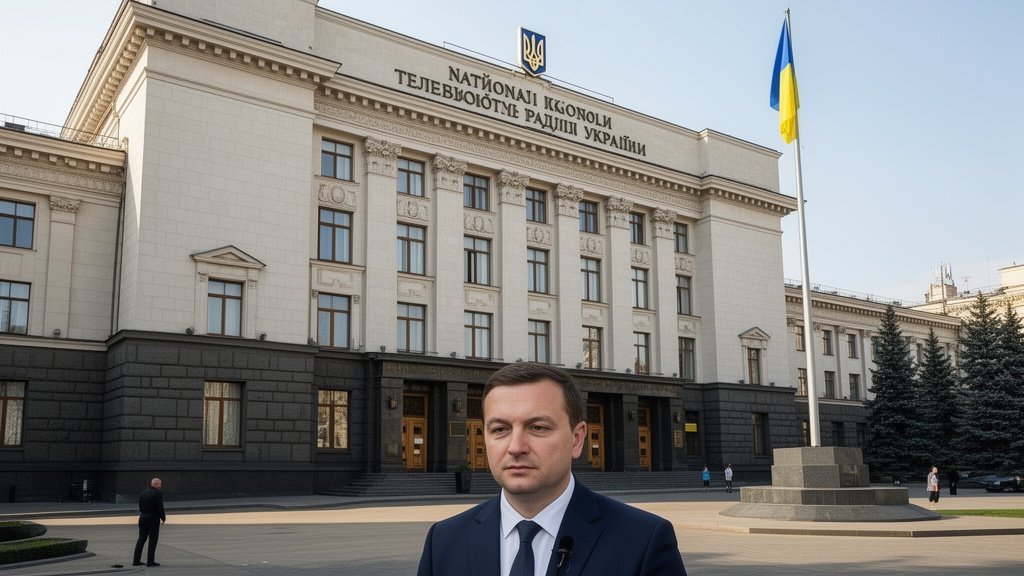
Ukraine has taken a decisive step in its ongoing campaign to curtail the influence of Russian media, officially imposing sanctions on the distribution and production of the globally recognized animated series, ‘Masha and the Bear.’ The move, spearheaded by the National Council of Television and Radio Broadcasting of Ukraine, marks a significant moment in the nation’s broader strategy to decouple its cultural and informational space from Russia, particularly following the escalation of the war. Officials have framed the restriction not merely as a broadcast regulation, but as a necessary national security measure to mitigate the spread of what Kyiv characterizes as subtle, yet persistent, pro-Russian narratives.
Key Highlights
- Regulatory Action: The National Council of Television and Radio Broadcasting of Ukraine has officially sanctioned the series, effectively restricting its distribution and licensing within the country.
- Security Justification: Authorities cite the series as a tool of ‘soft power,’ arguing that the show functions as a vehicle for Russian propaganda that potentially undermines Ukrainian state security.
- Legal Framework: The ban falls under the updated Law of Ukraine ‘On Cinematography,’ which provides the legal basis for the state to restrict Russian-produced content.
- De-Russification Push: This decision is part of a comprehensive, long-term policy aimed at purging Russian cultural influence from the Ukrainian media landscape.
The Anatomy of the Sanction: Culture as a Battlefield
The decision to target ‘Masha and the Bear’—a show originally created by the Moscow-based Animaccord Animation Studio—represents a distinct shift in how Ukraine views imported entertainment. While the cartoon is ostensibly a harmless, slapstick-driven series about a young girl and a retired circus bear, Ukrainian authorities have analyzed the content through the lens of psychological and political warfare.
The Soft Power Argument
For years, ‘Masha and the Bear’ has been heralded as a Russian cultural export success, reaching millions of children across the globe. However, Ukrainian experts and regulators have argued that its benign appearance masks a more calculated ‘soft power’ objective. The argument presented by the National Council posits that even children’s content, when produced within a state-controlled or state-aligned environment, can be used to normalize specific cultural values and historical narratives that are antithetical to Ukrainian national identity. The concerns often center on the portrayal of Russian characters and symbols, which some critics suggest are subtly aligned with Russian geopolitical rhetoric.
Legal Precedents and Implementation
The enforcement of this ban is not happening in a vacuum. It is the result of a rigorous application of the Law of Ukraine ‘On Cinematography,’ which was amended to provide the government with broader authority to ban foreign content deemed harmful to national security. Since the start of the full-scale invasion, the National Council has systematically reviewed thousands of titles, including films, television programs, and animated series, that originate from the Russian Federation. By prohibiting ‘Masha and the Bear,’ the state is signaling that there is no ‘neutral’ territory in media consumption during a period of existential conflict.
The Broader De-Russification Strategy
This ban is a microcosm of a larger societal shift occurring across Ukraine, often referred to as ‘derusification.’ This process involves the renaming of streets, the removal of Soviet-era monuments, and a wholesale re-evaluation of Ukrainian literature, music, and media. The decision to restrict ‘Masha and the Bear’ serves to reinforce the boundaries of the Ukrainian information space, ensuring that younger generations are shielded from media that the government views as a vector for foreign influence. This policy is not merely about banning content; it is about replacing it. The state has been actively encouraging the growth of the domestic animation industry and the licensing of international content that aligns with Western and European values, aiming to fill the void left by prohibited Russian media.
Economic and Global Implications
While the ban has immediate local consequences for the distribution rights held by various entities in Ukraine, the long-term impact on Animaccord and the global footprint of the franchise remains to be seen. The series maintains a massive international audience, particularly in the Middle East, Southeast Asia, and parts of Europe, where it is often perceived solely as entertainment. However, the decision by a European nation to explicitly categorize the show as a security risk could spark further debate in other countries regarding the intersection of entertainment, geopolitical influence, and media literacy. For the Ukrainian market, the message is clear: the integration of Russian media is no longer compatible with the national security priorities of the state.
FAQ: People Also Ask
Why was ‘Masha and the Bear’ singled out?
It was not singled out exclusively; it is part of a wider, systematic audit and prohibition of Russian media content deemed to carry ‘pro-Russian narratives’ or promote Russian state interests under the Law of Ukraine ‘On Cinematography.’
Does this ban apply to individual households?
No. The ban focuses on the professional distribution, broadcast, and licensing of the content within the Ukrainian media market. It prevents the show from being aired on Ukrainian television channels or distributed through sanctioned platforms, rather than policing private home viewing.
Is this considered censorship?
That depends on the perspective. The Ukrainian government defines these measures as ‘counter-propaganda’ and essential national security actions given the state of war. International human rights observers often debate the balance between wartime security needs and the freedom of information.
What are the consequences for violating these sanctions?
Media outlets and platforms that continue to broadcast or distribute sanctioned Russian content face heavy fines, the potential revocation of their broadcasting licenses, and legal action by the National Council of Television and Radio Broadcasting of Ukraine.