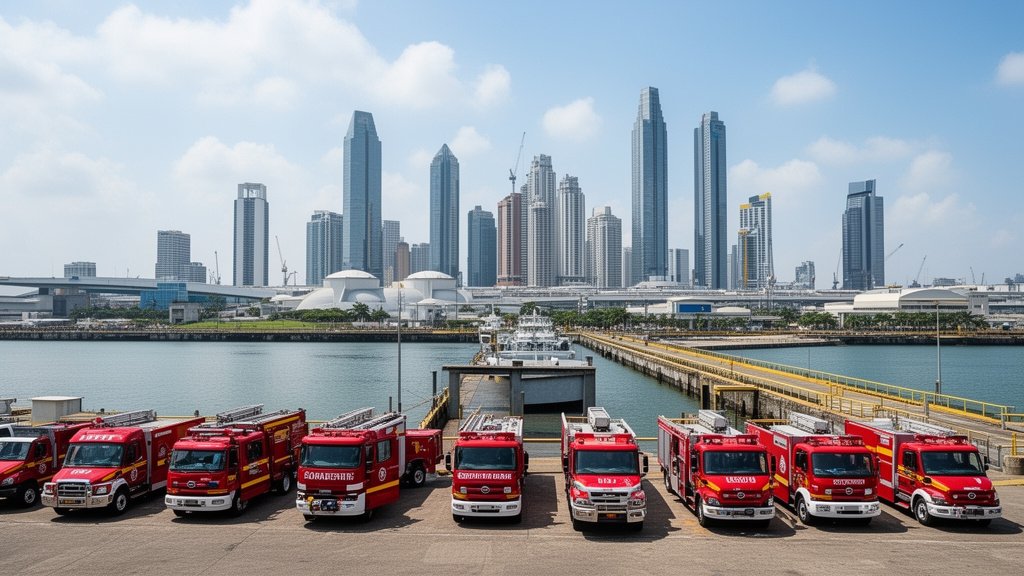
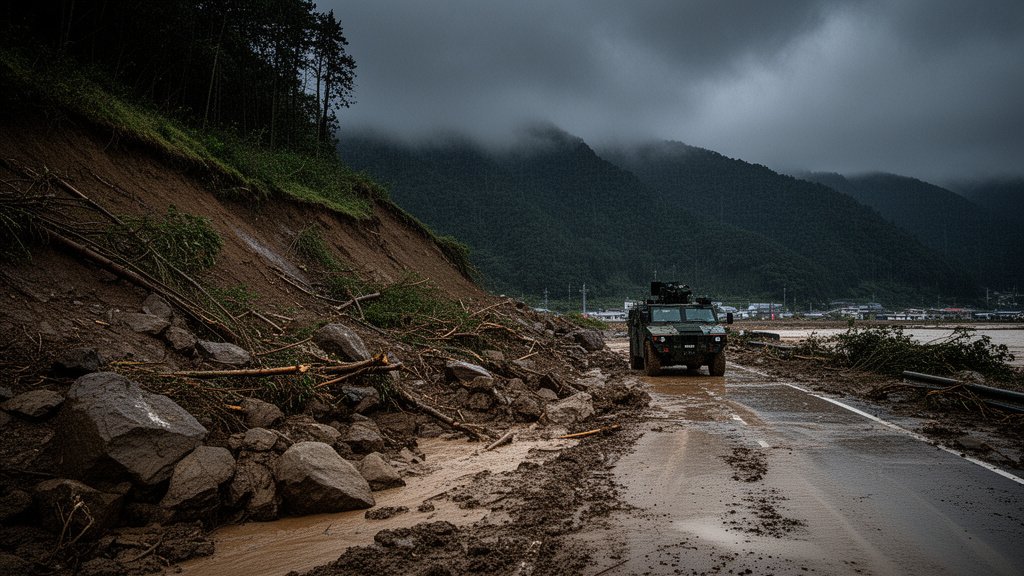
Torrential rain has unleashed a humanitarian crisis across Japan’s Chiba region, with local authorities issuing their highest-level emergency rain warnings as the death toll from the resulting landslides and floods reaches at least eight confirmed fatalities. The relentless downpour has paralyzed infrastructure, cut off remote communities, and left tens of thousands without electricity as regional disaster management agencies scramble to conduct search and rescue operations amid precarious terrain.
Key Highlights:
- Highest-Level Emergency Warning: The Japan Meteorological Agency (JMA) issued its most severe warning tier for the Chiba region due to historic rainfall intensity.
- Human Toll: At least eight deaths confirmed as of this report, with authorities fearing the number may rise as search efforts continue in landslide-affected zones.
- Widespread Infrastructure Failure: Massive landslides have severed key roadways, and widespread power outages have plunged major residential sectors into darkness.
- Emergency Mobilization: The Japan Ground Self-Defense Force (JGSDF) has been deployed to assist local police and firefighters in disaster-stricken areas.
The Meteorological Crisis and Infrastructure Collapse
A Record-Breaking Deluge
The current disaster in Chiba is being categorized by experts as a ‘once-in-a-generation’ meteorological event. The JMA has tracked a stationary front that has parked itself over the Chiba Prefecture, resulting in precipitation levels that have shattered local historical records for 24-hour accumulation. This persistent atmospheric river phenomenon has saturated the soil, leading to the rapid destabilization of hillside slopes.
For residents in the affected zones, the transition from a standard weather alert to a catastrophic emergency was nearly instantaneous. The sheer volume of water has overwhelmed local drainage systems, turning streets into torrential rivers and carrying debris that has further clogged critical infrastructure. The combination of intense rainfall and topographical vulnerabilities—specifically the mountainous terrain inherent to parts of the Chiba region—has created a volatile environment where the ground literally gave way, leading to the deadly landslides that have claimed lives and destroyed homes.
The Failure of the Power Grid
The impact on the regional power grid has been equally devastating. Reports from the local utility providers indicate that the combination of high winds associated with the weather system and the physical destruction of power lines by landslides and falling trees has resulted in widespread, blackout-level outages. These power failures are complicating rescue efforts, as they disrupt communication networks, limit the functionality of emergency sirens, and restrict the use of electric heavy machinery in rescue zones. Without stable power, hospitals and emergency shelters in the area are forced to rely on backup generators, putting additional strain on fuel reserves.
Socio-Economic and Logistical Impact
Disruption of Essential Logistics
Chiba is not only a residential hub but a critical component of the Greater Tokyo Area’s logistical and agricultural supply chain. The flooding has severed major arterial roads, creating a logistical bottleneck that threatens the flow of goods into the capital. The Ministry of Land, Infrastructure, Transport and Tourism (MLIT) has reported that several major highways are currently impassable, which is severely limiting the ability of emergency responders to transport heavy recovery equipment to the most isolated victims. This disruption of supply chains is also affecting the agricultural sector, as farmers struggle to access fields and markets, threatening a significant portion of the region’s seasonal harvest.
The Human Dimension of the Disaster
Behind the statistics of eight confirmed deaths lie stories of entire communities isolated by mudslides. Disaster management officials are prioritizing the evacuation of residents in ‘red zones’—areas identified as having a high risk of continued slope failure. However, the evacuation process is hindered by the same landslides that have rendered roads unusable. The psychological toll on the survivors, many of whom have lost their homes and livelihoods in a matter of hours, is profound. Local government officials have established temporary evacuation centers, yet the challenge remains in providing adequate medical care and basic necessities to those displaced, particularly the elderly population, who comprise a significant demographic in these rural areas.
Resilience and Future Planning
As the waters begin to recede, the conversation in Japan is inevitably shifting toward climate resilience. This event is being cited by urban planners and disaster management experts as a clear signal that existing flood control measures—many designed for 20th-century climate patterns—are insufficient for the 21st century’s reality of extreme weather. The government is expected to face pressure to increase investment in ‘green infrastructure,’ such as improved catchment basins, reinforced slope stabilization technology, and decentralized power microgrids that can remain functional even during massive grid failures. This tragedy will likely serve as a catalyst for a comprehensive re-evaluation of Japan’s disaster response protocols, focusing on the integration of AI-driven early warning systems that can predict localized landslides with greater accuracy than current regional models.
FAQ: People Also Ask
Why was the rainfall in Chiba so severe compared to previous years?
The severity is attributed to a stationary weather front that has lingered over the region for an extended period, continuously dumping massive amounts of moisture. When combined with climate change-induced rises in regional sea temperatures, this phenomenon creates more intense, localized, and longer-lasting rainfall events than historically recorded.
What should residents in Chiba do if they are near high-risk landslide areas?
Authorities from the Cabinet Office Disaster Management urge residents to evacuate immediately to designated emergency shelters at the first sign of soil instability or when municipal warnings are issued. They advise against waiting for official evacuation orders if local conditions appear dangerous, emphasizing that ‘preemptive evacuation is the only way to ensure safety.’
How does the JGSDF assist during these disasters?
The Japan Ground Self-Defense Force (JGSDF) provides critical logistical support, including the use of heavy-lift helicopters for rescue operations in areas cut off by landslides, the construction of temporary bridges, and the deployment of specialized search-and-rescue teams equipped with advanced sensors for detecting survivors under debris.
Is the power grid expected to return to normal soon?
Utility companies are working around the clock; however, the restoration process is slow due to the physical destruction of power lines and the inability of repair vehicles to access remote, landslide-affected areas. Officials warn that some residents may remain without power for several days until structural repairs are completed.