
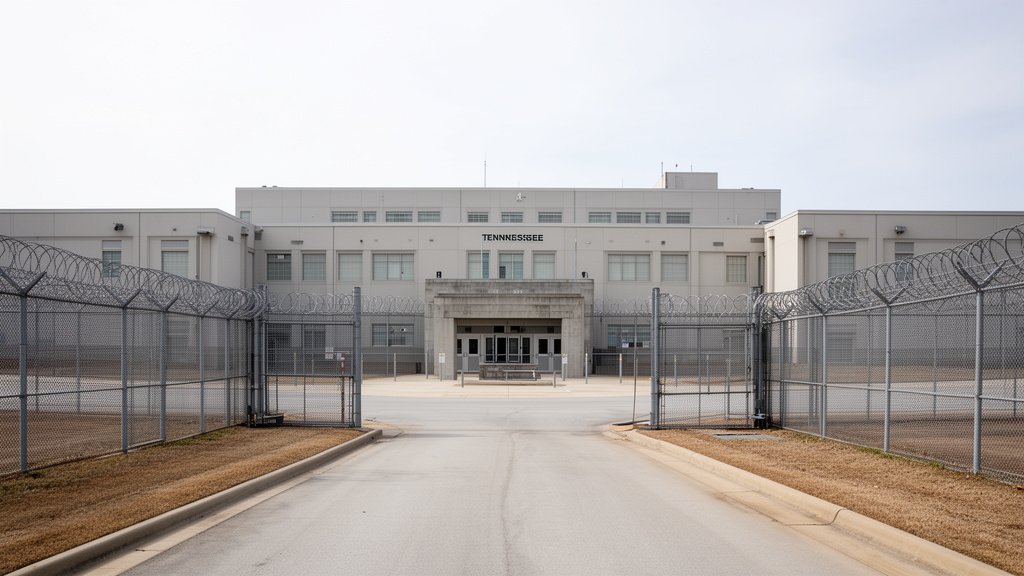
Tennessee’s recent series of failures in lethal injection administration has ignited a firestorm of controversy, once again centering the state at the heart of the national debate regarding the constitutionality and morality of the death penalty. When the Tennessee Department of Correction (TDOC) halted executions in 2022 following the discovery of significant flaws in its lethal injection protocols, it was not merely an administrative pause—it was an admission of institutional failure that has since forced a re-examination of how the state executes its most severe punishments.
The Anatomy of the TDOC Protocol Failure
The crisis in Tennessee reached a breaking point when Governor Bill Lee, in a surprising admission of state-level oversight, ordered an immediate halt to all scheduled executions. This decision followed an external review that uncovered the TDOC had failed to test its lethal injection drugs for potency and bacterial endotoxins as required by its own established protocols. The revelation was not just a technical oversight; it shattered public confidence in the state’s ability to carry out the ultimate punishment without error. For years, the legal arguments surrounding capital punishment have focused on the Eighth Amendment’s prohibition of “cruel and unusual punishment.” However, the Tennessee case shifted the focus toward the cold, clinical, and often sloppy reality of how states actually acquire and administer these substances.
Internal documents and investigations revealed a culture where speed and procedure took precedence over rigorous safety and constitutional compliance. The state had been operating under a protocol that, in practice, ignored the very safeguards designed to prevent botched procedures—processes that can lead to prolonged suffering rather than the instantaneous death intended by law. This internal breakdown provided legal teams across the country with a blueprint for challenging state death penalty protocols, arguing that if a state cannot follow its own rules, it cannot be trusted to take a human life.
The National Context: An Unsettled Institution
While Tennessee occupies the spotlight for its specific failures, it is part of a broader, more turbulent national trend. According to data tracked by the Death Penalty Information Center (DPIC), the use of the death penalty in the United States continues to face a slow but steady decline. Many states have either abolished the practice entirely or entered into de facto moratoriums as the difficulty of obtaining execution drugs—often manufactured by pharmaceutical companies that explicitly prohibit their use in capital punishment—becomes increasingly insurmountable.
This landscape is defined by a deep schism. While some states have redoubled their efforts to find alternative methods, including nitrogen hypoxia or renewed reliance on firing squads, the legal battles have intensified. The Supreme Court’s reluctance to issue a blanket ban on the death penalty has left the burden of proof on the states. This results in a patchwork legal landscape where the constitutionality of an execution is determined more by geography than by federal standards. The Tennessee scenario highlights that even in states with a strong pro-death penalty legislative history, the machinery of death is prone to breaking down under the weight of modern scrutiny.
Secondary Angles: The Hidden Costs and Realities
To fully understand why the Tennessee case has resonated so deeply, one must look at three critical dimensions often overlooked in the headlines.
First, there is the issue of pharmacological ethics. States are currently locked in a desperate search for suppliers of lethal drugs. When pharmaceutical companies withdraw their products from the corrections supply chain, states are forced to turn to compounding pharmacies or underground sources that operate with less oversight. This creates an inherently unstable supply chain where the “purity” of the dosage is a constant source of litigation. The Tennessee failure proved that without transparent, pharmaceutical-grade oversight, the risk of a “botched” outcome is not just possible—it is probable.
Second, the economic impact of capital cases cannot be ignored. The cost of a capital trial, including the exhaustive appeals process mandated by the Eighth Amendment to prevent wrongful execution, is significantly higher than the cost of life imprisonment. In Tennessee and across the U.S., taxpayers foot the bill for years of litigation. When a state botches an execution, those costs skyrocket as the state is forced to defend its protocols in federal court, conduct independent investigations, and overhaul its entire system—often using taxpayer funds that could otherwise be allocated to law enforcement or victim services.
Third, the political shift in public perception is notable. While support for the death penalty remains present in the United States, there has been a measurable shift toward caution. The Tennessee scandal forced even staunch supporters of the death penalty to pause and ask whether the state possesses the competence to act as executioner. This isn’t necessarily a moral awakening; it is a pragmatic realization that if the government cannot manage a basic protocol, it cannot be entrusted with the finality of death. This skepticism is bridging partisan divides, with fiscal conservatives and civil libertarians finding common ground in the belief that the state’s mismanagement of capital punishment is an unacceptable failure of governance.
As Tennessee and other states grapple with these realities, the legal path forward remains narrow. Courts are increasingly demanding that states prove not just the intent of their protocols, but the absolute, verifiable safety and accuracy of their application. Until that threshold is met with consistency, the death penalty in America will remain a subject of volatile legal, ethical, and practical uncertainty.