Hurricane Isaias made a devastating landfall on the Gulf Coast, leaving a trail of destruction that has resulted in at least four confirmed fatalities across Florida and Alabama and sparked a massive, ongoing emergency response as the region grapples with extensive power outages and dangerous flash flooding.
Key Highlights
- Four confirmed fatalities reported across Florida and Alabama following the storm’s landfall.
- Widespread power outages have left hundreds of thousands without electricity as repair crews face hazardous conditions.
- Emergency management teams, including the Florida Division of Emergency Management (FDEM) and the Alabama Emergency Management Agency (AEMA), are executing critical search and rescue missions.
- The region is currently under ongoing flash flood watches and warnings as rivers and drainage systems remain at capacity.
The Aftermath of Isaias: Infrastructure and Recovery Operations
The arrival of Hurricane Isaias on the Gulf Coast has triggered a massive disaster response effort, underscoring the fragility of the regional infrastructure when faced with extreme weather events. As the storm moved inland, it delivered a concentrated force that compromised power grids, inundated roadways with flash flooding, and tested the resilience of coastal communities that have faced repeated weather threats in recent years.
Assessing the Infrastructure Collapse
The most immediate challenge facing local authorities is the catastrophic failure of the regional power distribution system. Following the initial impact, damage to high-voltage transmission lines and local distribution centers has left hundreds of thousands of residents in the dark. The Gulf Coast Power Consortium reports that restoring power is a multi-phased operation that requires clearing heavy debris before utility vehicles can even access damaged substations. This process is further complicated by persistent flash flooding, which prevents heavy equipment from reaching key infrastructure points.
Experts note that the intensity of the storm surge combined with record-breaking wind speeds caused significant structural damage to coastal communication towers. This secondary loss of connectivity has hindered local emergency management agencies’ ability to receive real-time status updates from the hardest-hit rural municipalities. The repair of these communication nodes is being prioritized alongside the electrical grid to ensure that incident command centers can maintain coordination throughout the recovery phase.
The Human and Emergency Response
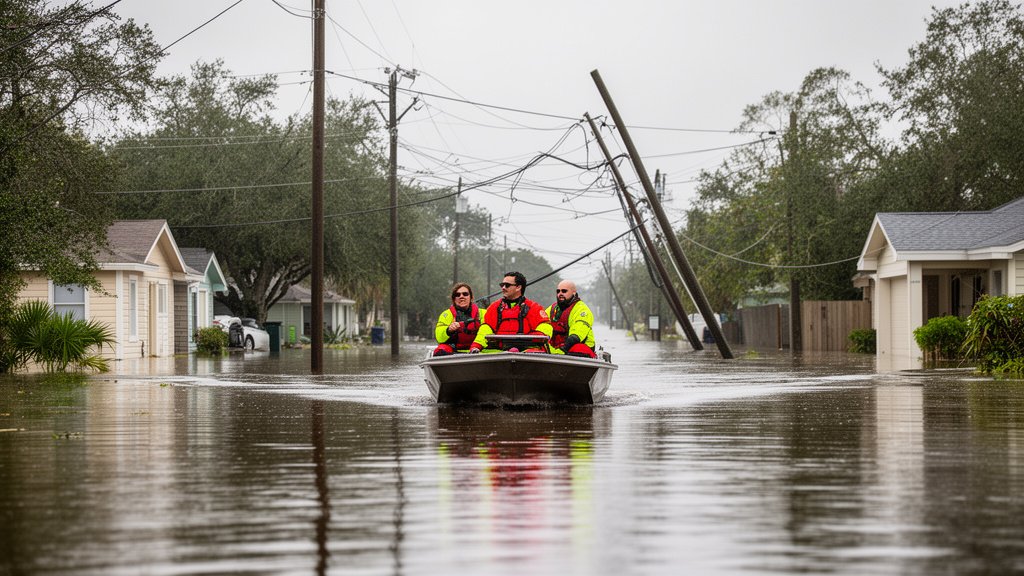
At the center of the crisis, the tragic loss of four lives in Florida and Alabama serves as a stark reminder of the dangers associated with storm-surge-induced flooding and debris impact. Search and rescue teams, coordinated by FEMA and local state agencies, are currently conducting grid-search operations in flooded neighborhoods. These teams are utilizing specialized flat-bottom boats and high-clearance vehicles to reach residents who were unable to evacuate or who became trapped in their homes due to rapidly rising waters.
FEMA has officially activated federal support protocols, allowing for a more seamless deployment of resources to the affected states. The primary focus for these teams is ‘life safety’—identifying survivors, providing medical triage, and clearing arterial roads to allow for the movement of essential goods, such as potable water and medical supplies. Public health officials are also warning of the secondary risks, including the proliferation of waterborne diseases and the potential for electrical hazards from downed, live power lines that remain hidden beneath floodwaters.
Long-Term Economic and Resilience Planning
Beyond the immediate tactical response, the Gulf Coast is facing an economic setback that extends far beyond the physical damage. Regional ports, which serve as critical hubs for trade and energy distribution, were forced to cease operations during the storm. The temporary closure of these facilities creates a supply chain ripple effect, impacting not just local economies but national energy markets. Economists suggest that the recovery process will require significant state and federal funding to address not only the immediate repairs but also to invest in ‘hardening’ infrastructure against future, similar-strength events.
There is a growing consensus among regional planners that the current strategy for coastal resilience is insufficient. The conversation is shifting toward the implementation of more robust sea-wall protections, the undergrounding of critical electrical distribution lines, and the modernization of drainage systems to better handle the increased rainfall totals that have characterized recent hurricane seasons. These projects require long-term legislative commitment and public-private partnerships, a challenge that is often exacerbated by the immediate fiscal constraints of state budgets post-disaster.
Furthermore, the psychological toll on residents cannot be overstated. Communities along the Gulf Coast have endured a series of storm-related disruptions, leading to a phenomenon of ‘hurricane fatigue.’ This collective experience influences public behavior, impacting everything from evacuation compliance rates to the economic investment in regional businesses. Future resilience planning must incorporate social and psychological support services as a pillar of recovery, acknowledging that the sustainability of these regions depends as much on the well-being of their inhabitants as it does on the sturdiness of their buildings.
Scientific Perspective on Storm Path and Intensity
The behavior of Hurricane Isaias, particularly its rapid intensification before landfall, has been a subject of intense analysis by the National Hurricane Center (NHC). Meteorological data suggests that warmer-than-average sea surface temperatures in the Gulf of Mexico provided a significant fuel source for the storm, allowing it to maintain its intensity closer to the coast than initial models had predicted. This specific characteristic—rapid intensification—presents a persistent challenge for forecasters who must provide actionable data to local governments under increasingly compressed timelines. As the climate evolves, the ability to predict, warn, and evacuate populations within these tighter windows will remain the most significant challenge for emergency management agencies across the southeastern United States.
FAQ: People Also Ask
What is the current status of the emergency response?
Emergency management agencies, including FEMA and state-level divisions in Florida and Alabama, are currently focused on search and rescue missions and the restoration of critical infrastructure, specifically power and communications.
Why was the power grid so severely impacted?
Initial assessments point to a combination of high wind speeds and heavy debris that damaged key transmission lines and substations, compounded by flooding that restricts access for repair crews.
What are the primary dangers for residents right now?
Public safety officials emphasize the risks of flash flooding, downed power lines, and structural instabilities. Residents are urged to avoid standing water and to only travel if absolutely necessary to allow emergency vehicles clear access.
How long will recovery take?
While emergency life-safety operations are underway, the full restoration of power and the clearing of major debris are expected to take several days to weeks, depending on the severity of damage in specific localized areas.