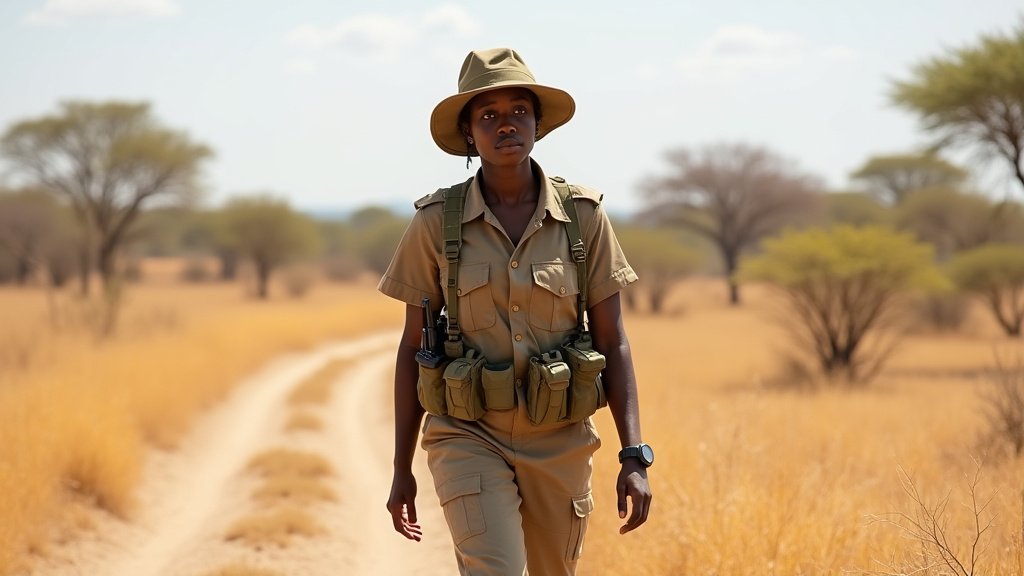
From the quiet rhythms of a rural Zimbabwean upbringing to the high-stakes frontlines of wildlife protection, Nyaradzo Auxilia Hoto has emerged as a beacon of change. As a pioneering biodiversity officer and anti-poaching ranger with the Akashinga unit, Hoto is not merely protecting endangered species; she is challenging deep-seated societal norms and reshaping the narrative of women rangers in the male-dominated field of conservation.
Key Highlights
- Nyaradzo Auxilia Hoto has risen to a leadership role within Akashinga, proving that local community empowerment is the most effective tool against poaching.
- The Akashinga project, meaning “The Brave Ones,” was founded by the International Anti-Poaching Foundation (IAPF) to create an all-female, community-led wildlife protection force.
- Operating in the Phundundu Wildlife Area, the unit has successfully demonstrated that employing local women provides economic stability that drastically reduces the local incentive for poaching.
- Hoto’s journey highlights a shift in African conservation, moving from militarized exclusion to community-integrated, sustainable biodiversity management.
The Akashinga Revolution: A New Blueprint for African Conservation
The conservation of Africa’s wildlife has long been dominated by masculine, militarized, and often international-led paradigms. However, in the heart of Zimbabwe’s Lower Zambezi Valley, a quiet revolution is underway. Nyaradzo Auxilia Hoto stands at the center of this shift. Her career trajectory—transitioning from a traditional rural life to becoming a tactical biodiversity officer—serves as a microcosm for the success of Akashinga, an organization that has fundamentally changed how the world views the intersection of human rights and wildlife protection.
The Birth of ‘The Brave Ones’
Founded by Damien Mander of the International Anti-Poaching Foundation (IAPF), Akashinga is built on a specific, innovative premise: that nature protection is only as strong as the community it supports. The unit focuses exclusively on recruiting and training women from marginalized backgrounds. For many of these recruits, including Hoto, the job is not just about conservation; it is an escape from cycles of poverty, abuse, and unemployment. By training women to manage the Phundundu Wildlife Area, the organization ensures that the people responsible for protecting the land have a direct, vested interest in its survival. This model has proven far more effective than traditional, external surveillance methods, as the rangers themselves are deeply woven into the social fabric of the surrounding villages.
Life on the Frontlines: Training and Tactical Skill
Nyaradzo Hoto’s daily operations are a testament to the rigorous standards of the Akashinga unit. It is not enough to simply love wildlife; rangers must master combat tracking, tactical planning, and complex biodiversity data collection. Hoto’s transition into this role required intense physical and mental conditioning, breaking the stigma that such demanding, dangerous work was unsuitable for women. Today, she navigates the rugged terrain of the Lower Zambezi with a precision that has earned her respect from both her peers and international conservationists. Her work involves patrolling protected zones, identifying snares, and—perhaps most importantly—engaging with the local population to foster a culture of conservation rather than exploitation.
Breaking the Socio-Economic Cycle
One of the most significant aspects of Hoto’s story is the economic autonomy her position provides. In many rural areas of Zimbabwe, women have historically faced limited access to formal employment. The Akashinga initiative channels significant funding directly into the hands of these women, who, on average, reinvest the majority of their income back into their families and local infrastructure. This creates a powerful ‘halo effect.’ When a ranger earns a steady, respected income, the entire village benefits. Education levels rise, healthcare outcomes improve, and the temptation to assist poachers for short-term, illicit gain evaporates. Hoto is not just protecting rhinos or elephants; she is protecting the economic future of her community.
Future Trajectories: Conservation Beyond the Border
The success of Nyaradzo Hoto and her colleagues has caught the attention of global conservation bodies. The model of using community-integrated, all-female units is now being explored as a scalable blueprint for other regions across Africa. As biodiversity loss continues to threaten ecosystems globally, the Akashinga approach offers a rare success story of positive, measurable outcomes. Looking forward, Hoto’s leadership represents the future of biodiversity management—a future where local expertise is prioritized over foreign intervention, and where the empowerment of women is seen as an essential component of ecological survival.
FAQ: People Also Ask
What is the primary mission of the Akashinga unit?
Akashinga, which translates to ‘The Brave Ones,’ aims to protect endangered wildlife in Zimbabwe by training and employing local women as anti-poaching rangers, effectively linking community empowerment with wildlife conservation.
How does the employment of women impact local poaching rates?
By providing stable, well-paying jobs to local women, the program removes the economic necessity that often forces community members to assist in poaching activities. This creates a community-wide support system for conservation.
What specific role does Nyaradzo Auxilia Hoto play?
Nyaradzo Auxilia Hoto serves as a leading biodiversity officer and anti-poaching ranger. She is responsible for tactical patrols, monitoring wildlife populations, and serving as a community liaison for conservation efforts.
Is the Akashinga model unique to Zimbabwe?
While currently focused on the Lower Zambezi Valley in Zimbabwe, the Akashinga model is being studied globally as an exemplar of community-led conservation that could potentially be adapted for other regions facing similar poaching and biodiversity challenges.