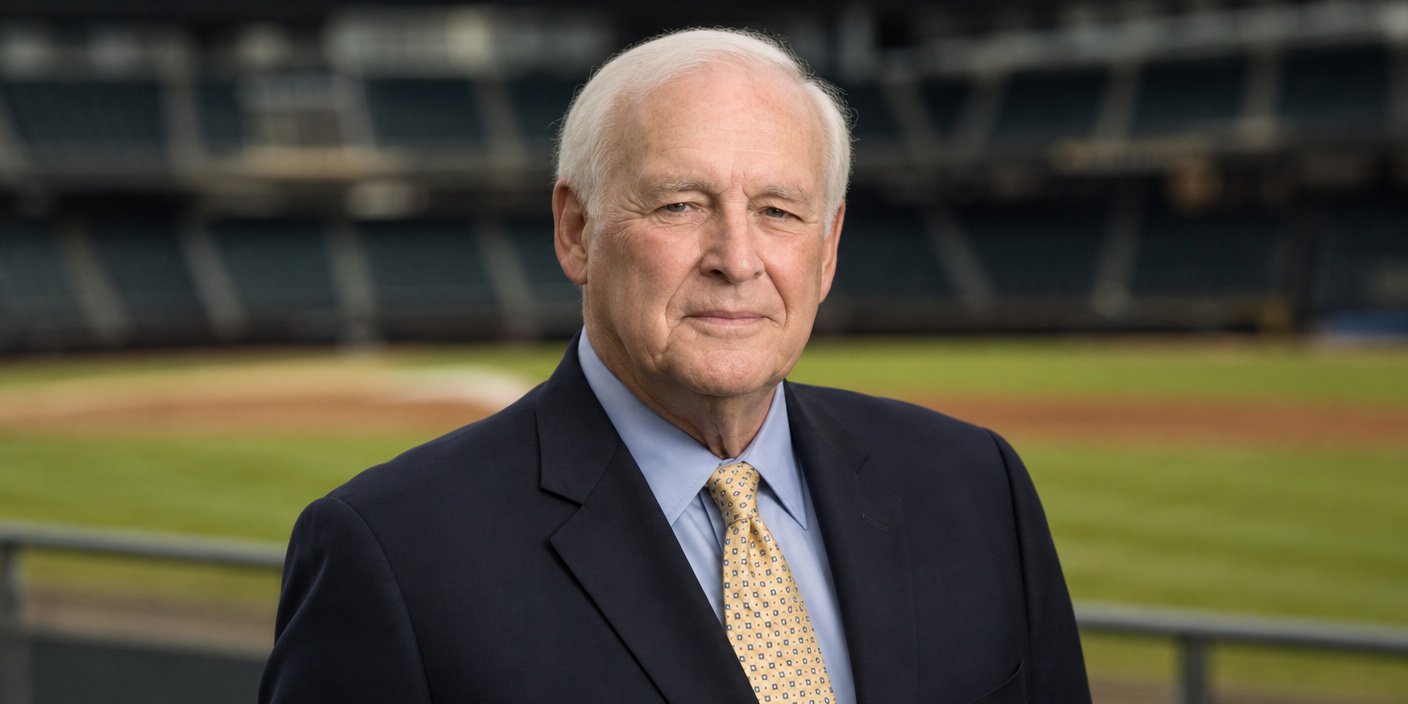
Bill Giles, a visionary executive who redefined the Major League Baseball fan experience, has passed away at the age of 92, leaving behind a legacy that transformed how America watches its national pastime. A transformative figure in Major League Baseball, Giles was instrumental in shifting the perception of a baseball game from a simple athletic contest into a comprehensive, high-energy entertainment spectacle. Throughout his storied career, particularly with the Philadelphia Phillies, Giles proved that the success of a sports franchise was as much about the in-stadium atmosphere as it was about the box score.
Key Highlights
- The Entertainment Pioneer: Bill Giles is widely credited with revolutionizing the in-stadium experience, turning passive spectators into active participants through innovative promotions.
- Iconic Mascot History: Under his leadership, the Philadelphia Phillies introduced the Phillie Phanatic in 1978, a move that changed sports marketing forever and set the standard for team mascots.
- Ownership Legacy: Giles served as president and later owner of the Philadelphia Phillies from 1981 to 2015, overseeing a period of sustained success and cultural impact.
- Mentorship and Roots: The son of former National League President Warren Giles, Bill brought a deep institutional understanding of baseball to his innovative approach, blending tradition with modern showmanship.
The Architecture of the Modern Ballpark Experience
Foundations of a Sports Visionary
Bill Giles did not simply manage a baseball team; he curated a culture. Born into baseball royalty, his father, Warren Giles, served as the president of the National League, providing Bill with an unparalleled education in the logistics and mechanics of professional sports. However, while his father focused on the governance of the game, Bill Giles looked toward the fans. His early career in the Houston Astros’ front office, where he helped manage the burgeoning spectacle of the Astrodome, provided the perfect laboratory for his unconventional ideas.
In an era when baseball was often a quiet, traditional affair, Giles identified a critical gap: the game needed more than just nine innings to retain the attention of families and casual viewers. He understood that in the modern era, the stadium was competing not just against other sports, but against every other form of live entertainment in the city. To compete, he realized the stadium had to become a theater.
The Birth of the Phanatic
Perhaps the most enduring symbol of Giles’ genius is the 1978 introduction of the Phillie Phanatic. At the time, team mascots were largely unheard of or, at best, novelty costumes. Giles recognized the need for a character that could bridge the gap between the players on the field and the fans in the stands. Working with a team of designers, he unleashed the fuzzy, green, prank-playing creature that would eventually become the gold standard for sports mascots across all professional leagues.
The Phanatic did more than just dance between innings; he became an extension of the franchise’s personality. He mocked opposing teams, interacted with children, and created “viral” moments long before the term existed. This specific initiative demonstrated Giles’ core philosophy: provide the fan with a reason to laugh, engage, and invest emotionally, regardless of the game’s outcome.
Revolutionizing the Game Day Production
Following his tenure with the Astros, Giles took the helm of the Philadelphia Phillies in 1981, a role he held until 2015. During this time, he systematically dismantled the “old guard” approach to stadium production. He was a pioneer in utilizing the jumbotron and in-stadium video boards not just for scorekeeping, but for entertainment. He implemented custom music cues, interactive fan games, and “theme nights” that made a Tuesday night game in July feel like a marquee event.
His approach at Veterans Stadium was meticulous. He analyzed everything from the speed of the grounds crew between innings to the selection of the stadium’s musical playlist. Giles famously believed that the “product” wasn’t just the nine players on the field—it was the three hours of memory that a family created when they walked through the turnstiles. This focus on the holistic experience helped the Phillies maintain strong attendance numbers and deep community roots, even during periods where the on-field team struggled to reach the postseason.
Economic Impact and Fan Engagement
From an economic standpoint, Giles was ahead of his time. He understood that merchandising, concessions, and a family-friendly atmosphere were the pillars of long-term financial stability for an MLB franchise. By making the stadium a “destination” rather than just a “venue,” he unlocked revenue streams that many other teams had ignored. He encouraged sponsorship integration that felt natural to the fan experience, ensuring that partners felt like part of the stadium culture rather than an intrusion.
His strategy influenced an entire generation of stadium designers and team owners. Today, when fans walk into a modern MLB ballpark and see concourses filled with interactive games, team museums, and tailored music, they are witnessing the direct evolution of the “Giles Model.” He proved that by prioritizing the fan, the franchise would reap the rewards in loyalty and ticket sales.
The Final Inning: A Lasting Legacy
Bill Giles’ passing at age 92 marks the conclusion of a singular chapter in baseball history. He was a man who saw the game through the eyes of the paying customer, never losing sight of the fact that baseball is, fundamentally, entertainment. While the stats of his teams—including the 1980, 1993, 2008, and 2009 National League pennants during his leadership—will be etched in the record books, his true accomplishment is softer, though no less significant: he made baseball fun. His legacy lives on every time a child cheers for a mascot, every time a video board sparks a crowd, and every time a fan leaves a stadium smiling, regardless of the final score.
FAQ: People Also Ask
Who was Bill Giles and why was he important to MLB?
Bill Giles was a legendary baseball executive, primarily associated with the Philadelphia Phillies (1981–2015). He is considered a pioneer who transformed the in-stadium fan experience, introducing modern entertainment concepts like mascots, high-energy music, and interactive video presentations to baseball.
What was Bill Giles’ biggest contribution to baseball?
His introduction of the Phillie Phanatic in 1978 is widely considered his most impactful innovation. It revolutionized how teams use mascots to connect with fans, eventually setting the standard for professional sports entertainment across all major leagues.
How did Bill Giles change the Philadelphia Phillies?
During his time as president and owner, Giles shifted the franchise’s focus to a “fan-first” mentality. He modernized Veterans Stadium operations, improved fan engagement through technology and consistent entertainment, and built a brand that maintained high attendance and deep community loyalty for over three decades.