The streets of Paris have become the epicenter of a significant civil security crisis as intense protests against the soaring cost of living rapidly descended into chaos, leading to a massive crackdown by law enforcement. French authorities confirmed a total of 855 arrests in connection with the unrest, marking one of the most volatile episodes of civil disobedience in recent months. The violence, which saw public buildings targeted and local shops looted, has underscored the deepening frustration among citizens facing economic hardship, while simultaneously raising critical questions about public safety and the state’s capacity to manage widespread dissent.
The Anatomy of the Escalation
The demonstrations began as a coordinated expression of grievance regarding the relentless rise in energy bills, food prices, and general inflation—economic factors that have eroded the purchasing power of middle- and lower-income families. While the vast majority of participants initially gathered for peaceful assembly, the atmosphere shifted as the demonstrations reached the city center. According to reports from the Paris Police Prefecture, the situation deteriorated when organized groups began breaching cordons near key government infrastructure.
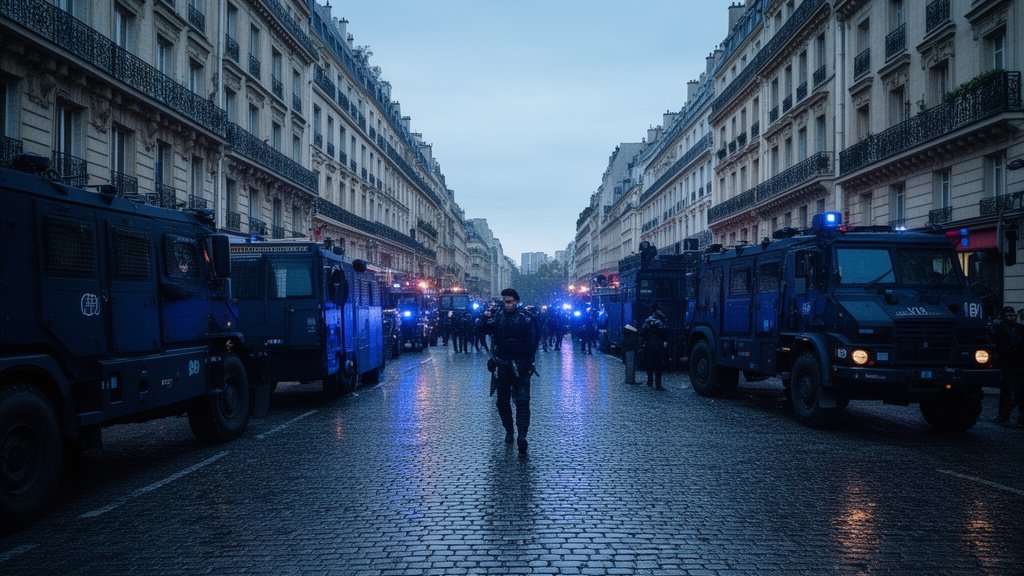
As the night progressed, the protests transformed from organized political messaging into a series of running battles. Riot police were deployed to contain the movement, using tear gas and non-lethal dispersal tactics. However, the scale of the unrest overwhelmed local containment measures, leading to widespread looting of storefronts along major commercial avenues. Emergency responders, including paramedics and firefighters, faced direct interference while attempting to address multiple fires and injuries, a trend that authorities have labeled as a dangerous escalation in civil hostility.
The Security Crisis: Analyzing the Police Response
The deployment of force to address the 855 arrests represents a massive operational effort by the Ministry of the Interior. Security analysts have noted that the sheer number of detentions suggests a preemptive and aggressive containment strategy, intended to prevent the systemic collapse of order in the capital’s central districts. The police response has drawn both praise for preventing wider infrastructure damage and criticism from civil rights groups who argue that the heavy-handed tactics may further inflame public sentiment.
Beyond the raw statistics of the arrests, the human cost of the evening is significant. Multiple law enforcement officers and emergency personnel sustained injuries ranging from fractures to respiratory distress caused by smoke inhalation. The targeting of public buildings serves as a symbolic marker of the participants’ resentment toward the administrative apparatus, which many protesters believe has failed to insulate them from the current economic volatility.
Economic Context: The Pressure Cooker
To understand the gravity of the unrest, one must examine the socioeconomic environment of modern Paris. Inflationary pressures have been compounded by a stagnant wage growth environment, leaving many households in a state of ‘economic precarity.’ The Consumer Price Index (CPI) has shown consistent upward trends in energy, transportation, and essential goods, placing a disproportionate burden on the urban workforce.
This unrest is not merely a reaction to current pricing but a cumulative release of pressure following years of economic tightening. Sociologists observe that when inflation meets a perceived lack of political representation, the probability of spontaneous, unstructured violence increases significantly. The looting of luxury and essential retail shops indicates a shift toward ‘opportunistic disruption,’ where the economic nature of the protest becomes secondary to the act of challenging the established order.
Secondary Angles: Future Implications
1. The Future of Urban Security: The use of mass-detention tactics during these protests sets a precedent for how future civil unrest in France will be managed. If the government continues to prioritize rapid, high-volume arrests, the state risks a permanent cycle of tension between the police and disenfranchised demographics.
2. Economic Policy Shifts: This volatility will likely force a reassessment of current cost-of-living policies. The political pressure on the governing administration to provide tangible relief—through subsidies or price caps—has intensified. Failure to address the root economic causes risks further localized uprisings.
3. Retail and Infrastructure Vulnerability: The targeting of commercial sectors has exposed weaknesses in urban planning and business security. We are likely to see a surge in investments toward fortified storefronts, private security, and surveillance infrastructure, fundamentally altering the visual and social landscape of Paris’s shopping districts.
FAQ: People Also Ask
Q: What was the primary driver of the Paris protests?
A: The protests were driven by public frustration over the rising cost of living, specifically high inflation rates affecting food, energy, and transportation prices.
Q: How many people were arrested during the events?
A: French authorities reported 855 arrests, involving individuals detained for looting, clashes with law enforcement, and property damage.
Q: Were there injuries reported during the unrest?
A: Yes, multiple injuries were reported among law enforcement officers and emergency responders who were targeted while attempting to restore order and manage fires.
Q: What is the current status of the city?
A: Following the large-scale police intervention and the high volume of arrests, authorities have increased security patrols in central Paris to prevent further incidents and conduct damage assessments.