At least 58 individuals have been confirmed dead and more than 200 others wounded following a targeted attack by Iran-aligned Houthi forces on a Yemeni government security training camp in Shabwa province. The assault, which has sent shockwaves through the region, represents one of the single deadliest incidents in recent months and signals a dangerous deterioration in the security situation within Yemen’s strategic interior. Governor Awad al-Wazir has confirmed the casualty figures, framing the event as a calculated escalation that threatens to undermine ongoing efforts to stabilize the war-torn nation. The attack, characterized by the precision typical of recent Houthi military operations, has prompted an immediate outcry from local officials and defense analysts who warn that the fragility of Yemen’s internal security is rapidly approaching a breaking point.
Key Highlights
- Casualty Toll: Confirmed death toll of 58, with more than 200 personnel sustained varying degrees of injury.
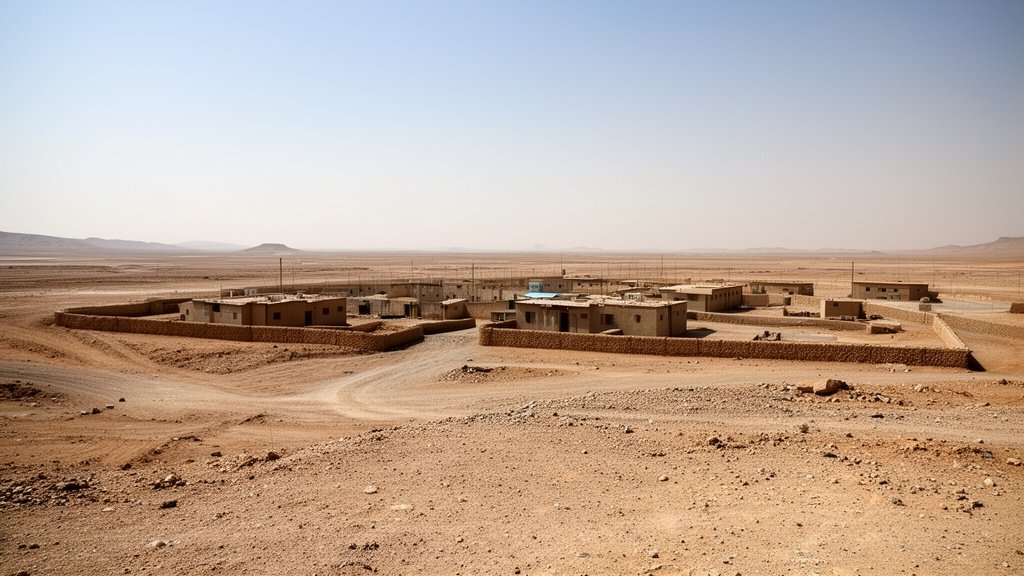
- Location: The strike targeted a specific security forces training camp located within the Shabwa Governorate.
- Attacker Profile: Forces identified as Iran-aligned Houthi militants, utilizing precision strike capabilities.
- Official Confirmation: Governor Awad al-Wazir verified the attack and the resulting humanitarian toll, calling for urgent reinforcements.
- Strategic Impact: The incident marks a significant escalation in regional instability, threatening oil and gas infrastructure vital to the region.
The Strategic Siege: Analyzing the Shabwa Attack
The assault on the Shabwa training facility is far from an isolated tactical maneuver; it is a strategic message regarding the Houthis’ expanding operational reach. Historically, Shabwa has been a critical pivot point in the Yemeni conflict due to its vast energy reserves and its position as a gateway between the northern strongholds of the Houthi movement and the southern territories held by the Presidential Leadership Council (PLC). By striking a training facility designed to bolster government security forces, the attackers aimed to disrupt the training pipeline of the local security apparatus, effectively attempting to paralyze the government’s ability to project power in the east.
The Shift to Precision Warfare
Military analysts have noted a marked evolution in Houthi tactics. No longer relying solely on the mass infantry charges that defined the early years of the Yemeni Civil War, the movement has increasingly integrated precision-guided missiles and unmanned aerial vehicles (UAVs) into its arsenal. The ability to successfully target a specific training camp—an installation that is often hardened against conventional infantry assaults—suggests a high level of reconnaissance and intelligence capability. This shift to precision strikes forces the Yemeni government into an expensive and difficult defensive posture, requiring constant air defense coverage across a vast, rugged geography.
The Humanitarian Consequence
The immediate impact of the strike is a humanitarian crisis within the camp itself. With over 200 casualties reported, local medical facilities in Shabwa have been overwhelmed. Reports from the ground indicate that critical shortages of blood, trauma surgical supplies, and stabilization equipment are impeding the rescue efforts. Governor Awad al-Wazir has appealed to international non-governmental organizations (NGOs) and neighboring regional partners to expedite medical aid to the province, noting that the sheer volume of injured personnel has exceeded the local capacity for rapid triage. This humanitarian burden adds another layer of complexity to an already strained socioeconomic landscape in southern Yemen.
Geopolitical Ripple Effects
The incident carries significant weight in the broader regional context. As Iran-aligned militias continue to leverage their proxy status to influence regional dynamics, this attack underscores the difficulty of maintaining the informal truces that have characterized recent diplomacy. The timing of the attack—coming amidst heightened regional tensions—suggests that local actors are not operating in a vacuum. International observers are now questioning how this will impact future peace negotiations. If the government determines that the security environment in provinces like Shabwa is fundamentally compromised, the pressure for a return to full-scale kinetic warfare could become unavoidable, effectively undoing the diplomatic progress made over the previous eighteen months.
Economic Vulnerabilities and Infrastructure
Shabwa’s importance cannot be overstated. It hosts critical oil and gas terminals and pipeline infrastructure that serve as the economic lifeline for the internationally recognized government. By destabilizing the security forces tasked with protecting this infrastructure, the Houthi movement is indirectly threatening the economic sovereignty of the state. If security cannot be guaranteed in the hinterlands of Shabwa, international investors and energy partners may be deterred, leading to a further contraction of government revenue. This economic strangulation appears to be a core component of the Houthi broader military strategy—combining kinetic force with economic sabotage to erode the state from within.
FAQ: People Also Ask
Q: Why was the Shabwa province targeted by the Houthis?
A: Shabwa is strategically vital because it acts as a corridor between northern and southern Yemen and houses essential oil and gas infrastructure. By attacking here, the Houthis aim to weaken government presence and disrupt vital economic arteries.
Q: How does this attack impact current peace talks?
A: The attack significantly complicates peace negotiations by eroding trust between the warring parties. Such escalations make it difficult for mediators to maintain ceasefires and often force the Yemeni government to prioritize military defense over diplomatic concessions.
Q: Who is identified as the aggressor in this specific incident?
A: Local authorities, including Governor Awad al-Wazir, have identified the perpetrators as Iran-aligned Houthi forces, noting their tactical use of precision weaponry consistent with recent patterns of Houthi military behavior.