
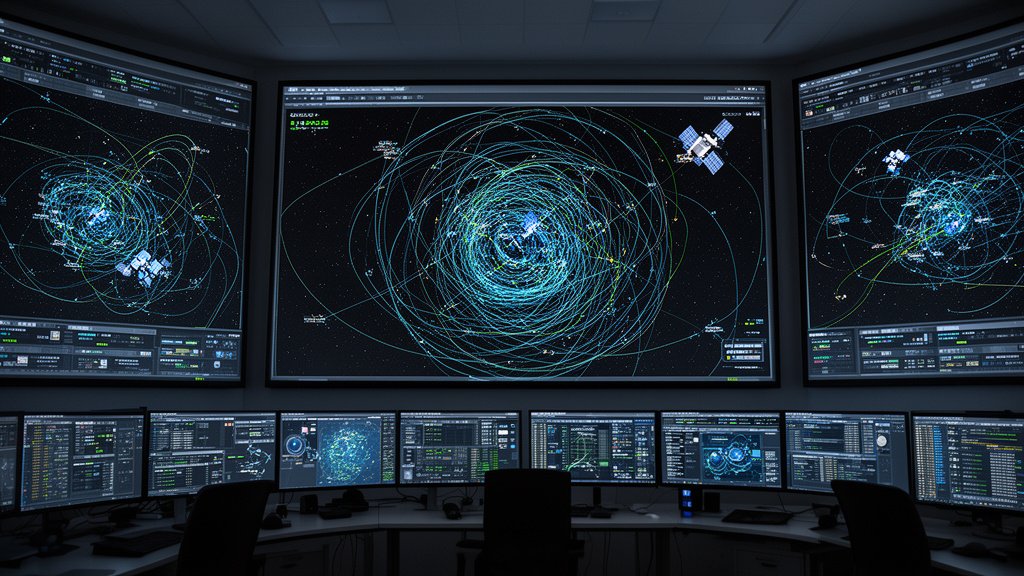
The Philippine Space Agency (PhilSA) has officially confirmed the launch of China’s Long March 8A rocket from the Hainan International Commercial Launch Center in Wenchang. The agency, which serves as the primary government body for space development and safety in the Philippines, utilized its established tracking and monitoring protocols to observe the launch, providing critical, real-time data regarding the trajectory of the vehicle. This confirmation highlights the increasing importance of robust PhilSA rocket launch monitoring capabilities, as the agency continues to mature its technical infrastructure to manage the rising frequency of space traffic within the region’s orbital slots and maritime corridors.
Key Highlights
- Mission Verified: PhilSA has officially verified the launch of the Long March 8A rocket from the Hainan International Commercial Launch Center.
- Technical Vigilance: The agency actively tracked the rocket’s flight path, contributing to essential Space Situational Awareness (SSA) data.
- Strategic Monitoring: The tracking effort underscores the Philippines’ commitment to maintaining safety and security within its maritime and aerial domains.
- Facility Focus: The launch occurred at the Wenchang site, which is increasingly becoming a critical hub for China’s commercial and heavy-lift space endeavors.
Safeguarding the Skies: The Strategic Importance of Space Situational Awareness
The confirmation of the Long March 8A launch serves as a tangible demonstration of the Philippine Space Agency’s (PhilSA) expanding operational maturity. In an era where space congestion is a growing global concern, the ability to monitor launch events, predict reentry trajectories, and understand the potential impact of debris is a cornerstone of national security and maritime safety. PhilSA’s involvement in tracking this specific mission from the Hainan International Commercial Launch Center is not merely a scientific exercise; it is a vital function of modern governance. As space becomes more crowded with satellites, commercial payloads, and launch vehicles, the data collected by national space agencies becomes the bedrock of international space traffic management.
The Long March 8A: A Technical Overview
The Long March 8A (CZ-8A) is a medium-lift launch vehicle that represents a significant evolution in China’s space program. Designed for efficiency and high-frequency deployment, the CZ-8A is engineered to bridge the gap between heavy-lift vehicles and smaller commercial launchers. Its design features are optimized for sun-synchronous orbit missions, making it a preferred choice for constellations of Earth observation satellites. From an engineering perspective, the rocket utilizes advanced liquid oxygen/kerosene engines, which provide the high thrust-to-weight ratio necessary for the demanding requirements of modern commercial payload delivery. PhilSA’s ability to track such a sophisticated vehicle demonstrates the agency’s capability to engage with high-velocity, high-altitude events, ensuring that the Philippines remains informed about activity directly affecting its airspace and surrounding seas.
Geopolitical and Regional Dynamics
The South China Sea and the surrounding airspace are regions of intense focus for regional powers, not just regarding maritime traffic but increasingly regarding aerospace developments. By actively confirming and monitoring launches from facilities like the Hainan International Commercial Launch Center, the Philippines is asserting its role as a responsible stakeholder in the Indo-Pacific space domain. This proactive monitoring approach helps mitigate risks associated with rocket stage debris, which often falls into areas that could potentially impact maritime navigation or fishing grounds. PhilSA’s transparent reporting on these events is a critical component of regional confidence-building, ensuring that nations are kept abreast of activity that could pose hazards to safety or economic zones.
Future-Proofing: The Rise of Commercial Launch Centers
The Wenchang facility’s emergence as a global player in space launch infrastructure is a significant development for the aerospace industry. Unlike inland launch sites, Wenchang’s coastal location allows for rockets to fly over the ocean, minimizing the risk of debris falling over populated areas. This design choice is fundamental to the scalability of the commercial space industry. As more nations and private entities utilize such coastal launch centers, the role of agencies like PhilSA will only become more vital. The agency is currently investing in localized sensor networks and data processing capabilities that will allow it to move beyond merely ‘confirming’ launches to providing detailed orbital analysis, risk assessments, and collision avoidance data for the Southeast Asian region.
FAQ: People Also Ask
What is the primary role of PhilSA in this rocket launch event?
PhilSA is responsible for Space Situational Awareness (SSA). Their primary role is to track the trajectory of the launch vehicle to assess any potential risks to the Philippines’ territory, maritime zones, and airspace, ensuring public safety and regulatory compliance.
Why is the Long March 8A rocket significant?
The Long March 8A is a medium-lift, highly efficient launch vehicle designed by China to support the rapid deployment of satellite constellations. Its design focuses on cost-effectiveness and versatility, making it a key asset in China’s broader space exploration and commercial deployment strategy.
What is Space Situational Awareness (SSA)?
SSA is the knowledge and characterization of all space objects, their operational environment, and the space weather conditions. For an agency like PhilSA, it involves monitoring satellites, debris, and active rockets to prevent accidents and protect national interests.
Is the Wenchang launch site standard for these operations?
Yes, the Hainan International Commercial Launch Center in Wenchang is a purpose-built facility designed to handle heavy-lift and commercial rockets, specifically chosen for its latitude and coastal access, which maximizes launch safety and orbital efficiency.