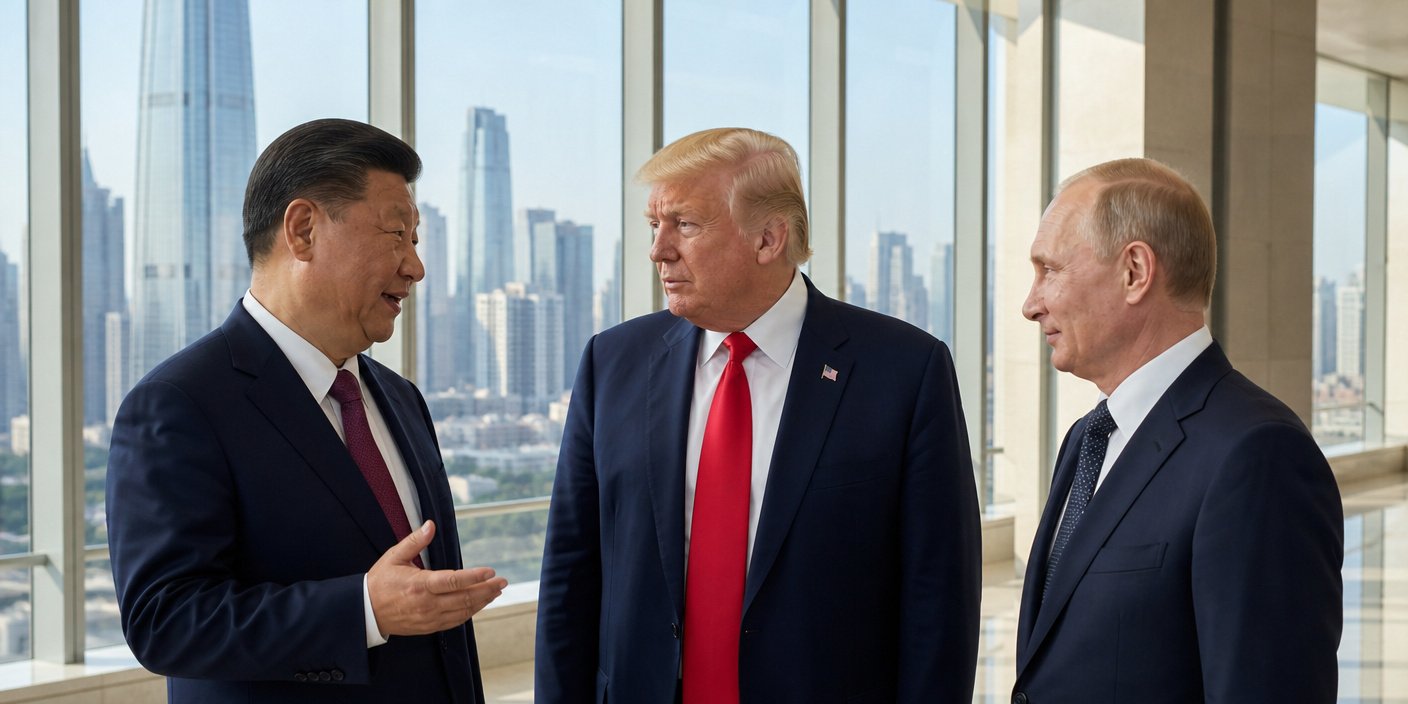
In an unprecedented display of diplomatic convergence on the sidelines of the APEC gathering in Shenzhen, China, President Xi Jinping, U.S. President Donald Trump, and Russian President Vladimir Putin have finalized and unveiled a “Declaration Towards Peace.” This document, signed in the high-stakes environment of the Shenzhen Special Economic Zone, marks a fundamental shift in international relations, specifically targeting the stabilization of nuclear arms control, the recalibration of global trade supply chains, and the immediate mitigation of active regional conflicts. The agreement represents the first time these three global powers have collectively committed to a unified framework for de-escalation, aiming to address systemic risks that have dominated the geopolitical landscape for the better part of the decade.
Key Highlights
- The Shenzhen Declaration: A binding framework committing to immediate transparency in nuclear stockpiles and the establishment of a hotline for crisis management.
- Trade Normalization: A tripartite agreement to reduce tariff barriers and address specific supply chain bottlenecks affecting semiconductor and energy sectors.
- Regional De-escalation: The leaders have pledged to leverage their combined diplomatic influence to mediate long-standing conflicts in the Middle East and Eastern Europe.
- APEC Integration: The declaration is being integrated into the broader APEC agenda, providing a roadmap for regional cooperation through 2026.
The Shenzhen Summit: A New Era of Global Diplomacy
The selection of Shenzhen as the backdrop for this historic announcement is symbolic. As a beacon of China’s “Reform and Opening-up” policy, the city now serves as the stage for a new phase of global cooperation. The “Declaration Towards Peace” is not merely a diplomatic platitude; it is a granular, actionable document designed to address the “trilemma” of modern international relations: the proliferation of advanced nuclear weapon delivery systems, the destabilization of integrated trade networks, and the rise of proxy-based regional warfare.
Nuclear Arms Control: Resetting the Clock
Perhaps the most significant component of the declaration is the section on nuclear arms control. Following years of eroding trust and the lapse of several legacy treaties, the three leaders have committed to a new regime of “Enhanced Strategic Transparency.” This involves the sharing of data regarding short-to-medium-range ballistic missile development and a moratorium on the deployment of hypersonic systems in disputed maritime corridors.
Experts note that the involvement of both the United States and Russia, with the high-level mediation and economic commitment of China, provides the necessary structure to revive the spirit of the Nuclear Non-Proliferation Treaty (NPT). By bringing the world’s three largest nuclear powers into a singular room, the Declaration aims to lower the “Doomsday Clock” probability through verified communication channels. The specifics include a mandate for technical experts from all three nations to establish an emergency “de-confliction” hotline, operational 24/7, to prevent accidental escalation stemming from radar misinterpretation or navigational errors in contested waters.
Trade Normalization and Regional Stability
Beyond the military implications, the summit addressed the fractures in the global economy. The “Shenzhen Protocol”—the economic annex to the Declaration—outlines a path to normalizing trade relations that have been strained by years of protectionist policies. The agreement focuses on three key sectors: high-end semiconductor chips, critical minerals, and grain logistics.
By creating a “Tripartite Trade Corridor,” the nations aim to streamline energy flows and stabilize the cost of goods for developing nations. The agreement includes provisions to discourage the weaponization of trade and to foster a collaborative approach to the technological standards of 6G and AI-driven infrastructure. For business leaders and international markets, this represents a massive reduction in the “geopolitical risk premium” that has plagued equity markets since 2020. Economists are already predicting a steadying effect on inflation, provided the terms of the trade corridor are upheld over the coming 18-month rollout period.
Geopolitical Implications: The Role of APEC
While the meeting was held on the sidelines of the APEC gathering, the ripple effects are expected to permeate the entire Asia-Pacific region. By aligning their interests, Xi, Trump, and Putin have effectively created a new center of gravity in international politics. This “Declaration Towards Peace” is expected to provide the needed cover for smaller nations in the Pacific Rim to decouple from the binaries of “bloc-based” politics, allowing for a more nuanced approach to regional security.
However, the challenge remains in the implementation. Historical precedents suggest that summits of this magnitude often face “implementation lag” as domestic political pressures in each country may threaten the long-term sustainability of the agreement. The true measure of the Shenzhen Declaration will be tested during the upcoming G20 summit, where the framework will face scrutiny from secondary global powers who were not signatories to the initial agreement. Nevertheless, the immediate market and diplomatic reaction has been one of cautious optimism, signaling that the era of “high-tension volatility” may be ceding to a period of “managed competitive cooperation.”
FAQ: People Also Ask
Q: What is the primary purpose of the ‘Declaration Towards Peace’?
A: The primary purpose is to establish a verified framework for de-escalation in nuclear policy, stabilize global supply chains, and create a cooperative mechanism for resolving regional conflicts between the world’s three largest powers.
Q: How does this summit affect APEC?
A: The summit leverages the APEC infrastructure to provide a regional platform for the implementation of the agreement, effectively making the Asia-Pacific region the primary laboratory for these new diplomatic initiatives.
Q: Are there specific details on nuclear arms control in the declaration?
A: Yes. The declaration mandates the creation of a 24/7 emergency hotline for crisis management and a commitment to “Enhanced Strategic Transparency” regarding hypersonic missile deployment and stockpiles.
Q: Why was Shenzhen chosen as the location?
A: Shenzhen is the symbol of China’s modern economic success and industrial integration. Choosing it signals that the focus of this peace declaration is as much about economic stability and growth as it is about security and military de-escalation.