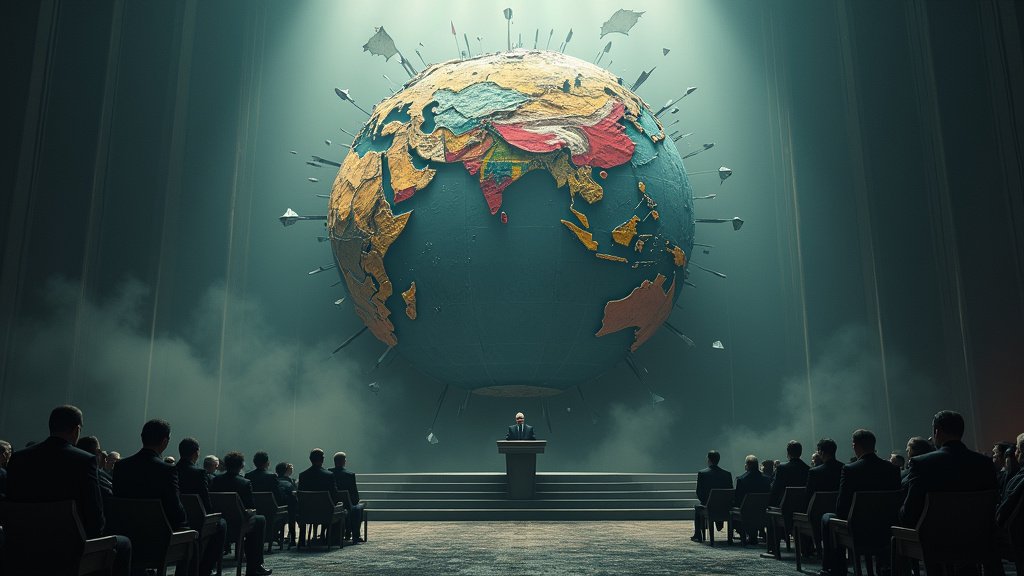
The world order built after World War II is collapsing. A new, uncertain era is emerging. This shift is driven by several factors. Major powers are changing their roles. Economic ties are being weaponized. International institutions are struggling. The world faces a potential descent into “no order at all.” Discussions at the Munich Security Conference highlighted these concerns. Global leaders are grappling with this uncertainty. The situation demands a new global architecture. This is a huge news topic.
A Fractured Transatlantic Alliance
The United States’ role as a global leader is under scrutiny. President Donald Trump’s “America First” approach has strained alliances. His transactional foreign policy prioritizes U.S. interests. This has led to skepticism among allies. European nations are questioning U.S. commitments to NATO. Some are exploring greater strategic autonomy. Canadian Prime Minister Mark Carney noted a “rupture” in the liberal democratic world. He urged nations to accept the loss of American leadership. Carney also called for diversifying to hedge against uncertainty. This uncertainty is making alliances less reliable. Many people worry about this trend. Many countries fear a return to a world where “the strong can do what they can, and the weak must suffer what they must”.
The Weaponization of Interdependence
Economic integration is no longer solely about mutual benefit. Great powers are using it as a weapon. Tariffs are used as leverage. Financial infrastructure becomes a tool of coercion. Supply chains are exploited as vulnerabilities. This is especially true for nations like Canada. Canada’s economy is heavily reliant on the U.S.. This creates a significant dependency. The concept of “weaponized interdependence” describes this reality. Nations must now consider how economic ties can be used against them. This makes traditional economic interdependence a double-edged sword.
Europe’s Push for Strategic Autonomy
Europe faces significant challenges in defining its new role. The EU aims for “strategic autonomy.” This means making independent choices and shaping its world. However, internal differences exist. Some nations prioritize European defense. Others focus on open trade. Europe’s structural weaknesses include resource needs, industrial competitiveness, and military power. These require huge spending and policy changes. The EU risks being left behind by more assertive powers. It needs to secure essential resources and manage supply chains. This is making strategic autonomy a complex undertaking.
The Rise of Other Powers
As U.S. global leadership declines, other nations are gaining influence. China’s image has improved in many Global South nations. However, China is not yet ready to replace the U.S.. Its experience as a global leader is limited. Many neighbors view China’s power aspirations with caution. The world is moving toward a “multiplex” order. No single nation will dominate this new system. The U.S. may remain militarily powerful. China could become pre-eminent in development and trade. This shift is creating new geopolitical dynamics.
The Risk of No Order
The current geopolitical landscape is highly fragmented. The UN Secretary-General António Guterres stated the global order is not working for anyone. He noted that countries are “doing whatever they like, with no accountability”. This impunity fuels crises. The world faces existential threats. These include climate change and artificial intelligence risks. The transition to multipolarity without strong global institutions can lead to chaos. This makes aggressive opportunism and miscalculation more likely. Many people are concerned about this direction.
Making a Difference for the Future
The situation calls for urgent action. Leaders must address these challenges. Canada, for example, is involved in global initiatives. Prime Minister Justin Trudeau has championed creativity for global issues. He advocates for innovation. He has also supported efforts for housing technology. He urges nations to deliver on pacts for the future. This involves confronting serious global challenges collectively. Many people are making a huge difference in their field. They are finding creative solutions. The goal is to build a more inclusive and effective global order. This aims for peace and dignity for all. This is a huge task, but necessary for everyone.
A New Dawn or Utter Chaos?
The world is at a critical juncture. The old international order is crumbling. Its institutions falter. Trust in long-standing alliances erodes. The rise of multipolarity presents opportunities. It also brings significant risks. The potential for “no order at all” is a grave concern. Leaders must find common ground. They need to build a stable future. This requires renewed solidarity. It also demands urgent action. The news about these shifts is trending globally. People are discussing about this future. The future of their field depends on it. It is important to understand about these changes. It makes a huge difference for all.