Nvidia CEO Jensen Huang has transformed from a teenage dishwasher at a San Jose Denny’s into the titan of the artificial intelligence revolution, a trajectory that has recently captivated the internet and provided the diner chain with a powerful, organic marketing moment. By frequently referencing his formative years washing dishes and busing tables, Huang has provided a rare, humanizing thread that connects the high-stakes world of semiconductor manufacturing to the ubiquitous, blue-collar appeal of a roadside breakfast chain, creating an unexpected but highly effective brand synergy.
Key Highlights
- Humble Origins: Jensen Huang worked at a Denny’s in San Jose during the 1970s, an experience he credits with teaching him patience, resilience, and the value of hard work.
- Viral Synergy: The connection between a trillion-dollar tech giant and a legacy diner chain has generated significant social media buzz, highlighting the power of authentic founder backstories.
- Marketing Strategy: Denny’s effectively utilized Huang’s public anecdotes to build brand engagement, proving that legacy companies can successfully associate themselves with modern tech success stories.
The Anatomy of a Viral Founder Narrative
The San Jose Connection: From Dishwasher to Tech Titan
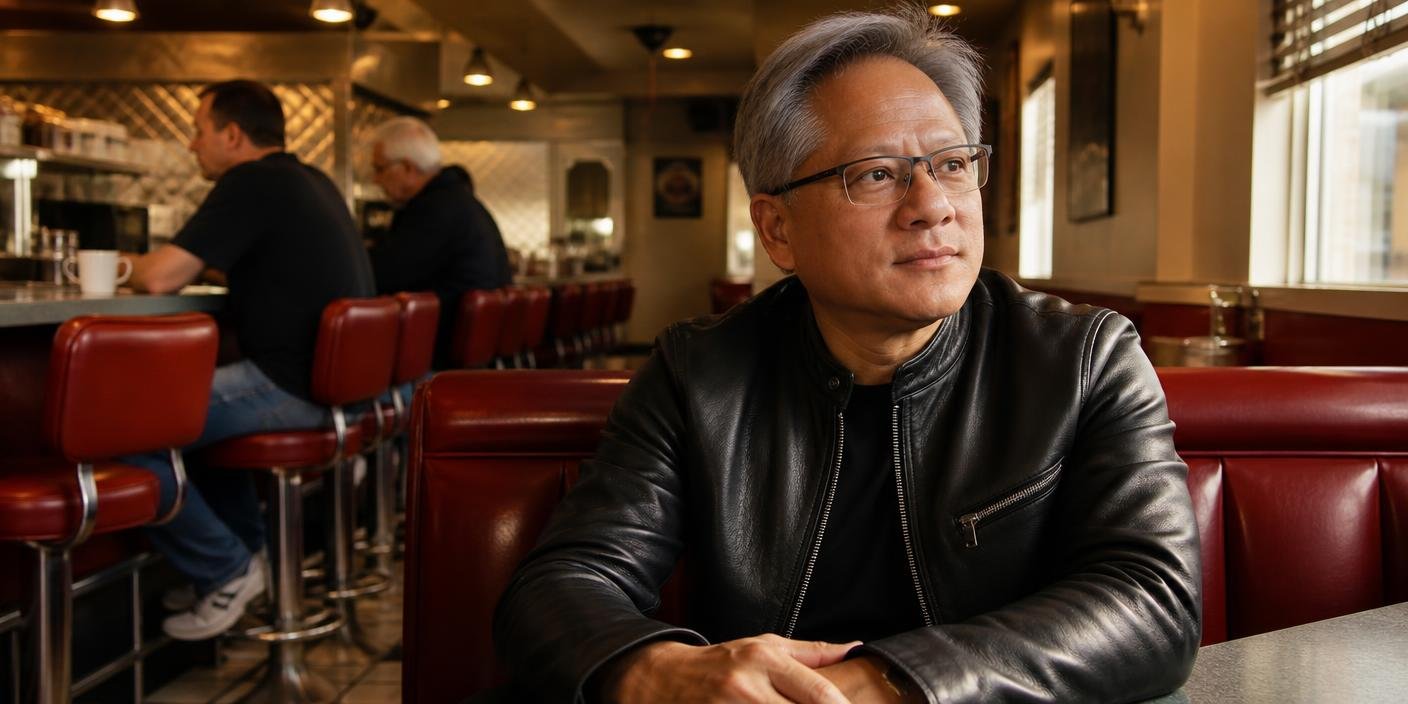
Long before the ticker symbol NVDA was dominating the Nasdaq, Jensen Huang was navigating the high-pressure environment of a busy restaurant. During his youth in San Jose, California, Huang spent significant time working at a Denny’s. In various interviews, including high-profile appearances on programs like 60 Minutes, Huang has vividly recounted his experiences washing dishes and busing tables. He describes these tasks not as beneath him, but as essential training for the discipline required to lead a global organization.
This specific detail—that the architect of the modern AI chip revolution once scrubbed greasy plates—is more than just a trivia point. It is a narrative anchor that grounds a figure who deals in abstract concepts like GPU architecture and neural networks. For the public, this creates an “everyman” perception. It bridges the gap between the inaccessible world of deep tech and the relatable reality of the service industry, humanizing a leader whose net worth is measured in the billions.
The Power of Authentic Storytelling in Corporate Branding
When a brand like Denny’s, which has been a staple of American dining since 1953, attaches itself to a figure as prominent as Jensen Huang, the results are exponentially more effective than traditional advertising. This viral moment did not result from a paid endorsement deal or a calculated corporate partnership; it emerged from the organic repetition of a founder’s personal history. In an era where consumers are increasingly skeptical of polished corporate messaging, the “accidental” marketing of Huang’s past serves as a masterclass in brand authenticity.
For Denny’s, the association is a gold mine. It positions the brand as the “start line” for success stories. By acknowledging Huang’s comments, the company implicitly tells its customers: “Greatness starts here.” This narrative is highly shareable on platforms like X (formerly Twitter) and LinkedIn, where the Silicon Valley hustle culture is a primary driver of discourse. When users share clips of Huang talking about his time at the diner, they aren’t just sharing a story about a celebrity; they are sharing a story about potential and the American Dream.
Silicon Valley’s Obsession with Humble Roots
Silicon Valley has long obsessed over the “garage” origin story—the idea that a billion-dollar company can emerge from a cluttered, unglamorous workspace. However, the “diner” origin story offers a different, perhaps more grounded, emotional resonance. While the garage represents technical tinkering, the restaurant kitchen represents social agility.
Huang has often remarked that working in a restaurant forced him to develop “thick skin” and the ability to manage intense, immediate customer feedback—a skill set that he argues is perfectly transferable to the boardroom. For tech enthusiasts and aspiring entrepreneurs, this narrative is intoxicating. It suggests that the path to innovation is not just about writing code; it is about learning how to serve people, how to function under pressure, and how to maintain discipline. This cultural trend of elevating the “service industry past” of successful executives serves as a counterweight to the increasingly distant and elitist perception of modern tech conglomerates.
Why Viral Moments Build Market Sentiment
Does a viral tweet or a shared interview clip about Denny’s impact Nvidia’s stock price? Probably not directly. But it does affect the brand’s “soft” equity. Perception is a critical component of market valuation. When a company CEO is viewed as a person of depth and character rather than just a faceless executive, the brand receives a “trust premium.” Investors and consumers alike are more likely to support entities that possess a coherent, narrative-driven history.
This phenomenon highlights a shift in corporate communications. The most effective marketing in the 2020s is often unplanned and personality-led. Denny’s did not have to manufacture a campaign; they simply had to react to one. By engaging with the conversation, they amplified the reach of a story that was already being told, effectively riding the wave of Nvidia’s current market dominance to gain a secondary, cultural relevance that paid advertisements could never achieve.
The Future of Corporate Storytelling
As we look forward, the success of the Huang-Denny’s narrative suggests that “Legacy Brands” (retail, restaurant, logistics) need to keep a close eye on their alumni. There is immense untapped potential in tracing the paths of successful modern leaders back to their entry-level beginnings. Every CEO, founder, and visionary had a first job. Whether it was folding clothes at a retail store, mowing lawns, or working the night shift at a diner, those origins are marketing assets.
Moving forward, we can expect to see more companies mining their own historical records to identify famous alumni. It is a low-cost, high-impact strategy that leverages the psychological tendency of the public to find comfort in the “rags-to-riches” trope. The Denny’s moment proves that in the age of AI and high-frequency trading, there is still an insatiable appetite for the human stories that underpin our technological progress.
FAQ: People Also Ask
1. Did Jensen Huang actually work at a Denny’s?
Yes. Jensen Huang has frequently mentioned in interviews that he worked at a Denny’s in San Jose as a teenager, where he performed duties like washing dishes and busing tables.
2. How did Denny’s use this for marketing?
Denny’s social media accounts and public relations representatives have acknowledged and highlighted Huang’s past employment, often using it to celebrate his success and build an association between the diner chain and the tech mogul.
3. Why does this story matter to the tech industry?
It reinforces the “hustle culture” narrative in Silicon Valley. It portrays successful tech leaders as relatable individuals who climbed from the bottom, which humanizes the industry and makes figures like Huang more “likable” to the general public.
4. Is there an official partnership between Nvidia and Denny’s?
No. As of the latest reporting, this remains a purely organic, viral connection based on Huang’s past experiences and public anecdotes rather than a formal corporate sponsorship or partnership deal.