Federal authorities have successfully executed a comprehensive airspace security mandate during the 2026 FIFA World Cup, resulting in the seizure of over 700 unauthorized drones. The interagency operation, spearheaded by the FBI, Department of Homeland Security (DHS), and the Federal Aviation Administration (FAA), underscores the unprecedented level of surveillance and technical intervention required to secure the skies over 11 host cities against the growing threat of unmanned aerial systems (UAS).
Key Highlights
- Massive Interception: Over 700 illegal drone flights were identified, intercepted, and seized across all 11 official FIFA World Cup host cities.
- Interagency Synergy: A unified security front was established, leveraging the combined tactical expertise of the FBI, DHS, and FAA.
- Strict Airspace Enforcement: Implementation of comprehensive Temporary Flight Restrictions (TFRs) created zero-tolerance “no-fly zones” around tournament venues.
- Technological Shift: The operation highlights a strategic evolution in event security, prioritizing counter-UAS (C-UAS) measures alongside traditional ground security.
Safeguarding the Skies: The New Frontier of Stadium Security
The sheer volume of intercepted drones—surpassing 700 individual seizures—marks a critical turning point in the management of mass-gathering security. For years, the security focus for events of this magnitude was largely confined to ground-level perimeter control, bag screenings, and physical barriers. However, the proliferation of low-cost, high-capability consumer drones has shifted the strategic landscape, compelling the FBI and DHS to treat the airspace above these stadiums as a primary theater of defense.
The Operational Scope of Airspace Protection
The operation was not limited to stadium perimeters but extended across the metropolitan areas of all 11 host cities. The FAA’s enforcement of Temporary Flight Restrictions (TFRs) provided the legal framework necessary for federal agents to identify and mitigate aerial threats in real-time. By designating these venues and their surroundings as national defense airspace, authorities were empowered to employ advanced signal detection and electronic warfare techniques to identify drone operators and ground the unauthorized aircraft.
FBI and DHS personnel operated under a mandate of “domain awareness,” ensuring that even small, hobbyist drones that breached the TFR were met with immediate detection and subsequent seizure. The coordination between the FAA’s flight tracking and the law enforcement ground response was described by officials as the most sophisticated integration of civil and federal air defense protocols ever utilized for a sporting event in the United States.
Technological Deterrence and C-UAS Implementation
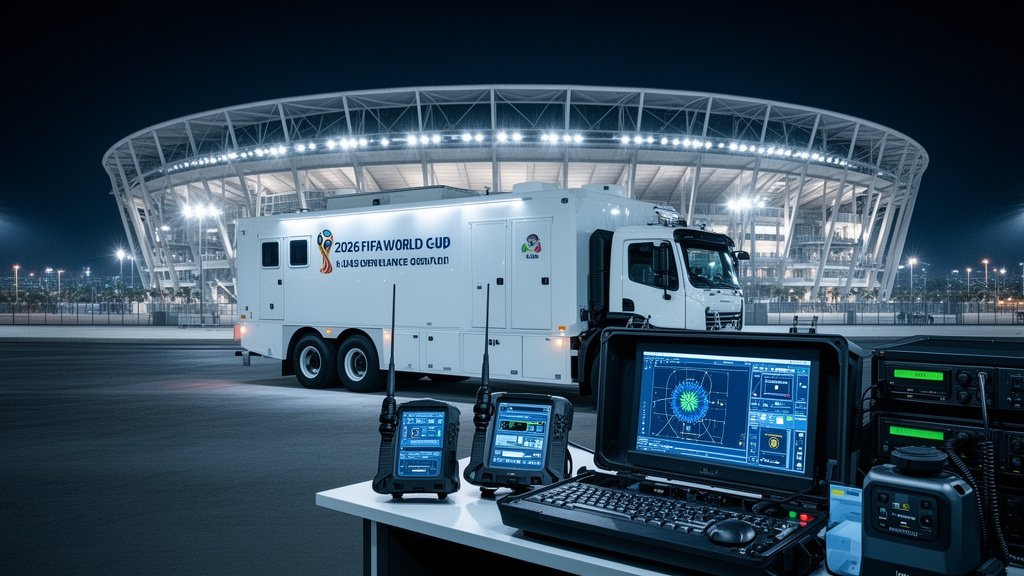
The seizure of 700 drones points to the efficacy of contemporary Counter-Unmanned Aircraft Systems (C-UAS). Authorities utilized a layered defense strategy, which included radio-frequency (RF) scanners to locate the “signature” of the drone controllers, and in some instances, electronic jamming equipment to neutralize the connection between the operator and the aircraft, forcing a controlled landing or return-to-home protocol. This technical capability ensures that security forces are not reliant on visual confirmation, allowing for a proactive rather than reactive defensive posture.
Secondary Angles: The Future of Event Security
1. The Evolution of Stadium Defense: The 2026 FIFA World Cup sets a new “Gold Standard” for event security. Future major sporting events—including the Super Bowl and the Olympics—will likely replicate this model of integrated federal-civilian airspace oversight, moving away from purely reactive policies toward a permanent C-UAS framework.
2. Privacy vs. National Security: While the seizure of 700+ drones has been heralded as a safety success, it raises ongoing questions regarding public privacy. As federal agencies deploy more sophisticated surveillance equipment to “scan” the skies for drones, the line between protecting the event and monitoring the local population becomes increasingly thin, a topic that is sure to dominate future legislative debates.
3. The Impact on the Hobbyist Community: The strict enforcement actions and the high number of seizures serve as a stark warning to the drone-flying public. The incident highlights the disconnect between the rapid adoption of drone technology by the general public and the rigid regulatory environment that governs national security airspace. Operators must now navigate an increasingly complex landscape of TFRs, with ignorance of these restrictions serving as no defense against federal seizure of equipment.
FAQ: People Also Ask
1. What happens to the seized drones after the operation?
Generally, seized drones are treated as evidence in federal investigations. If the operator violated TFRs, the equipment is processed through legal channels. Often, these devices are either forfeited to the government, destroyed, or held for investigation depending on the severity of the flight violation and the potential risk posed to the event.
2. Why are drones strictly banned during events like the World Cup?
Beyond the obvious risk of a crash into a crowd, drones can be utilized for malicious purposes, including unauthorized surveillance, the delivery of illicit payloads, or providing “birds-eye” tactical data that could compromise security perimeters. The TFR ensures that all aerial assets in the vicinity are accounted for and authorized.
3. How does the FAA monitor the airspace during such events?
The FAA employs a combination of radar, remote ID detection, and mobile C-UAS detection platforms. These systems monitor the electromagnetic spectrum to detect the control signals used by drones, allowing authorities to pinpoint the exact location of the operator and the flight path of the aircraft.
4. Can recreational flyers operate near stadiums during major tournaments?
No. During major events designated by the Department of Homeland Security or the FAA as “National Security Sensitive,” all drone flights are prohibited within a designated radius, typically covering several miles, regardless of operator certification. Attempting to fly in these zones is a federal offense.