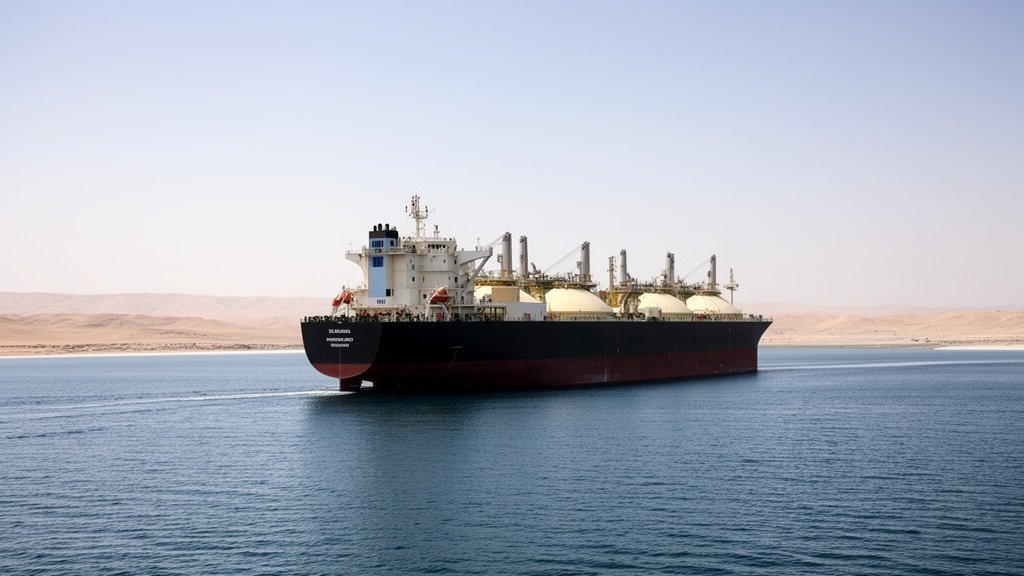
The maritime security landscape in the Middle East has shifted dramatically following the confirmed projectile strike on the Bermuda-flagged LNG tanker Gaslog Shanghai. While transiting the Strait of Hormuz with a critical cargo of liquefied natural gas (LNG) originating from Qatar, the vessel was hit, marking a significant escalation in the ongoing regional maritime crisis. This incident does not merely represent an isolated attack; it underscores the deepening vulnerability of one of the world’s most vital energy arteries.
The Anatomy of the Strike
The Gaslog Shanghai, a vessel central to the global LNG trade, was navigating the narrow, high-traffic corridors of the Strait of Hormuz when the incident occurred. Reports confirm that the vessel was targeted by a projectile, forcing a re-evaluation of security protocols for commercial shipping in the region. The proximity of the strike to the Iranian coastline and the high-density shipping lanes has triggered immediate alarm among international shipping conglomerates and energy analysts. Unlike crude oil tankers, which are often robust in design, LNG carriers are highly complex vessels; the potential for catastrophic failure if containment systems are breached makes such an attack a major escalation in the severity of regional tensions.
The Strategic Chokepoint
The Strait of Hormuz is widely considered the world’s most important oil and gas chokepoint. Located between Oman and Iran, it connects the Persian Gulf with the Gulf of Oman and the Arabian Sea. Roughly 20% of the world’s total oil consumption and a substantial portion of global LNG exports—particularly from Qatar—pass through this narrow strait daily. When security in this region is compromised, the impact is instantaneous and global. For the energy markets, the attack on the Gaslog Shanghai is not just a safety concern; it is an economic signal that the “risk premium” on global energy supplies is set to rise, likely driving up insurance premiums for all vessels traversing the region.
Secondary Angles: The Risks to Global Energy Stability
1. The Fragility of the LNG Supply Chain: Unlike crude oil, which can be stored in massive strategic reserves and is somewhat fungible, LNG requires highly specific infrastructure for both transport and regasification. An attack on a carrier like the Gaslog Shanghai threatens the specialized supply chains that fuel power grids across Europe and Asia, potentially causing volatility in natural gas pricing that exceeds the impact of crude oil fluctuations.
2. The Shift in Asymmetric Maritime Warfare: The use of projectiles against commercial shipping represents a shift toward more direct, asymmetric tactics. This moves the conflict beyond cyber warfare or posturing into direct kinetic engagement with civilian commercial assets. This development forces global powers—including the United States, the UK, and regional allies—to reconsider their naval presence and the efficacy of the International Maritime Security Construct in protecting commercial lanes.
3. Insurance and the “Fear Premium”: The insurance industry reacts instantly to kinetic events. The attack on the Gaslog Shanghai will likely trigger a rapid reassessment of “War Risk” premiums for all vessels in the Gulf. This economic friction is rarely temporary; as premiums rise, the cost is passed down to consumers at the pump and in utility bills, essentially exporting the cost of regional geopolitical tensions to the global economy.
Assessing the Diplomatic Fallout
The incident places immense pressure on diplomatic channels. Qatar, the source of the Gaslog Shanghai’s cargo, is a crucial intermediary in regional diplomacy. By targeting a vessel carrying Qatari LNG, the aggressors have signaled a willingness to bypass traditional diplomatic buffers. International maritime authorities and naval coalitions currently operating in the region are now faced with the difficult task of escalating security patrols without triggering a full-scale kinetic conflict. The challenge is to maintain the flow of energy while deterring further projectiles, a balancing act that requires precise intelligence and rapid response capabilities.
FAQ: People Also Ask
Q: Why is the Strait of Hormuz considered the world’s most critical chokepoint?
A: It is the only sea passage from the Persian Gulf to the open ocean, serving as the transit route for roughly 20-30% of the world’s total global oil supply and a significant percentage of global LNG, making it an essential artery for the global economy.
Q: How does the attack on the Gaslog Shanghai affect gas prices?
A: Even before a full supply chain disruption occurs, the “risk premium” associated with shipping insurance and the potential for reduced vessel availability forces energy traders to bid up prices. This volatility is quickly reflected in regional wholesale natural gas markets.
Q: What are the risks of a projectile hitting an LNG tanker specifically?
A: LNG carriers are double-hulled and built with high safety standards to prevent leakage of the super-chilled, liquefied gas. However, any kinetic impact poses a massive risk to the structural integrity of these containment systems, which could result in environmental or safety disasters far beyond those of a standard oil tanker collision.