In a move that has sent shockwaves across the European Union, the Italian government has announced the immediate closure of all air and sea borders connecting to Spain. This drastic suspension of the Schengen Agreement, the treaty that governs the border-free movement of people across most of Europe, comes in response to an escalating migrant crisis emerging from the Spanish enclave of Ceuta. Prime Ministerial sources indicate that this unilateral decision is a direct attempt to curb an unprecedented influx of migrants who are allegedly utilizing the Spanish mainland as a transit point to reach the Italian peninsula.
Key Highlights
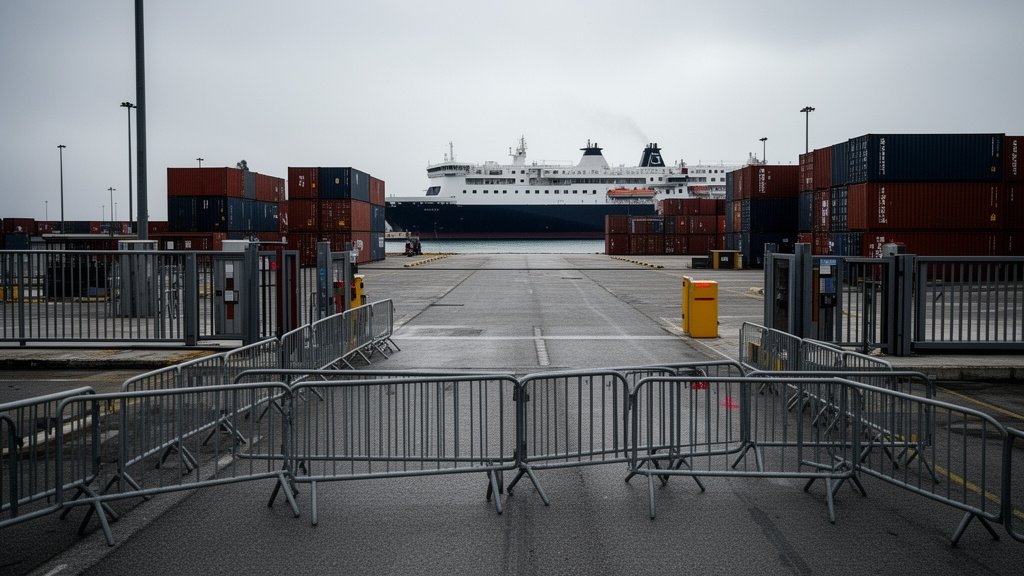
- Border Lockdown: All direct commercial flights and maritime ferry services between Spanish ports and Italian territory have been suspended until further notice.
- Schengen Suspension: Italy has invoked emergency provisions under the Schengen Borders Code, effectively halting free movement with Spain for the first time in recent history.
- Ceuta Pressure Point: The policy shift follows a sharp spike in undocumented migration originating from the Spanish enclave of Ceuta, which acts as a primary entry point for North African migrants into European territory.
- Humanitarian & Legal Concerns: International observers and the European Commission are currently scrambling to assess the legality of the move and the resulting humanitarian impact on stranded travelers and migrants.
The Anatomy of the Diplomatic Rift
The decision to decouple Italy’s border security from the Schengen framework represents a tectonic shift in European migration policy. For years, the Schengen Agreement has been the hallmark of European integration, facilitating the seamless transit of goods and people. However, the Italian government, citing the sovereignty of its domestic security, has argued that the pressure exerted by the migrant situation in Ceuta has rendered the existing collective border security protocols obsolete.
The Ceuta Catalyst
Ceuta, a Spanish autonomous city located on the northern coast of Africa, has long served as a pressure cooker for migration. Surrounded by Morocco and the Mediterranean, the enclave’s double-fenced perimeter is a frequent flashpoint. Recent intelligence reports, which the Italian government claims were the primary driver of this decision, suggest that organized networks have successfully redirected migration flows from the Moroccan border through the Spanish mainland, eventually seeking passage to Italy. Rome asserts that the Spanish border control mechanisms, while robust, are being overwhelmed, leading to a ‘secondary migration’ crisis that Italy is no longer prepared to absorb.
The Economic and Logistical Fallout
Beyond the political implications, the closure is poised to create a logistical bottleneck of historic proportions. Italy and Spain share extensive trade ties, with billions of euros in goods moving across the Mediterranean annually. The immediate grounding of air traffic and the cessation of sea routes threaten to disrupt supply chains in the automotive, agricultural, and luxury goods sectors. Businesses are currently operating in a state of high alert, as logistics companies attempt to reroute freight through non-Schengen-suspended corridors, which are already nearing maximum capacity.
European Commission’s Dilemma
The European Commission faces an uphill battle in mediating this crisis. Under the Schengen Borders Code, temporary reintroductions of border controls are permitted under ‘serious threat to public policy or internal security,’ but a total suspension between two member states is an extreme measure that sets a dangerous precedent. EU officials are expected to convene an emergency session in Brussels to determine if Italy’s actions qualify as a legitimate safeguard or a violation of the fundamental treaties binding the Union. The outcome of these discussions will likely redefine the balance of power between national security mandates and collective European obligations.
Future Implications for Border Management
As the situation unfolds, analysts are warning that this could signal the beginning of a ‘balkanized’ Europe, where individual states prioritize isolationist tactics over multilateral cooperation. If the suspension remains in place, it could pressure other Mediterranean nations—such as Greece and Malta—to reconsider their own border strategies, potentially unraveling the Schengen system entirely. Furthermore, the reliance on externalizing border controls to North African nations like Morocco has come under renewed scrutiny, with activists calling for a more holistic approach that addresses the root causes of migration rather than the symptoms of border permeability.
FAQ: People Also Ask
1. Is this the end of the Schengen Agreement?
While the suspension is currently framed as a ‘temporary emergency measure,’ legal experts warn that if the suspension persists, it undermines the trust and procedural integrity that hold the Schengen zone together, potentially leading to a permanent ‘two-speed’ Europe.
2. How are travelers affected by the border closure?
Travelers are facing massive disruptions. Direct flights between Italy and Spain have been canceled, and maritime travel is halted. Those currently in either country are advised to check with consular services regarding land-based transit options through France or other neighboring states, though these routes are expected to face intense scrutiny.
3. What does this mean for the Ceuta enclave?
Ceuta remains the epicenter of the issue. The closure of Italian borders is a signal from Rome to Madrid to tighten control over their own African frontiers. The enclave remains under heavy military and civil guard, with tensions expected to remain high as transit migration routes are disrupted.
4. Will the European Commission fine Italy?
Under Article 258 of the Treaty on the Functioning of the European Union, the Commission can launch infringement proceedings. However, the political reality of the situation may lead to mediation rather than immediate punitive financial action, as the EU attempts to prevent further fragmentation.