The United States, Japan, and South Korea have initiated an urgent tripartite coordination effort in the wake of a fresh, aggressive barrage of short-range ballistic missiles (SRBMs) launched by North Korea. This latest escalation from Pyongyang, which targeted waters off the Korean Peninsula, has prompted an immediate security alignment between the three allied nations. The launch comes amidst a backdrop of deepening geopolitical frustration, following reports that the North Korean regime has definitively rejected recent diplomatic overtures associated with the former U.S. administration, signaling a pivot back to hardline military brinkmanship.
Key Highlights
- Trilateral Alignment: The US, Japan, and South Korea held high-level tripartite discussions to synchronize intelligence sharing and deterrent responses.
- Missile Capabilities: The barrage consisted of multiple short-range ballistic missiles (SRBMs), testing the intercept and detection capabilities of the regional defense systems.
- Diplomatic Deadlock: The provocation follows a formal rejection of diplomatic outreach by Pyongyang, effectively closing the door on immediate high-level dialogue.
- Heightened Surveillance: Indo-Pacific Command has increased surveillance activity to monitor for follow-up launches or potential nuclear-testing readiness.
The Strategic Defense Response
The coordinated response from the United States, Japan, and South Korea marks a critical test for the existing regional security architecture. By aligning their military and diplomatic apparatus, the three nations are attempting to send a unified signal that the “strategic patience” of previous eras has been replaced by active, integrated defense postures.
Intelligence Sharing and Deterrence
The core of the tripartite agreement centers on real-time data sharing. Advanced radar systems in Japan and South Korea, coupled with US satellite intelligence, are being fused to create a comprehensive picture of North Korean missile activities. This integration is designed to neutralize the element of surprise that Pyongyang frequently seeks to exploit with its “barrage”-style launches. Military analysts suggest that the speed of this trilateral response is intentionally designed to force Pyongyang to reconsider the cost-benefit analysis of its ongoing missile development program. By demonstrating a seamless alliance, the US-Japan-ROK bloc aims to diminish the strategic value of North Korea’s kinetic provocations.
The Failure of Overtures
Deepening the crisis is the collapse of diplomatic engagement. Sources indicate that efforts to revive high-level discussions—previously characterized by intermittent overtures—have been met with categorical refusal by the Kim Jong Un regime. This rejection is not merely a tactical pause in diplomacy but a strategic recalibration by Pyongyang. North Korea’s leadership appears to have concluded that the current global climate offers a window to assert its status as a nuclear-armed power, thereby attempting to coerce the international community into accepting its military advancements as a fait accompli. This stance leaves little room for conventional de-escalation, forcing the allied nations to rely on containment strategies rather than negotiation.
Regional Impact and Secondary Angles
The Economic Ripple Effect
Beyond the military implications, the missile barrage serves as a stress test for regional economic stability. The uncertainty generated by frequent missile tests affects maritime shipping lanes and creates volatility in capital markets throughout Northeast Asia. Investors monitor these events closely, as they perceive a direct risk to the semiconductor supply chains based in South Korea and the high-tech industrial hubs in Japan. Any prolonged period of heightened tension risks inflating insurance premiums for commercial shipping in the Sea of Japan, creating a hidden, secondary economic cost for the region.
Technological Brinkmanship
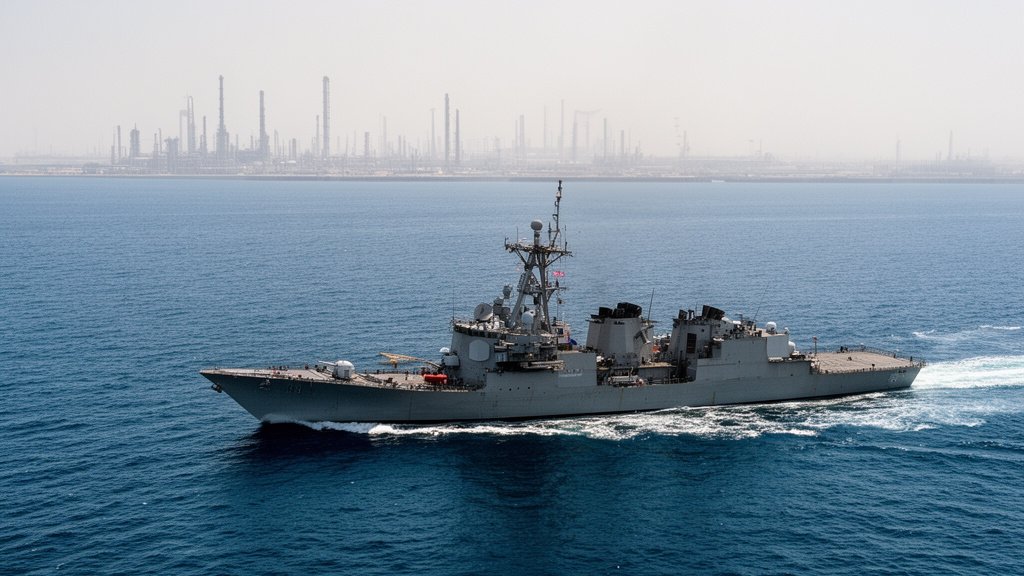
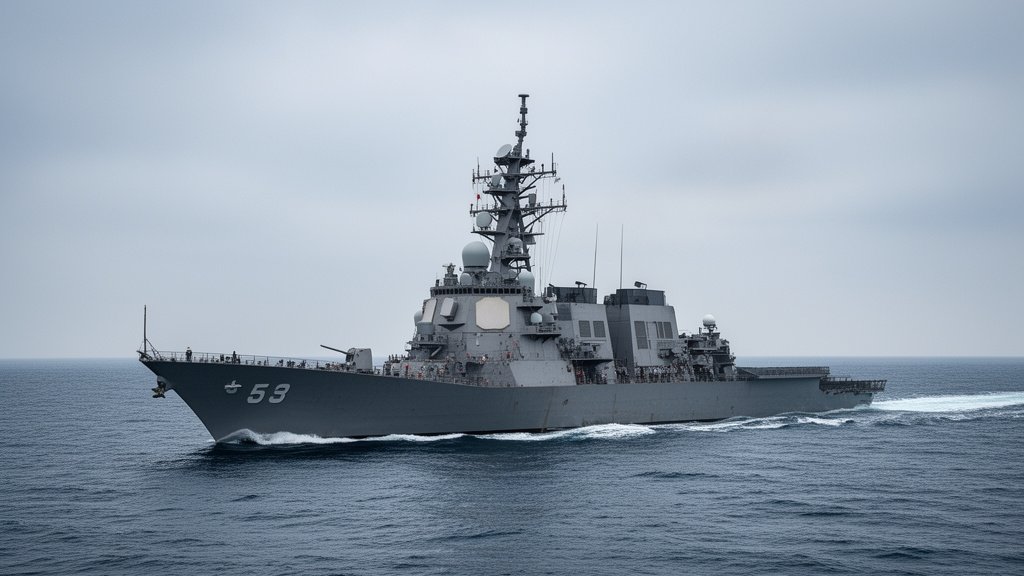
Technically, the barrage highlights an evolution in North Korea’s arsenal. The use of SRBMs, which are difficult to intercept due to their depressed flight trajectories and maneuverability, serves as a proof-of-concept for the regime’s ability to overwhelm regional missile defense systems. Experts argue this is a “saturation attack” simulation, intended to prove that even a robust defense network, like the Aegis-equipped destroyers utilized by the US and Japan, can be overwhelmed by volume. This forces a massive allocation of resources toward anti-ballistic missile research and development, draining military budgets that could otherwise be allocated to different strategic domains.
Future Predictions: The Path to Normalization or Conflict?
The trajectory of the US-Japan-South Korea relationship suggests that the days of bilateral, fractured responses are effectively over. We are witnessing the solidification of a “Pacific NATO” lite—a structural, permanent trilateral consultative body that will survive changing administrations in Washington, Seoul, or Tokyo. This framework will likely expand in the coming years to include cyber-defense initiatives and joint naval exercises, creating a permanent, ironclad containment ring around the Korean Peninsula. Unless Pyongyang shifts its current strategy of aggressive isolation, this trilateral security bloc will likely expand its definition of “defensive operations,” potentially leading to a new, more rigid status quo in the Indo-Pacific.
FAQ: People Also Ask
Q: Why does North Korea continue to launch short-range missiles?
A: North Korea uses these launches to test and refine its domestic missile technology, train its military units in real-world deployment, and project strength domestically, while simultaneously testing the resolve and unity of the US-Japan-South Korea alliance.
Q: How does the trilateral coordination actually function?
A: The coordination involves real-time sharing of missile tracking data (telemetry), synchronized diplomatic messaging, and pre-planned military readiness exercises, ensuring that all three nations act as a single, cohesive unit during a crisis.
Q: What was the significance of Pyongyang rejecting recent diplomatic overtures?
A: It signaled that the current leadership in Pyongyang has transitioned away from a desire for sanctions relief through negotiation, opting instead to prioritize military expansion and international recognition of its status as a nuclear-armed state.
Q: Is there a risk of immediate full-scale conflict?
A: While the rhetoric is heated, most defense analysts believe these launches are calculated “gray zone” provocations. They are designed to escalate tension without crossing the red line that would trigger an immediate, large-scale kinetic response from the United States.