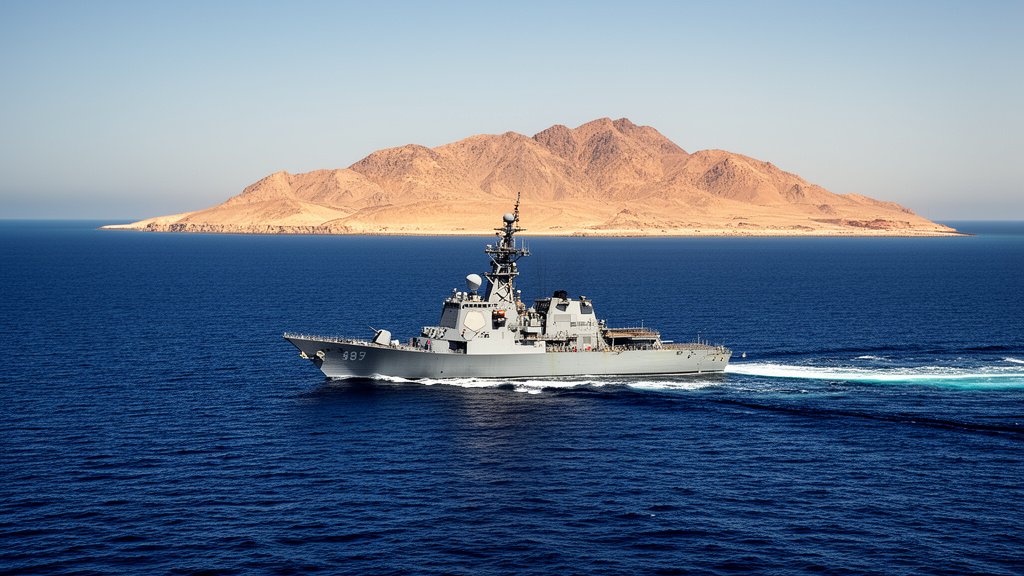
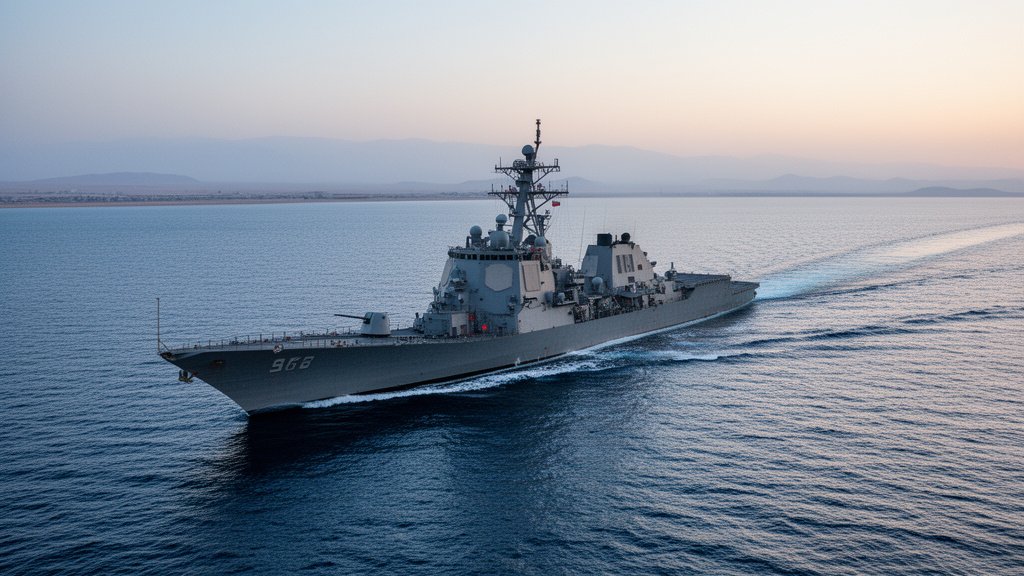
The U.S. military executed a series of ‘large and powerful’ strikes against Iranian-aligned targets near the Strait of Hormuz early Wednesday morning, September 2, 2026, marking a significant escalation in regional hostilities. The operation was authorized as a direct response to a failed mining attempt on commercial shipping lanes and a preceding missile attack on a U.S. military installation in Jordan. Simultaneously, on the domestic front, the U.S. House of Representatives successfully passed a short-term spending bill, providing a critical legislative bridge to avert an imminent government shutdown that had threatened to freeze federal operations at the close of the fiscal year.
Key Highlights
- Military Retaliation: U.S. forces targeted key Iranian infrastructure near the Strait of Hormuz following a failed mining operation and an earlier missile strike on a base in Jordan.
- Strategic Response: Pentagon officials described the strikes as ‘large and powerful,’ intended to degrade Iranian capacity to disrupt international shipping and protect U.S. service members.
- Shutdown Averted: The House of Representatives passed a stopgap spending measure, securing funding for federal agencies and avoiding a government shutdown.
- Geopolitical Tension: The dual events highlight a fragile confluence of escalating Middle Eastern conflict and precarious domestic legislative stability.
The Rising Tensions in the Strait of Hormuz
The military action reported Wednesday represents a turning point in the persistent ‘gray zone’ warfare between U.S. Central Command (CENTCOM) and the Islamic Revolutionary Guard Corps (IRGC). The Strait of Hormuz, a critical maritime chokepoint through which approximately 20% of the world’s petroleum supply flows, has increasingly become a theater of aggression. According to Pentagon sources, the immediate trigger was a complex, coordinated effort by Iranian-backed proxies to deploy naval mines intended to harass and potentially damage commercial traffic. This tactical maneuvering was coupled with a persistent missile threat against U.S. forward-operating bases in Jordan, which have served as vital hubs for regional stability.
The Doctrine of Retaliation
U.S. defense officials have signaled that the strategy of ‘containment through deterrence’ is shifting toward a more aggressive, active-denial posture. By targeting the source of the mining technology and the launch platforms for the missile attacks, the U.S. aims to alter the risk calculus for Iranian commanders. Analysts suggest that the scale of the strikes—described by witnesses as ‘large and powerful’—was explicitly designed to be undeniable, serving as a message to both Tehran and regional observers that the United States remains committed to maintaining the freedom of navigation in the Persian Gulf regardless of other domestic or international distractions.
Fiscal Stability Amid Geopolitical Volatility
While the Pentagon was engaged in the Strait of Hormuz, the House of Representatives was grappling with its own crisis: the looming threat of a government shutdown. The passage of the short-term spending bill provides a necessary, if temporary, floor for federal operations. This legislative move effectively kicks the can down the road, buying lawmakers time to negotiate a comprehensive budget agreement before the new deadline.
Economic Implications of the Spending Bill
For global markets, the legislative reprieve is a vital signal of stability. A government shutdown in the U.S. creates ripple effects throughout the global economy, impacting everything from treasury yield stability to the confidence of international investors. By securing this funding, the House has mitigated the risk of a domestic fiscal crisis that could have hampered the U.S. ability to respond effectively to the military challenges unfolding simultaneously in the Middle East. The alignment of these two events—the military strike and the legislative vote—underscores the complexity of the current U.S. policy environment, where international projection and domestic consensus are increasingly intertwined.
Secondary Angles: Contextualizing the Crisis
1. The Geopolitical Energy Nexus
The Strait of Hormuz remains the single most sensitive node in global energy security. Any sustained disruption to this corridor does not merely affect the immediate region; it triggers immediate volatility in global crude oil pricing. By responding forcefully, the U.S. is not only protecting its military assets but also actively stabilizing global energy markets. The challenge lies in managing the thin line between deterrence and open-ended conflict, which would prove far more expensive for the global economy than the current volatility.
2. Legislative Fatigue and the Budgetary Cycle
This short-term spending bill is the latest in a series of stopgap measures that have defined the current legislative cycle. There is a growing concern among political analysts that this ‘governing by crisis’ approach diminishes the effectiveness of U.S. foreign policy. When domestic resources are constantly under threat of suspension, long-term strategic planning—such as the modernization of military assets or sustained diplomatic outreach—becomes increasingly difficult to execute with the necessary consistency.
3. The Future of Proxy Warfare
As the U.S. continues to engage with Iranian-backed proxies, the definition of ‘success’ in this conflict is evolving. The transition from purely defensive postures (like intercepting missiles) to offensive, retaliatory strikes indicates that the U.S. is moving toward a strategy of ‘cost imposition.’ The objective is to make the sponsorship of non-state actors or the harassment of U.S. forces economically and militarily expensive for Iran. Whether this will lead to a de-escalation or a cycle of tit-for-tat attacks is the critical question facing the current administration.
FAQ: People Also Ask
What triggered the U.S. military strikes?
The strikes were a direct retaliation for a failed mining attempt in the Strait of Hormuz and a separate missile attack on a U.S. military base in Jordan. The U.S. cited a need to maintain regional security and protect its service members.
Does the new spending bill prevent a government shutdown permanently?
No. The bill is a short-term measure designed to fund the government temporarily and avoid an immediate shutdown. Lawmakers must still reach a more comprehensive agreement on federal spending to prevent a future shutdown once this measure expires.
How does the Strait of Hormuz impact the global economy?
The Strait is a vital maritime artery for energy exports. Approximately 20% of the world’s petroleum supply passes through this chokepoint daily. Any significant disruption or conflict in this area typically leads to immediate spikes in global oil prices and increased volatility in financial markets.
Why are U.S. troops stationed in Jordan?
U.S. forces are stationed in Jordan as part of a long-standing security partnership. Their presence serves to bolster regional stability, counter terrorism, and provide a strategic buffer and response capability for U.S. operations across the Middle East.