
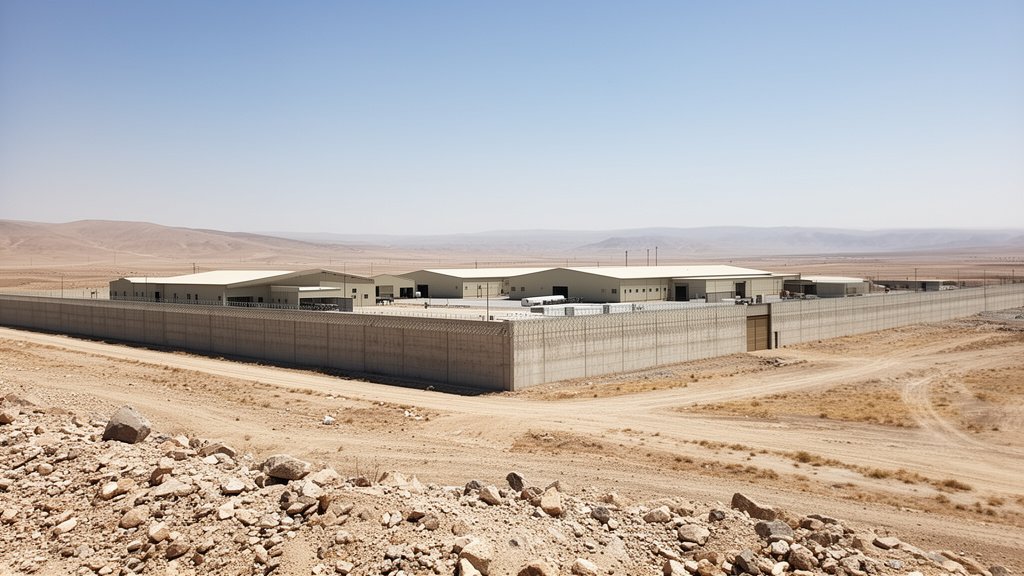
In a significant escalation of regional hostilities, the United States has launched a series of precise airstrikes targeting Islamic Revolutionary Guard Corps (IRGC) installations located in Kermanshah, Iran. The military operation, which marks a sharp departure from previous defensive posturing, serves as a direct retaliatory strike following an intensified cycle of aggression involving commercial vessels transiting the Strait of Hormuz. Intelligence reports confirmed by regional observers indicate that the strike resulted in at least five fatalities within the ranks of the IRGC Aerospace Force, raising immediate questions regarding the trajectory of future engagements between Tehran and Washington.
Key Highlights
- Targeted Retaliation: The U.S. airstrikes specifically targeted IRGC infrastructure in Kermanshah in response to persistent threats against international commercial shipping and U.S. military personnel.
- Human Cost: Confirmed reports indicate the operation resulted in at least five fatalities within the IRGC Aerospace Force, a significant tactical blow to the organization’s regional command capabilities.
- Strategic Catalyst: The strikes were prompted by escalating hostilities in the Strait of Hormuz, a critical global maritime chokepoint, where U.S. forces deemed the threat to regional stability ‘intolerable.’
- Broader Implications: This move marks a high-stakes moment in U.S.-Iran relations, shifting from passive deterrence to kinetic action within Iranian borders.
The Strategic Escalation in Kermanshah
The decision to strike targets within Kermanshah—a region deep within Iranian territory—signals a substantial shift in the U.S. Department of Defense’s engagement strategy. By moving away from purely maritime defense to interior target engagement, the U.S. is signaling that the IRGC Aerospace Force is now directly accountable for the disruption of global supply chains.
The Strait of Hormuz Crisis
For weeks, the Strait of Hormuz has served as the primary theater for these tensions. As a vital artery for global energy, the strait carries approximately 20% of the world’s total petroleum consumption. The IRGC has been accused of utilizing swarm tactics, unmanned aerial vehicles (UAVs), and fast-attack craft to harass tanker traffic. These actions have not only threatened global energy markets but also placed U.S. Navy assets in the Persian Gulf under consistent, high-pressure vigilance. When these threats culminated in specific, actionable intelligence regarding the IRGC’s role in coordinating these maritime disruptions, the decision was made to authorize the strike.
Impact on the IRGC Aerospace Force
The IRGC Aerospace Force has historically been the primary driver of Iran’s asymmetric warfare capabilities, particularly concerning missile technology and drone proliferation. By targeting their installations in Kermanshah, the U.S. is aiming to degrade the command-and-control infrastructure that facilitates these threats. The reported five fatalities among their ranks suggest that the strike was not merely a warning shot but a calculated operation designed to neutralize specific operational capacity. Military analysts suggest that this targeted attrition is intended to weaken the IRGC’s ability to project power into the Persian Gulf.
The Geopolitics of Deterrence
This development raises critical questions regarding the future of diplomatic efforts in the Middle East. With this strike, the U.S. is operating under a strategy of ‘active deterrence,’ moving the goalposts for what constitutes an acceptable level of Iranian aggression. The primary challenge now lies in the potential for miscalculation. As Washington attempts to secure the Strait of Hormuz, Tehran may view this strike as an infringement on sovereignty that demands a proportionate, or asymmetric, response. The international community is now watching closely to see if this event sparks a wider regional conflagration or effectively resets the boundaries of the ‘shadow war’ that has persisted between the two nations for decades.
Economic Ripple Effects
Beyond the immediate military significance, the Kermanshah strikes have sent jitters through global commodity markets. Oil futures, which are acutely sensitive to any disruption in the Strait of Hormuz, have exhibited volatility in the immediate aftermath of the news. Any prolonged confrontation in this region threatens to spike global energy costs, further complicating the economic recovery strategies of nations reliant on Middle Eastern crude. Investors and policymakers are currently weighing the risk of a full-scale blockade of the strait, a scenario that would have catastrophic consequences for the global economy.
Future Predictions and De-escalation Paths
While the U.S. maintains that these strikes were defensive in nature, the path to de-escalation remains narrow. Historically, U.S. operations in the region have been met with proxy responses—actions taken by regional allies of the IRGC rather than direct confrontation. Experts suggest that the next few days will be critical, as they will reveal whether Tehran seeks to escalate through conventional military means or through decentralized, deniable proxy networks. For the U.S., the challenge remains in maintaining the security of the strait while avoiding a full-scale war that would require massive, long-term deployment of assets.
FAQ: People Also Ask
Why were the strikes focused on Kermanshah?
Kermanshah is a strategic hub for the IRGC Aerospace Force, housing key logistics, command centers, and missile storage facilities that are utilized to support operations in the Persian Gulf and the Strait of Hormuz. Targeting this location is a tactical choice to disrupt the supply chain of aggression at its source rather than at its periphery.
How will this impact global oil prices?
The Strait of Hormuz is the world’s most important oil chokepoint. Any sustained military conflict in the region creates uncertainty, which typically drives up oil futures. While the market initially reacted with caution, the long-term price impact depends on whether the transit of tankers through the strait remains uninterrupted.
Is this considered a formal state of war?
Currently, these operations are classified as targeted military actions aimed at deterrence and protection of shipping lanes. They do not constitute a declaration of war but do reflect a significant uptick in the intensity of the ongoing shadow conflict between the United States and Iranian forces.
What role does CENTCOM play in these operations?
U.S. Central Command (CENTCOM) is responsible for the planning and execution of these missions. They maintain the surveillance, intelligence gathering, and operational readiness required to monitor the Strait of Hormuz and act swiftly when commercial safety and U.S. national interests are directly threatened.